Before you go
- Vehicle
- Sedan is fine
- Permit
- Not required
- Entrance fee
- The Zharkent Mosque museum charges a small entrance fee; approximately 500–1,000 KZT per adult. The mosque also functions as an active place of worship — dress modestly, remove shoes before the prayer hall. Cash preferred.
- Peak altitude
- 700 m
- Cell coverage
- Good
- Fuel
- Fuel is available in Kapchagai (89 km from Almaty) and again in Chunja (240 km) and Zharkent (350 km). The A-351 corridor has no long gaps. Refuel in Almaty before departure and top up in Chunja or Zharkent before the return leg.
- Road status
- A-351 is sealed tarmac in good repair for the full 350 km Almaty–Zharkent corridor. A short toll section applies near Almaty. No gravel or unpaved sections; sedan access throughout.
About this trip
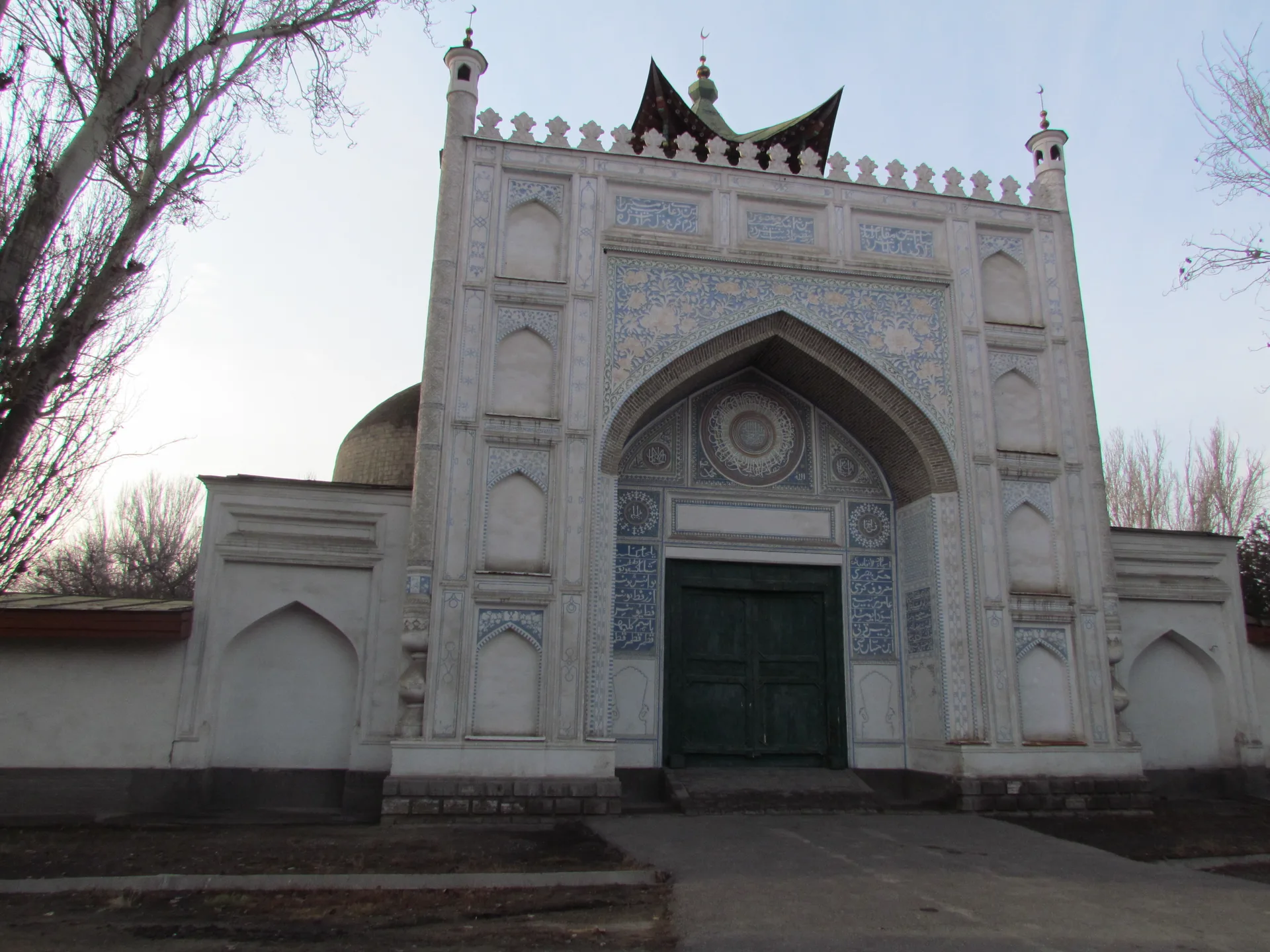
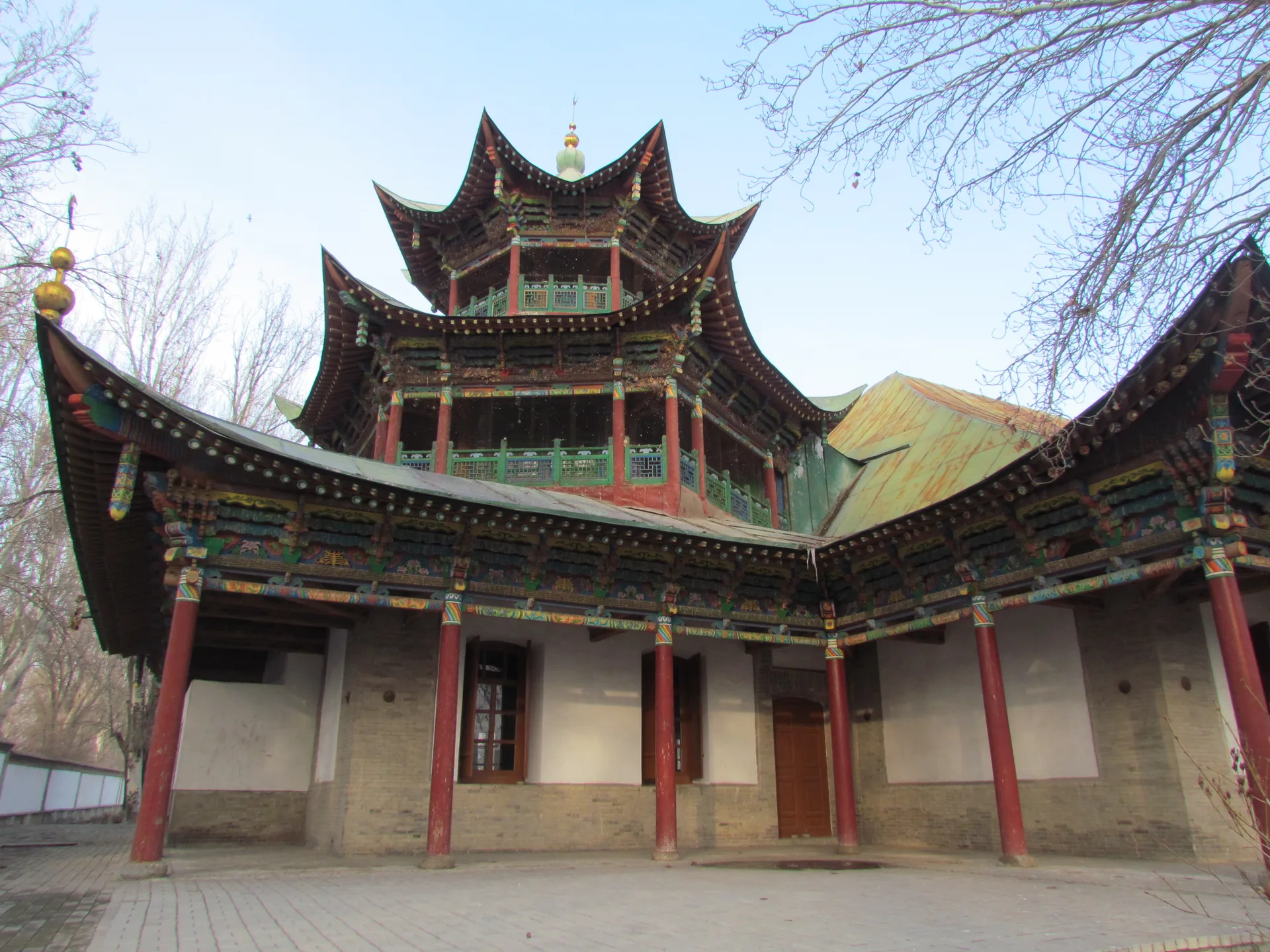
The Zharkent Mosque, completed in 1895, is a working prayer hall and state museum in one building. Chinese architect Hong Pik designed it in a style that grafts Islamic spatial logic onto the structural vocabulary of Chinese timber-frame construction: multi-tiered curved roofs, 122 interlocking spruce columns, mortise-and-tenon joinery throughout, and interior walls decorated with arabesque plant motifs alongside Chinese polychrome painting. No metal nails were used. The minaret stands 22 m and reads like a pagoda from a distance. The structure is 54.5 m long and 29 m wide and holds roughly 1,000 worshippers. It was designated a monument of republican significance in 1982.
The drive follows the A-351 highway east from Almaty, passing through Kapchagai (89 km) where the Kapshagay hydroelectric dam created the 180 km reservoir, then continues through arid steppe country before the road reaches Chunja (about 240 km from Almaty), the administrative centre of the Uyghur district. From Chunja the highway continues east to Zharkent, the district capital, 350 km from Almaty in total. The road is sealed tarmac the entire way and accessible to any vehicle.
The Uyghur community in Panfilov district traces its presence to the Treaty of Saint Petersburg (1881), which returned the Ili valley to the Qing Empire after Russian occupation. Between 1881 and 1884 an estimated 70,000–107,000 people — predominantly Uyghur farmers known as Taranchi — crossed into Russian territory, founding agricultural settlements in the Semirechye region. Six generations later the community numbers around 300,000 across Kazakhstan, retaining distinct cuisine, textile traditions, and spoken Uyghur. Zharkent's central street, Zhibek Zholy (Silk Road), reflects the town's historical trading position 20 km from the Khorgos border crossing. Practical services — fuel, small hotels, Uyghur-run restaurants, a covered bazaar — operate without issue.
The Ile valley microclimate, moderated by the river corridor, supports melon and grape cultivation that is absent from the drier steppe on either side. Small farms selling produce operate along the road south of Zharkent in late summer and autumn. A useful extension is the Altyn-Emel National Park entry at Basshi, 60 km north of Zharkent, reachable as a half-day detour before the return drive.
Route
Skip map, jump to step listWhere to sleep
- Night 1 of 1Satti Hotel ZharkentHotelMid-range
Budget · ~8–15k KZT/night. Mid-range · ~15–40k KZT. Premium · ~40k+ KZT.
Itinerary
Stop 1
Almaty
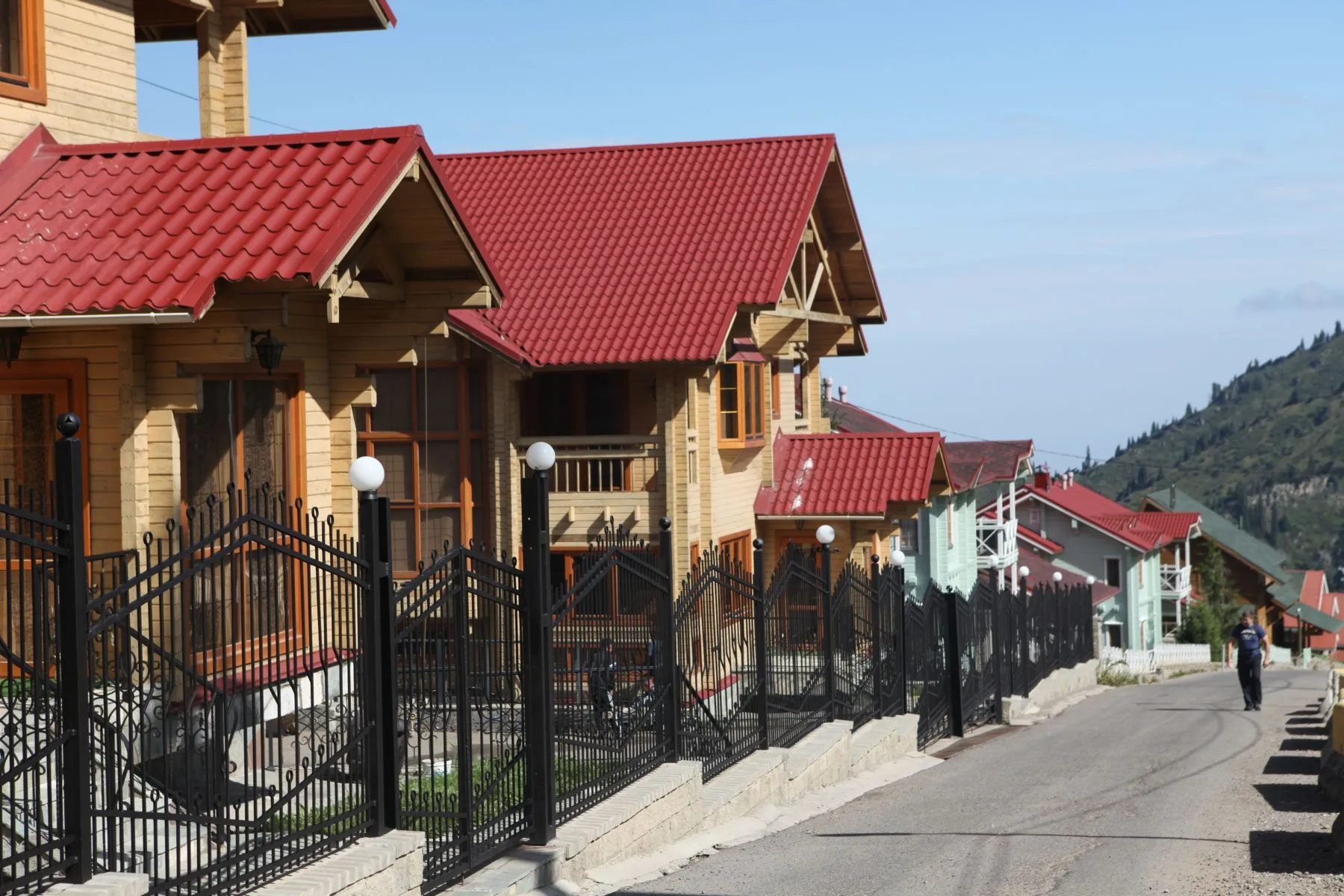
Departure point for the A-351 eastbound. The highway leaves Almaty through the Turksib district and passes a toll gate within the first 10 km. Morning traffic on the eastbound approach is manageable by 07:00. Fill the tank and buy provisions at the Carrefour on Al-Farabi or any petrol station on the eastern ring before joining the highway — the first reliable stop is Kapchagai, 89 km ahead across open steppe. Journey time to Zharkent is 4–4.5 hours without stops; the day works best with two deliberate pauses (Kapchagai and Chunja) rather than driving straight through.
Tip: Leave by 07:00 to reach Chunja before the midday heat. The A-351 toll near the city boundary accepts card but keep KZT on hand.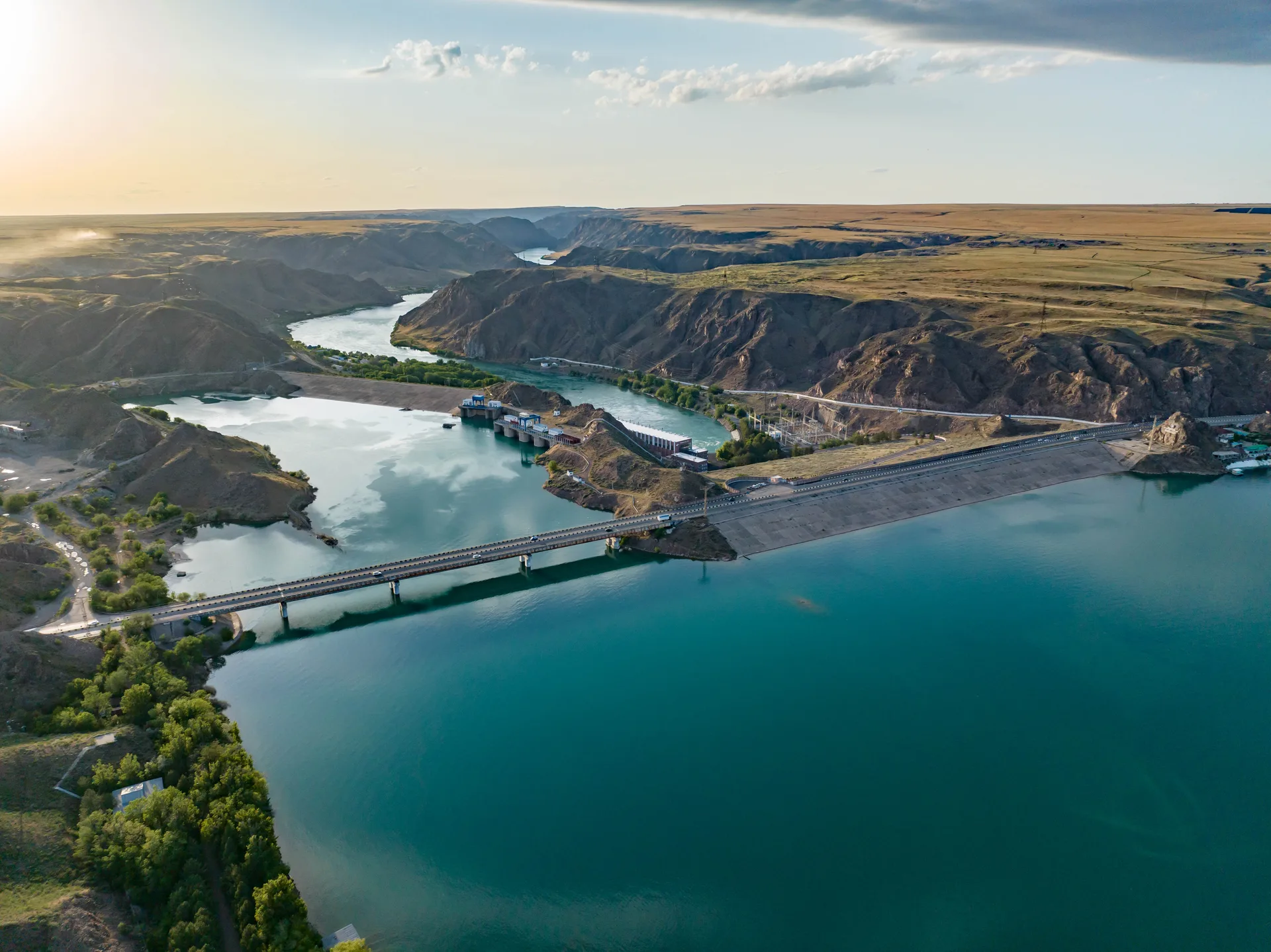
Stop 2
Kapchagai — Ile River crossing
- From previous:
- 89 km · 70 min drive
- Stay:
- ~0.5 h
89 km from Almaty, Kapchagai (now Qonaev) sits at the southern end of the Kapshagay Reservoir, where the Kapshagay hydroelectric dam — built 1965–1970, 364 MW capacity — created a 180 km lake from the Ile River. The town is primarily a weekend destination for Almaty residents, with beaches and waterparks on the reservoir shore. For this trip, it functions as a fuel and coffee stop: the petrol stations on the main road are modern and reliable. From Kapchagai the A-351 continues eastward across flatter, drier steppe, and the landscape opens considerably — the road is straight, traffic thins, and you are past the Almaty commuter belt.
Tip: Fuel here regardless of the gauge — the next reliable modern station is Chunja, 150 km east. The reservoir beaches are 5 km north off the main road if you want a 20-minute stretch.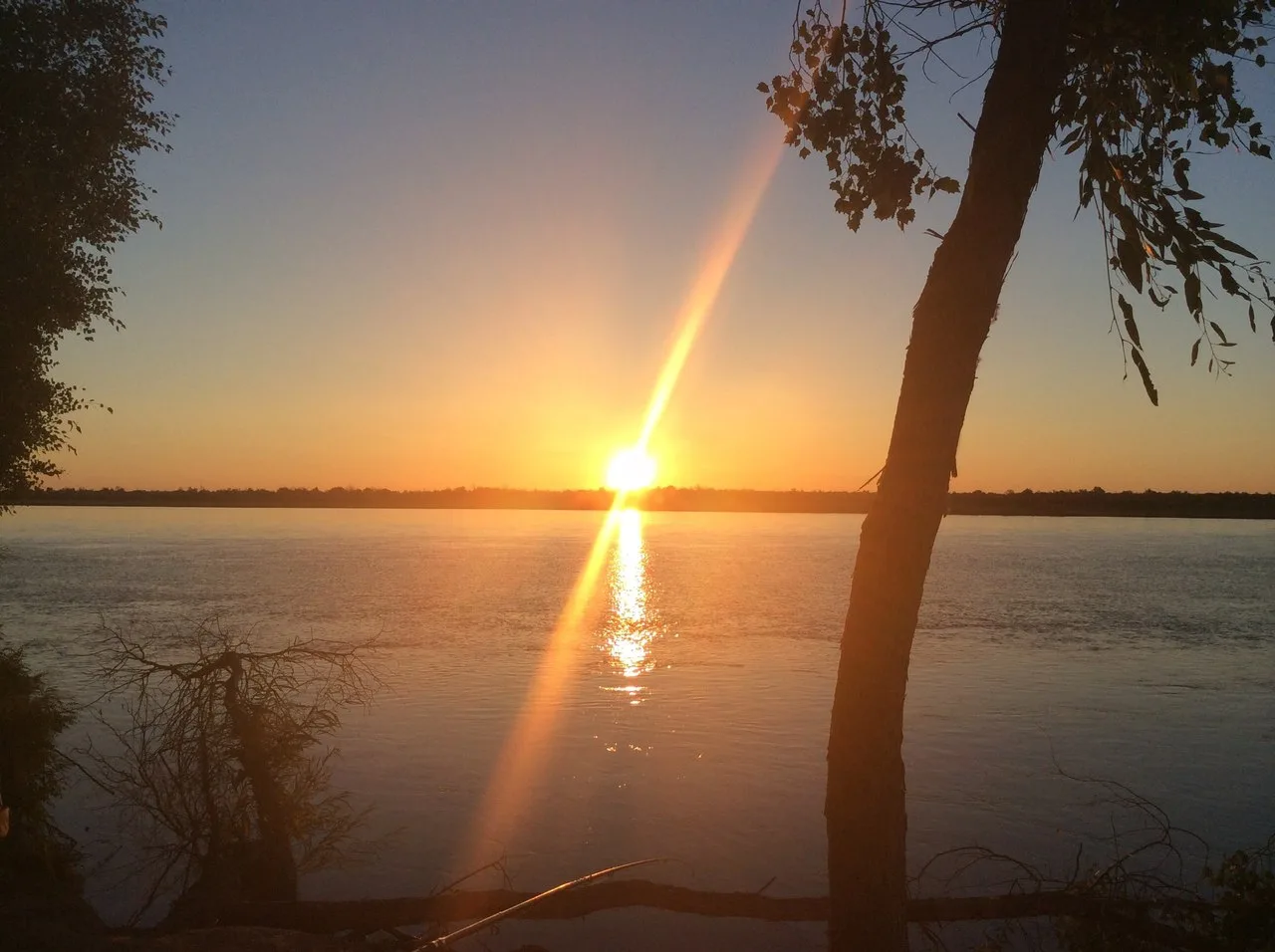
Stop 3
Chunja — Uyghur district centre
- From previous:
- 151 km · 100 min drive
- Stay:
- ~1.5 h
Chunja (also spelled Chundzha) is the administrative centre of the Uyghur district of Almaty Region, roughly 240 km from Almaty. The town has about 20,000 residents and is the clearest introduction to the Uyghur corridor before Zharkent. Along the main street a small bazaar operates daily selling produce, flatbreads, and household goods. Laghman — hand-pulled wheat noodles in a lamb-and-vegetable broth — is the staple meal in the teahouses along the central block; samsa (baked pastry with meat or pumpkin) is sold from street stands. The Ile valley microclimate here already differs from the steppe to the west: more greenery, some tree cover along the river channels, and roadside melon sellers in summer. The hot springs resort south of town is a popular local weekend destination but is off the route for this trip.
Tip: Eat lunch here rather than Zharkent — Chunja's teahouses are less tourist-facing and portions are generous. Cash only. Uyghur nan bread (round, thick, decorated with a stamp pattern) is sold near the bazaar and travels well.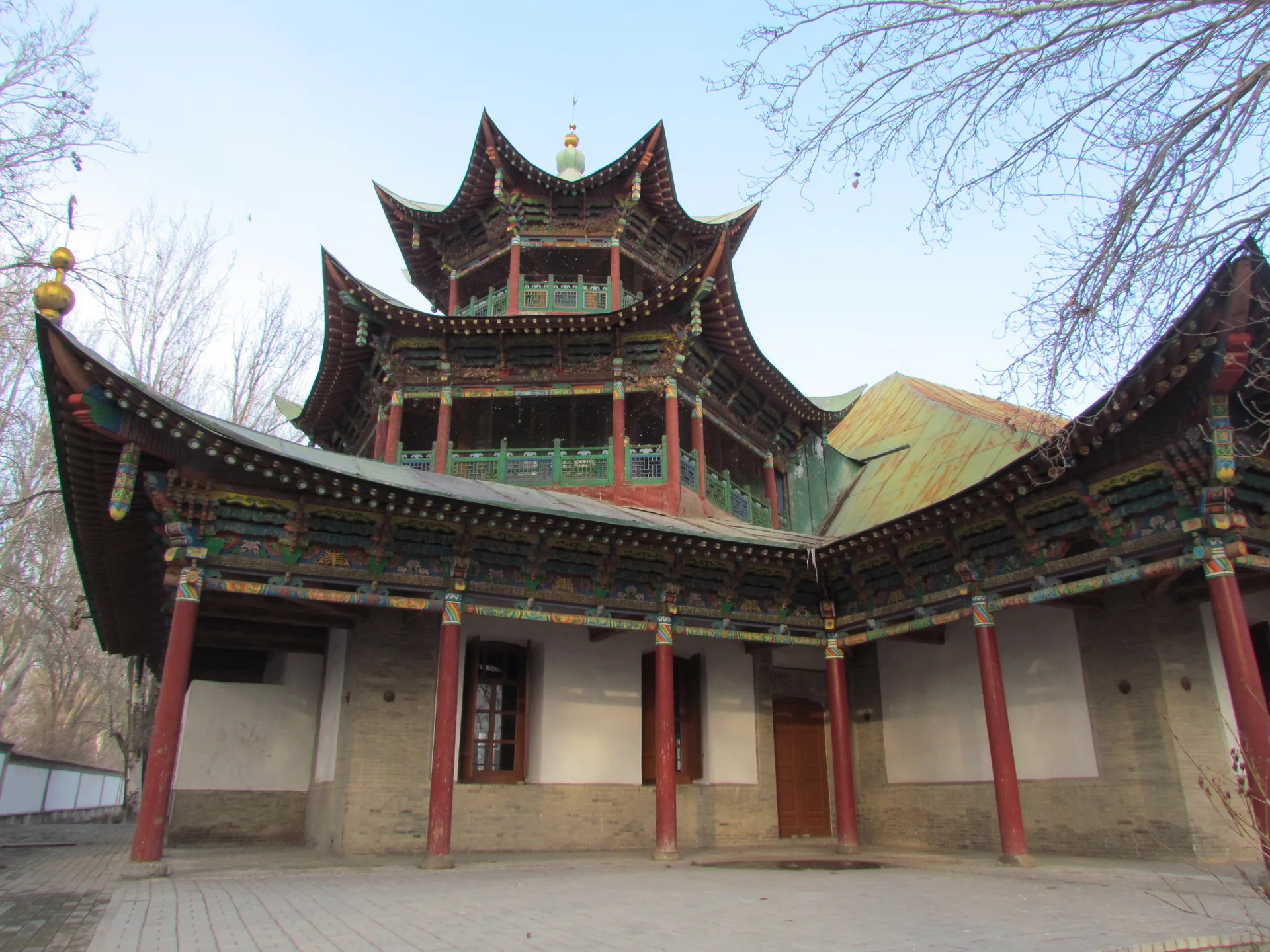
Stop 4
Zharkent Mosque
- From previous:
- 110 km · 80 min drive
- Stay:
- ~1.5 h
The Zharkent Mosque stands near the centre of Zharkent, 350 km from Almaty. Construction ran from 1892 to 1895, funded by merchant Vali Akhun Yuldashev and designed by Chinese architect Hong Pik. The brief was to build without metal nails using timber from the Aksu and Ketmen mountains. The result is a 54.5 m × 29 m wooden structure on 122 interlocking spruce columns, with multi-tiered curved roofs that follow Chinese timber-frame conventions while housing an Islamic prayer hall. The minaret, 22 m tall, is visible from the main road. Interior walls carry arabesque floral motifs, Quranic Arabic script, and painted birds and animals — the decorative vocabulary shifts registers across the room. The mosque survived a 1910 earthquake, underwent major restoration in 1975–1978, and received a 26-million-tenge repair in 2001–2004. Since 1982 it has held republican-significance monument status. It functions simultaneously as an active mosque and as an architectural museum with paid admission.
Tip: Remove shoes at the prayer hall entrance. Women should cover their heads and shoulders. The museum section and prayer hall are accessible simultaneously — the attendant can explain which areas are open for visitors. No photography rules are posted but ask before photographing worshippers.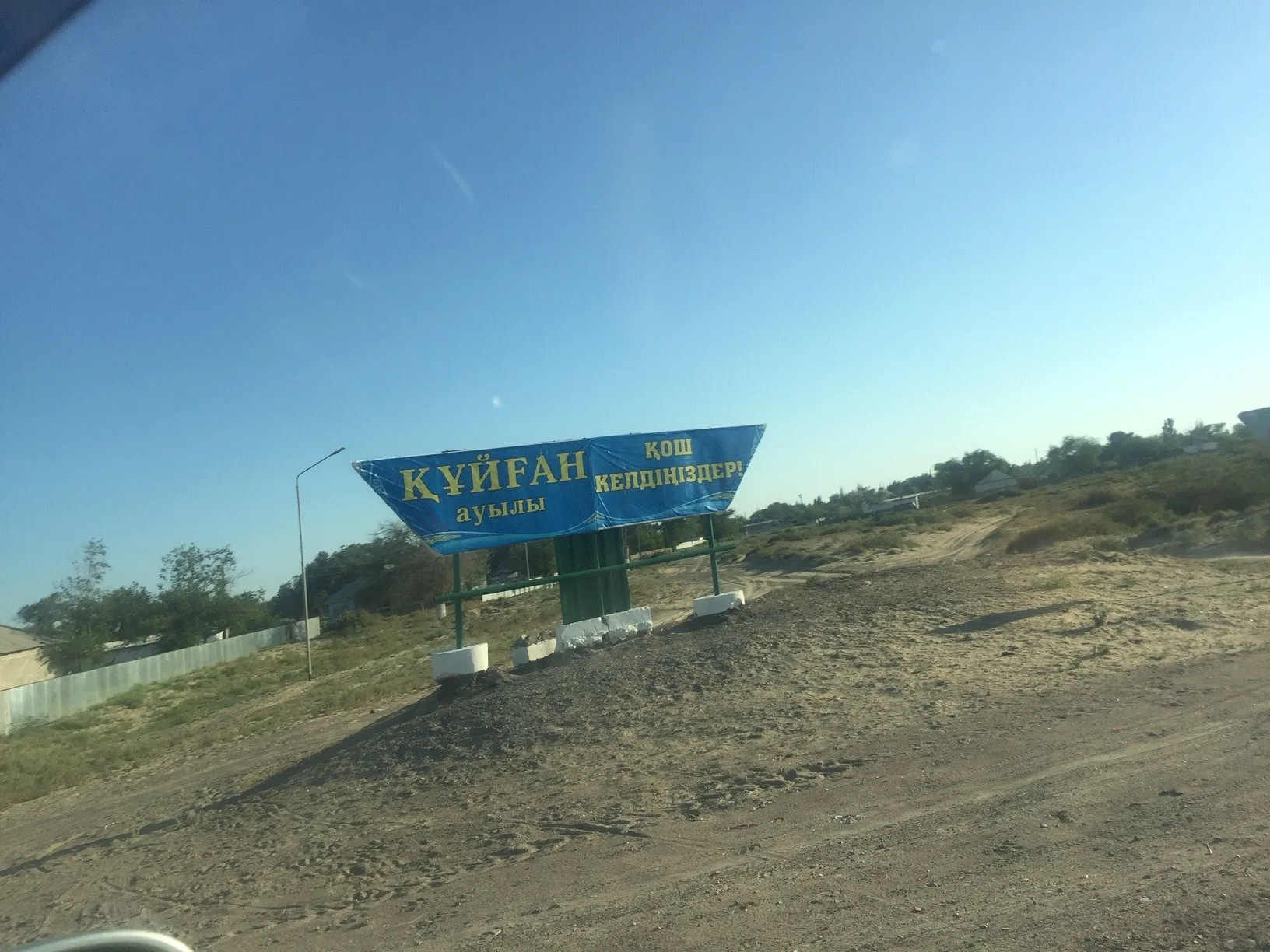
Stop 5
Zharkent bazaar — Zhibek Zholy
- From previous:
- 1 km · 5 min drive
- Stay:
- ~1 h
Zhibek Zholy (Silk Road) street is Zharkent's main commercial corridor, running south from the mosque area through the town centre. The covered bazaar, a few minutes' walk from the mosque, sells produce, dry goods, household items, and prepared food. The contrast between Kazakh and Uyghur material culture is legible at the stalls: Uyghur flatbreads, dried mulberry, walnut honey, and handmade noodle products sit alongside standard Kazakh market goods. Zharkent's position 20 km west of the Khorgos border crossing with China means the bazaar also stocks Chinese-manufactured goods — kitchen equipment, textiles, electronics — at lower prices than Almaty. The covered section closes by 18:00; outdoor stalls run earlier. Zharkent has a small-town rhythm: nothing is fast, but the town is safe and functional with a fuel station, several small hotels, and mobile coverage throughout.
Tip: The bazaar accepts KZT only — no cards. Dried mulberry (tut) and walnut preserves make good road-trip provisions. If you plan to visit the nearby Altyn-Emel Singing Dune the following day, this is the last well-stocked market before the park.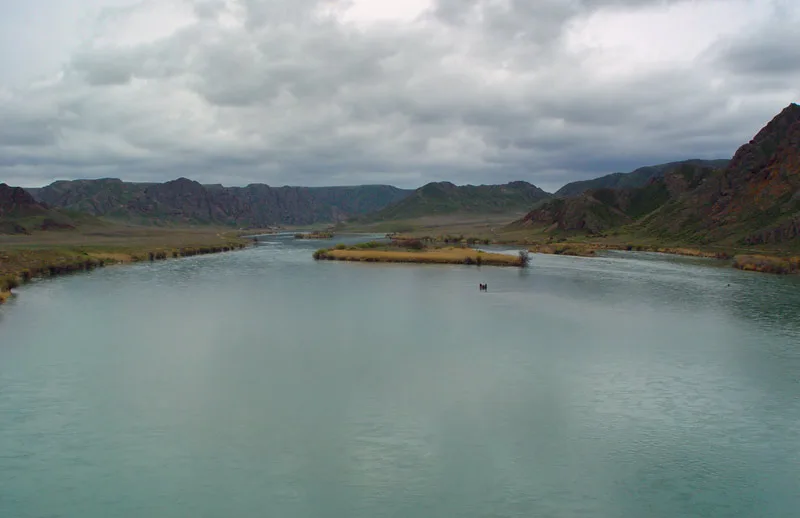
Stop 6
Ile valley — grape and melon corridor
- From previous:
- 15 km · 20 min drive
- Stay:
- ~0.5 h
The road south of Zharkent toward the Ile River runs through a microclimate zone unlike the surrounding steppe. The Ile valley floor, at roughly 600–700 m elevation, receives enough moisture from the river corridor to support viticulture and melon cultivation that is absent 30 km in either direction. In late summer (August–September) roadside sellers set up under canvas awnings selling Panfilov district melons — round, yellow-skinned varieties — and table grapes from local plots. Wine production exists on a small scale; Kazakhstan's oldest winemaking artifacts were found in this district. The agricultural strip is 15–20 km long before the terrain reverts to open steppe. This section works as a scenic afternoon stop and a practical place to buy fresh produce for the overnight stay.
Tip: Melon season is August–September. Outside those months the roadside sellers are absent, but the drive through the valley is still worthwhile. The river access tracks are suitable for sedan on dry days.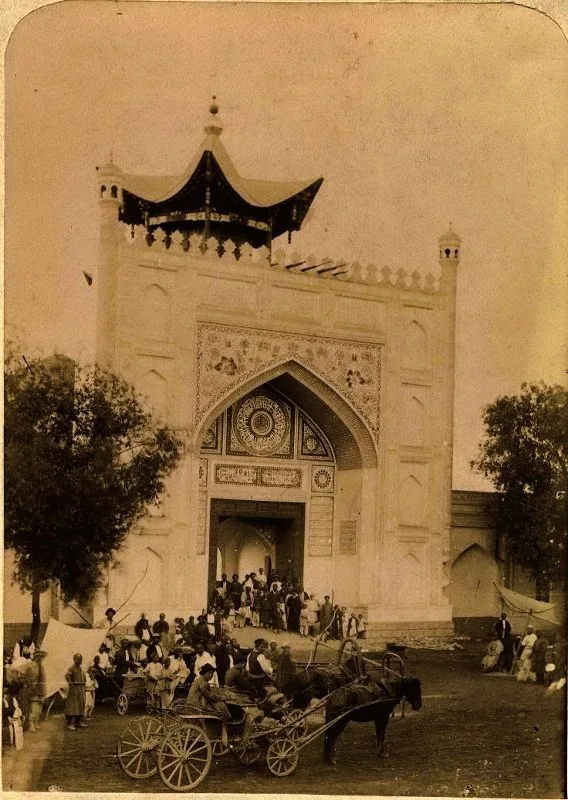
Stop 7
Overnight — Zharkent
- From previous:
- 15 km · 20 min drive
- Stay:
- ~10 h
Zharkent has several small hotels and guesthouses, including family-run operations that function as basic homestays. Room rates run from approximately 5,000–12,000 KZT per night for a double. Facilities are simple: private or shared bathroom, Wi-Fi of variable reliability, and a breakfast of bread, eggs, and tea. The town is quiet after 21:00. A handful of small restaurants on Zhibek Zholy serve Uyghur cuisine into the evening — laghman, goshnan (layered meat bread), and chuchvara (Uyghur dumplings). There is no nightlife district. The mosque minaret is illuminated after dark and visible from the central streets. Booking accommodation by phone (Russian required) or via Booking.com is both viable; walk-in is usually possible except on major Kazakh public holidays.
Tip: Book accommodation at least two days in advance via Booking.com or a direct phone call. If you want a homestay experience with a Uyghur-speaking host, asking the mosque caretaker or bazaar vendors for a recommendation often works.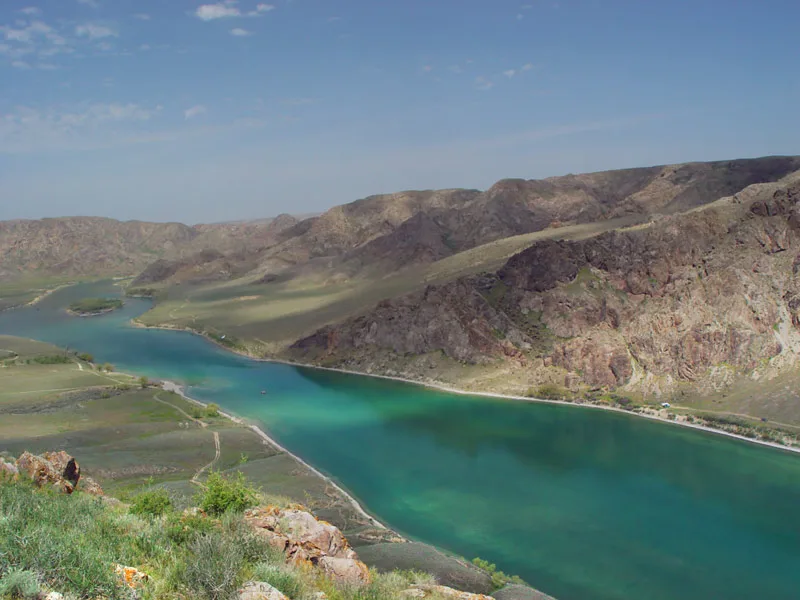
Stop 8
Return to Almaty via A-351
- From previous:
- 350 km · 270 min drive
The return drive retraces the A-351 westbound for 350 km back to Almaty, taking 4–4.5 hours without stops. Morning departure between 07:00 and 08:00 puts you back in Almaty by early afternoon before the city traffic builds. The road runs through the same steppe corridor but the light is different heading west: the Dzungarian Alatau peaks are behind you and the Trans-Ili Alatau gradually fills the windscreen from 100 km out. A stop at the Kapchagai reservoir shore is easy to slot in for coffee. If you didn't visit Chunja's bazaar on the way out, the stop makes sense on the return. Alternative: from Zharkent, a short detour north to the Altyn-Emel National Park Basshi gate adds 60 km but requires an overnight in the park — possible only if a third day was planned.
Tip: Fuel in Chunja (240 km from Zharkent / 110 km from Almaty) if the tank is under half. The toll near the Almaty edge requires KZT or a card. City traffic is heavy from 16:00 onward — aim to clear the ring road by 15:00.
Night 1 of 1 · after Step 7: Overnight — Zharkent
Satti Hotel Zharkent
A small Zharkent hotel option in the town core, close to the mosque and bazaar. It keeps the overnight in Zharkent itself rather than turning the route into a highway stop farther west.
- Private rooms
- Town-center access
Town-center stay; use as the main overnight for the Zharkent heritage trip.
What to bring
- Cash in KZT (mosque entrance fee, bazaar, Uyghur restaurants)
- Water (2 L per person — steppe stretch between Kapchagai and Chunja is hot in summer)
- Modest clothing for mosque visit (headscarf for women, no shorts)
- Offline map downloaded (Yandex Maps covers this corridor well)
- Sun hat and sunscreen (flat steppe driving)
- Snacks for the road (limited options between Kapchagai and Chunja)
- Camera with lens cloth (dusty in summer)
- Power bank
- Russian phrasebook or translator app (English is limited in Zharkent)
Sources
Researched from English and Russian sources. Inaccuracies are mine.
- https://en.wikipedia.org/wiki/Jarkent_Mosque
- https://en.wikipedia.org/wiki/Uyghurs_in_Kazakhstan
- https://en.wikipedia.org/wiki/Kapchagay_Reservoir
- https://silkadv.com/en/content/history-zharkent-mosque
- https://central-asia.guide/kazakhstan/destinations-kz/zharkent/
- https://central-asia.guide/kazakhstan/destinations-kz/chunja-hot-springs/
- https://qazaqadventure.com/zharkent-mosque/
- https://flagma.kz/en/distance-zharkent-almaty/
- https://ru.wikipedia.org/wiki/%D0%94%D0%B6%D0%B0%D1%80%D0%BA%D0%B5%D0%BD%D1%82%D1%81%D0%BA%D0%B0%D1%8F_%D0%BC%D0%B5%D1%87%D0%B5%D1%82%D1%8C
Similar trips
Day trip
Issyk Lake
A turquoise alpine lake at 1,756 m in the Ile-Alatau foothills, 72 km from Almaty — a rewarding half-day drive through the Issyk Gorge, with forested shores, a reconstructed dam, and the nearby Saka 'Golden Man' burial mounds.
Day trip
Medeu & Shymbulak
The Ile-Alatau mountains rise straight from Almaty's southern edge; drive 17 km up the gorge and you reach Medeu's famous high-altitude ice rink, then a gondola carries you another 1,500 m to Talgar Pass at 3,200 m.
Day trip
Sorbulak Lake and Ile Delta Birding
Lake Sorbulak — a sewage-fed reservoir 40 km north of Almaty that became Central Asia's most species-rich inland birding site — hosts breeding Dalmatian pelicans, staging greater flamingos, and over 20 Red-Listed species during spring and autumn migration.