Before you go
- Vehicle
- Sedan is fine
- Permit
- Not required
- Peak altitude
- 650 m
- Cell coverage
- Good
- Fuel
- Fill up in Almaty before departure. Kapchagai city (80 km from Almaty) has several filling stations near the main road if needed on the return leg.
- Road status
- The A350 ring road and M-36 to Kapchagai are fully paved. Access tracks along the Sorbulak dam berm are compacted gravel, passable to any sedan in dry conditions. Avoid the western embankment track after heavy rain.
About this trip
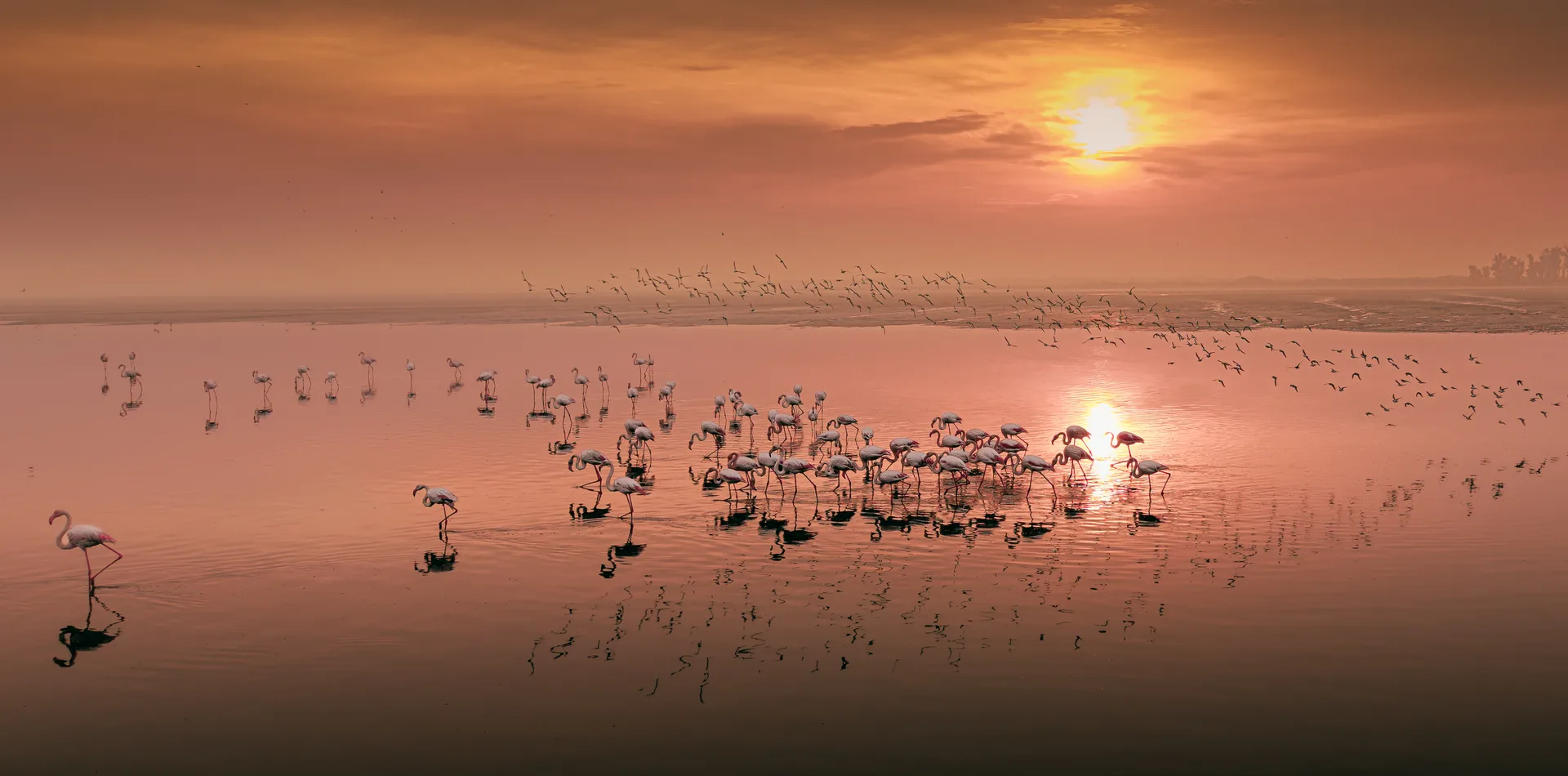
Sorbulak is a paradox on the steppe. Built between 1969 and 1985 to receive treated wastewater from Almaty and surrounding towns, the 55 km² reservoir sits in a closed depression on the Karaoy plateau, its shoreline fringed by dense Phragmites australis reed beds up to four metres tall. What might read as an environmental liability has become an ecological windfall: the nutrient-rich water feeds a food chain dense enough to support one of the largest Dalmatian pelican (Pelecanus crispus) colonies in Kazakhstan — up to 300 pairs in summer — alongside great white pelicans, greater flamingos (Phoenicopterus roseus), black-winged stilts, ruddy shelducks, and at least 20 species listed in Kazakhstan's Red Book. BirdLife International recognises the Sorbulak Lake System as an Important Bird Area.
The peak windows are April–May for northward flamingo passage and early August–September for the southward return, when wader diversity peaks and juvenile pelicans join the adults on the open water. Summer brings breeding species — Black-winged Stilt, Collared Pratincole, Gull-billed and Common Terns, and the secretive Great Bittern — but the midday heat is punishing and shimmering light limits optics. Winter sees Whooper Swans and large raptor concentrations on the ice margins. The lake is accessible year-round but the two migration shoulders are the clear priority.
The drive from central Almaty takes 40–50 minutes northbound via the A350 ring road and then the M-36 highway toward Kapchagai. A second wetland complex is accessible at the Ile River delta where the river enters Kapchagai reservoir, roughly 80 km from Almaty. The delta hosts its own pelican and cormorant colonies and is worth the additional 40-minute drive, especially in spring when water levels in the delta channels are high. All roads are paved; a sedan handles the full circuit without difficulty.
No formal entrance fee applies to the Sorbulak perimeter roads, but the reservoir is an operational wastewater facility — access tracks along the dam berm and south shore exist but are not signposted. A spotting scope (20–60x) is more useful than binoculars at the open-water pelican zone, where birds sit 300–500 m from the nearest bank. The closest birding guiding outfit is Silk Road Birding in Almaty, who run regular half-day and full-day Sorbulak sessions.
Route
Skip map, jump to step listItinerary
Stop 1
Almaty — North Ring Road Departure
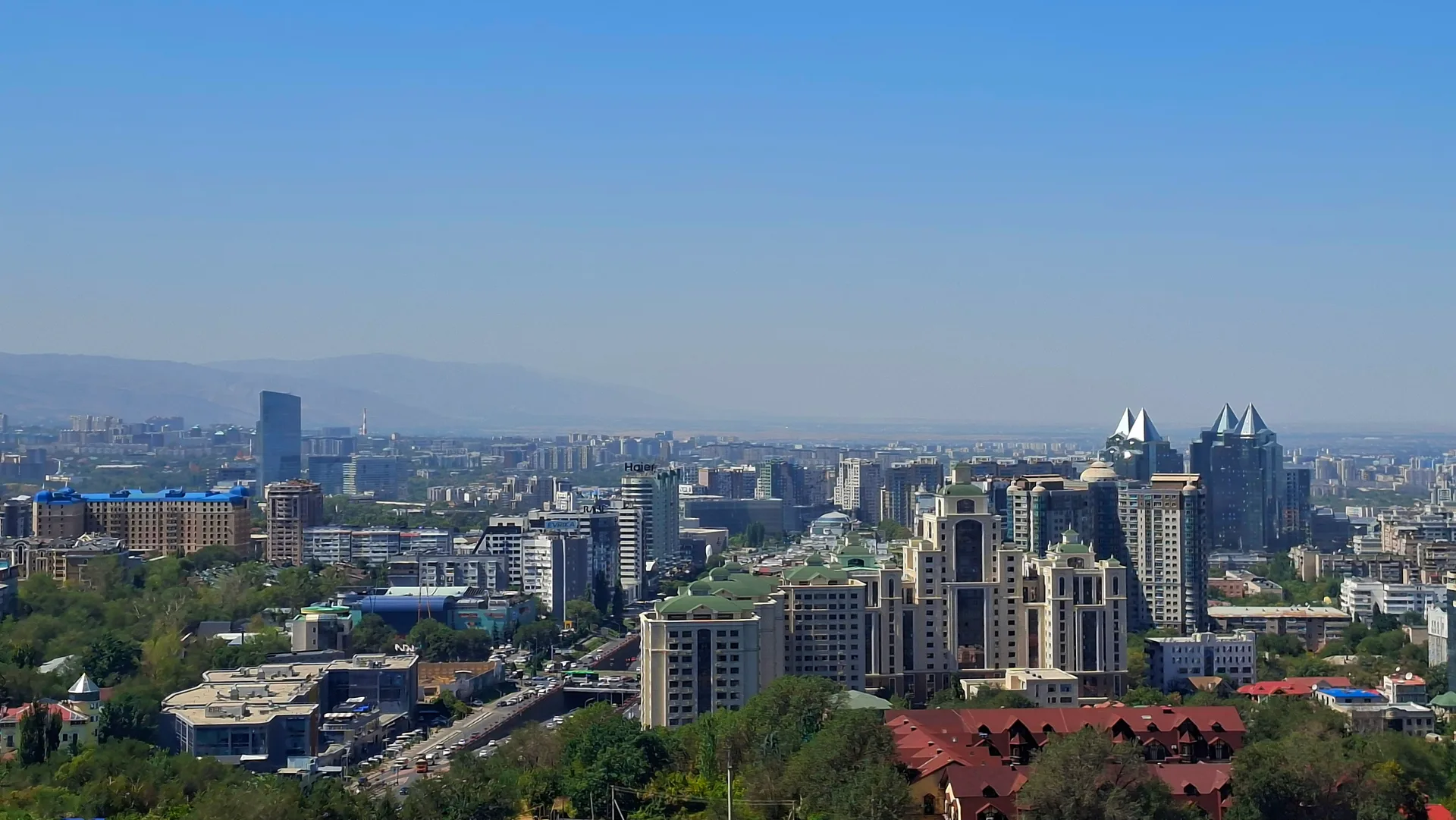
Leave central Almaty by 07:00 to reach Sorbulak in early morning light, when birds are most active and heat haze has not yet built up over the open water. Take the A350 northern ring road westbound, then merge onto the M-36 highway toward Kapchagai. The road climbs out of the Almaty basin onto the Karaoy plateau in about 20 km; the steppe opens up ahead. Fuel up before leaving the city — there are no reliable filling stations between the ring road junction and Kapchagai. Total drive to the Sorbulak south shore viewpoint is 40–50 minutes depending on traffic on the ring road.
Tip: Download the 2GIS offline map for Almaty Region before leaving — the access tracks to Sorbulak viewpoints do not appear on Google Maps. Setting '43.70, 76.95' as a waypoint in your navigation puts you near the south dam road.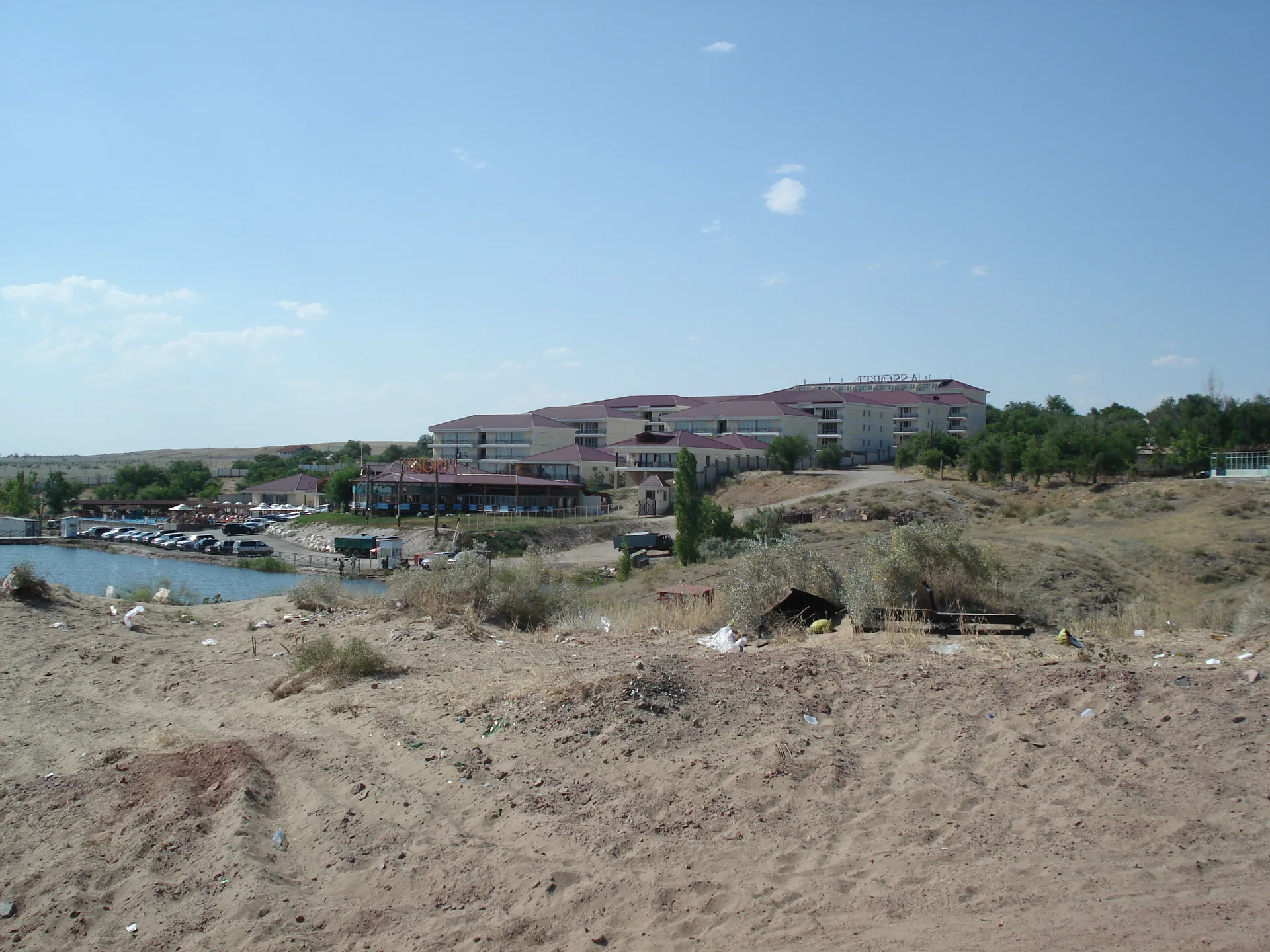
Stop 2
Sorbulak South Shore — First Overlook
- From previous:
- 43 km · 50 min drive
- Stay:
- ~1 h
The first view of Sorbulak hits without preamble: the track crests the dam berm and the full expanse of the lake opens below, water surface interrupted by the dark lines of reed beds and, in summer and spring, dense rafts of cormorants, coots, and ducks. This is the best vantage point for an overview scan — bring the scope here first. Dalmatian pelicans are typically visible from this point as a white mass 300–400 m offshore, distinguishable by their massive bulk and the russet breeding pouch at the base of the bill. Great cormorant colonies occupy reed platforms to the northwest.
Tip: The track along the berm is passable to sedans in dry conditions. If the ground is wet from recent rain, stop before the soft section rather than getting stuck — there is no recovery service within 10 km.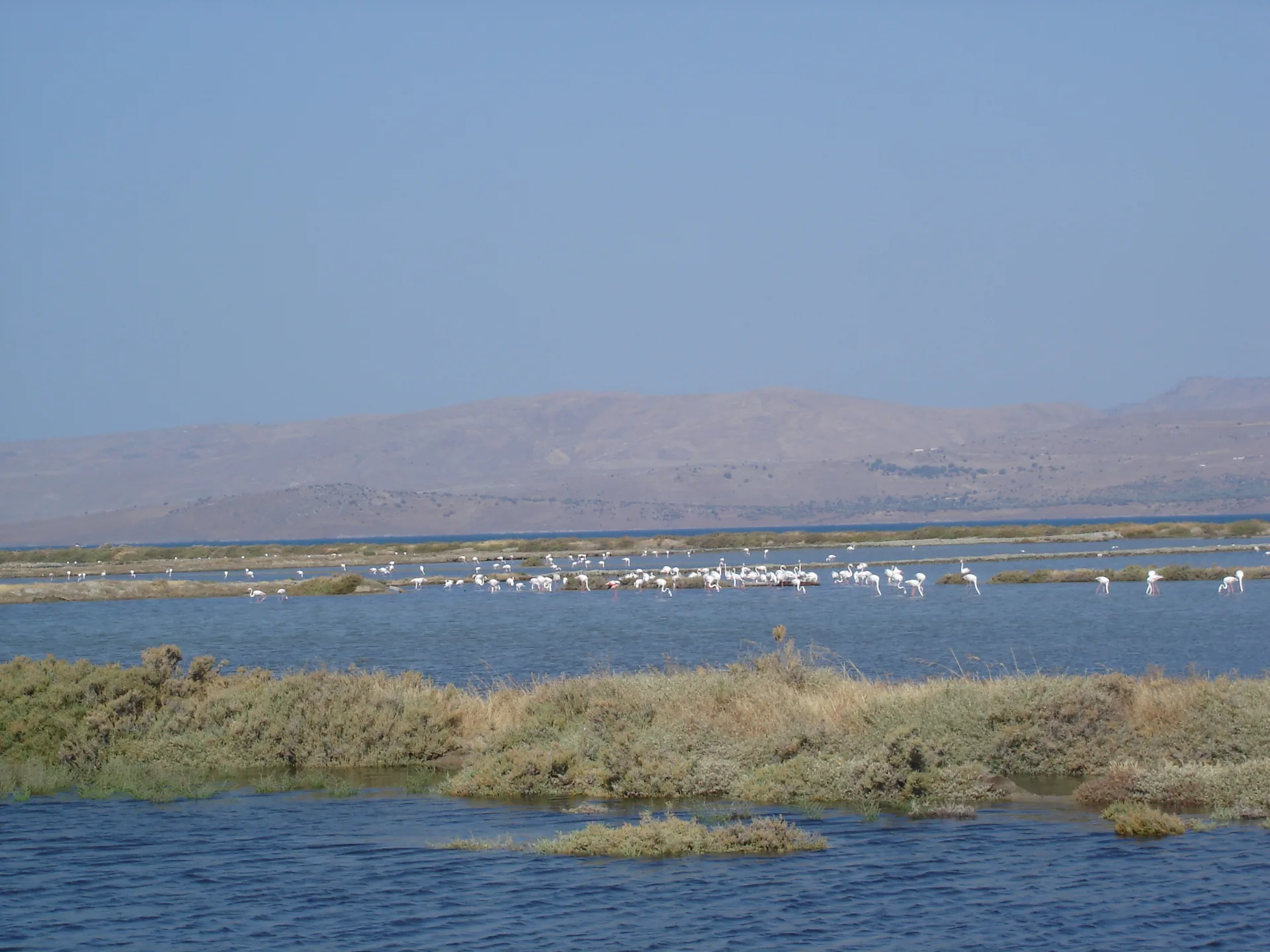
Stop 3
Flamingo Colony Viewpoint
- From previous:
- 2 km · 5 min drive
- Stay:
- ~1.5 h
Drive 1.5 km northwest along the south shore track to a slightly elevated bank where greater flamingos (Phoenicopterus roseus) are typically staged during April–May northward migration and again in August–September on the return south. Flocks range from a few dozen to several hundred birds, feeding in the shallow brackish shallows with their bills inverted, filtering algae and crustaceans. In some years, small numbers attempt to summer at Sorbulak, but most breed at the large Central Kazakhstan salt lakes — Tengiz, Chelkar-Teniz — and use Sorbulak as a staging point. The flamingos here are reliably seen in both migration windows and are not elusive.
Tip: Flamingos are present April–May and August–September. Outside these windows the viewpoint is still productive for shelducks, stilts, and waders, but plan the visit around migration dates for the flamingo spectacle.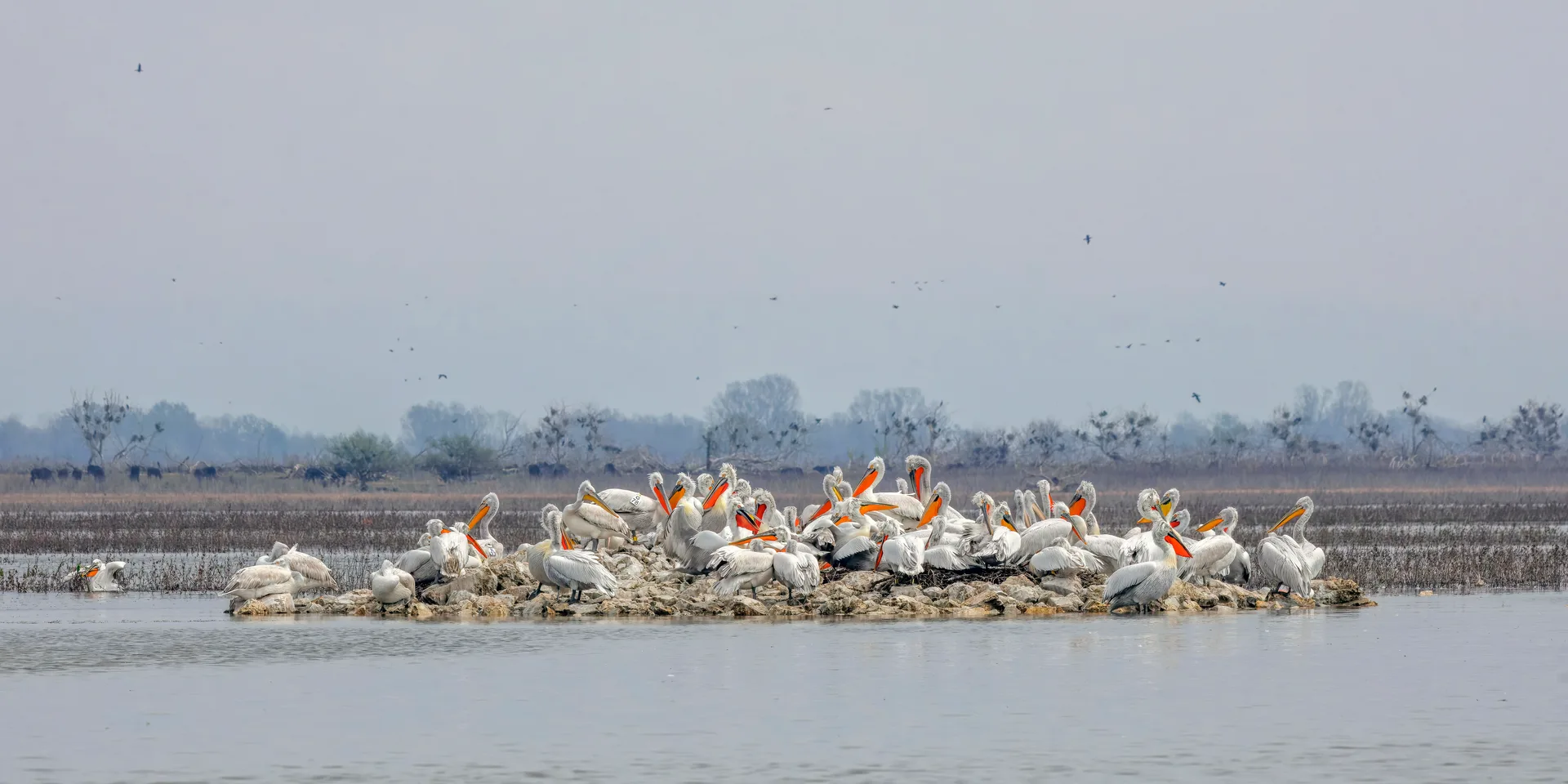
Stop 4
Open-Water Pelican Zone
- From previous:
- 3 km · 8 min drive
- Stay:
- ~1.5 h
The Dalmatian pelican (Pelecanus crispus) colony at Sorbulak supports up to 300 breeding pairs — one of the largest colonies in Kazakhstan for a globally vulnerable species with a world population of around 10,000 birds. From the east-shore access road, the pelicans are best viewed where the reed bed gives way to open water. Adult birds measure 160–180 cm in length with a wingspan up to 295 cm; the colony is audible from 200 m, a constant grunting and bill-clattering. Great white pelicans (Pelecanus onocrotalus) share the same water and are visually distinguished by their pink-flushed white plumage and solid orange-yellow pouch. A scope is essential here — birds rarely approach closer than 200–300 m.
Tip: Do not approach the reed island breeding platforms — flushing the colony causes nest abandonment. Keep 300 m minimum distance and observe from the track. A 400 mm equivalent lens is the minimum for frame-filling shots.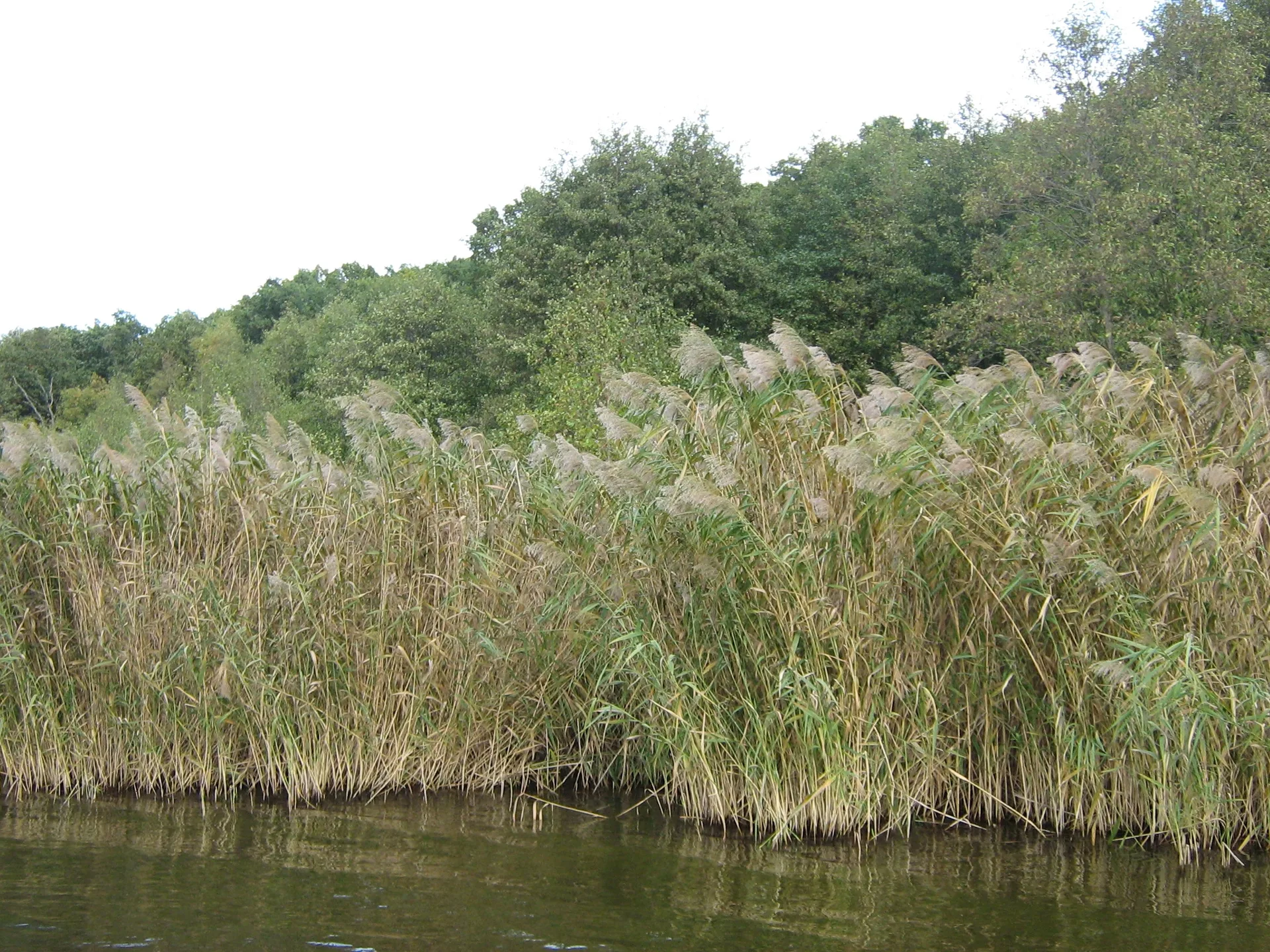
Stop 5
Reed Marsh Edge — Passerine Walk
- From previous:
- 1 km · 3 min drive
- Stay:
- ~1.5 h
The reed beds lining the south and east shores of Sorbulak stretch several hundred metres from water's edge and hold a separate suite of species from the open water. Walk the reed margin slowly in the first two hours of daylight to find Great and Little Bitterns flushing from the reeds, Water Rail skulking at the edge, and Reed Warblers and Clamorous Reed Warblers singing from the stems. Marsh Harriers quarter the reed tops continuously. The fringing scrub and tamarisk belts inland from the reeds attract migrants in spring and autumn — Thrush Nightingale, Bluethroat, Common Rosefinch, and occasionally Eastern Olivaceous Warbler. The walk is 1–2 km along a firm track.
Tip: Mosquitoes are severe from May through September along the reed edge. DEET-based repellent is more effective than alternative formulations here. Walk in silence and stop frequently — the bitterns and rails will not show themselves to someone moving at a steady pace.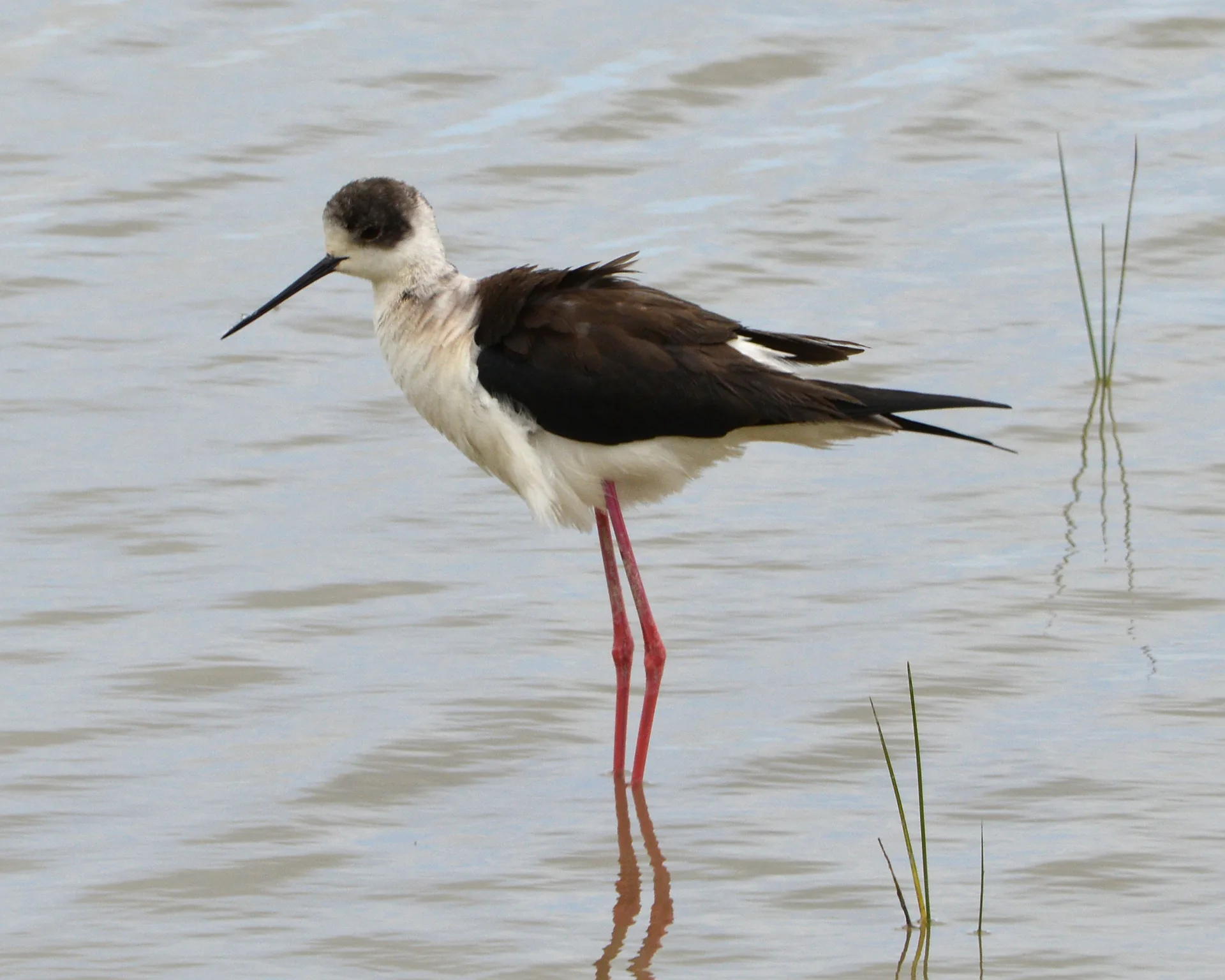
Stop 6
Brackish Pond — Wader Scrape
- From previous:
- 2 km · 5 min drive
- Stay:
- ~1 h
South of the main reservoir, a series of smaller brackish impoundments and damp hollows attract wading birds that prefer muddier, more exposed shorelines than the reed-fringed main lake. Black-winged Stilts (Himantopus himantopus) breed here in loose colonies, their high-pitched 'kik-kik-kik' alarm call audible from the track. Collared Pratincoles perch on dry mud banks. During passage, the scrapes attract Terek Sandpiper, Lesser Sand Plover, Dunlin, Ruff, and in some years, Greater Sand Plover. White-headed Duck (Oxyura leucocephala) — a globally endangered stiff-tail — winters and occasionally summers on the deeper brackish pools.
Tip: The scrape access requires a short walk across open ground. Keep low when approaching — waders flush easily. Scan from the track edge before committing to a closer position.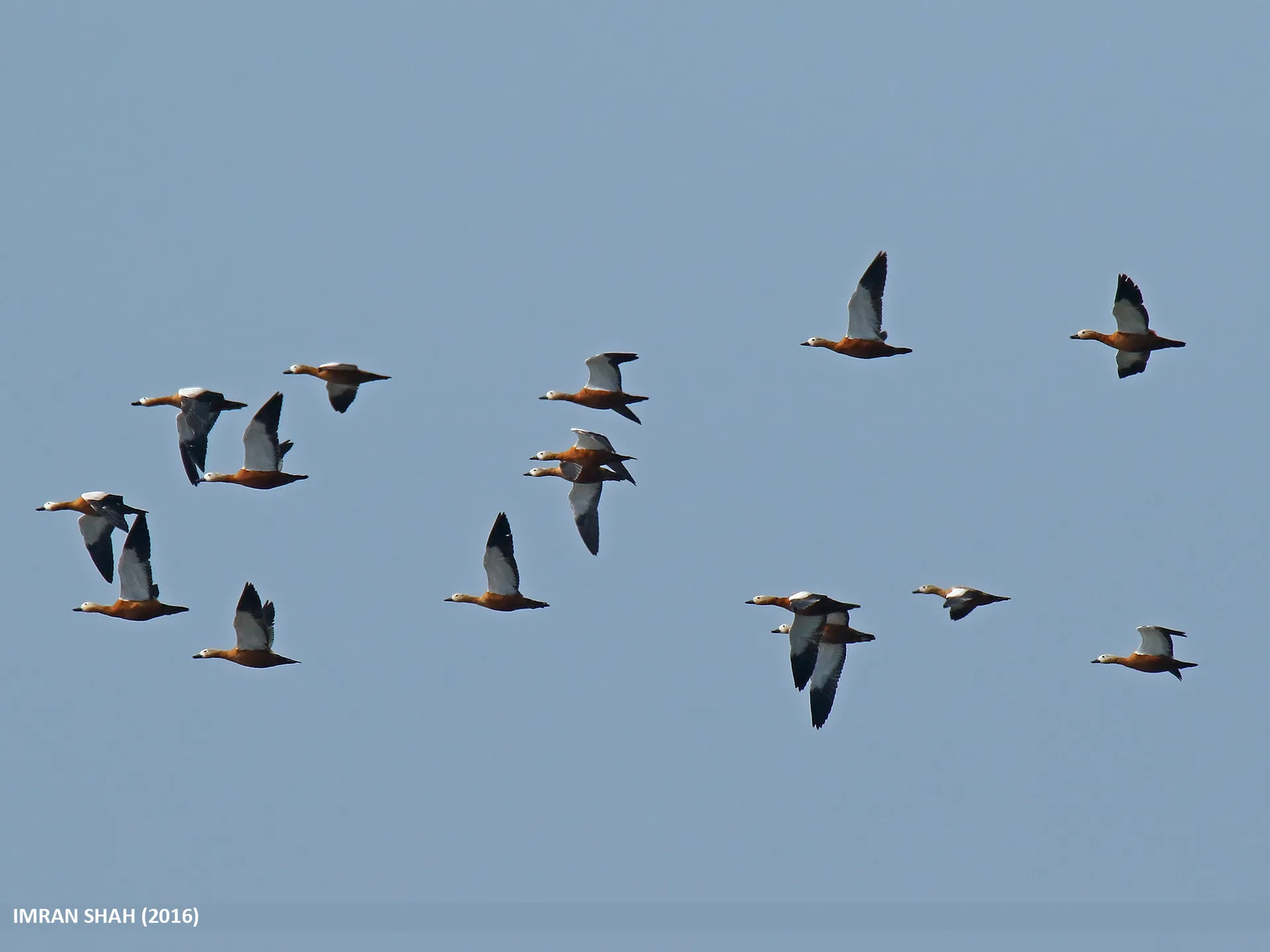
Stop 7
Ile Delta — Eastern Arm at Kapchagai Rim
- From previous:
- 45 km · 40 min drive
- Stay:
- ~1.5 h
The Ile (Ili) River enters the Kapchagai reservoir 40 km northeast of Sorbulak, forming a delta complex of reed channels, flooded scrub, and open water bays covering roughly 168,000 hectares — the largest wetland in Kazakhstan. From the eastern arm access road (turn east off the M-36 near the reservoir dam), the delta opens into a patchwork of islands and channels alive with breeding and migrating waterbirds. Both Dalmatian and Great White Pelicans nest in large colonies in the delta interior, and White-tailed Eagles (Haliaeetus albicilla) are almost guaranteed year-round. The drive from Sorbulak takes 40 minutes on the M-36 north.
Tip: The delta access road is paved to the reservoir viewing point but becomes gravel thereafter. Sedans can manage the first 3 km of gravel without difficulty. Park and walk the remaining section rather than risking a soft section.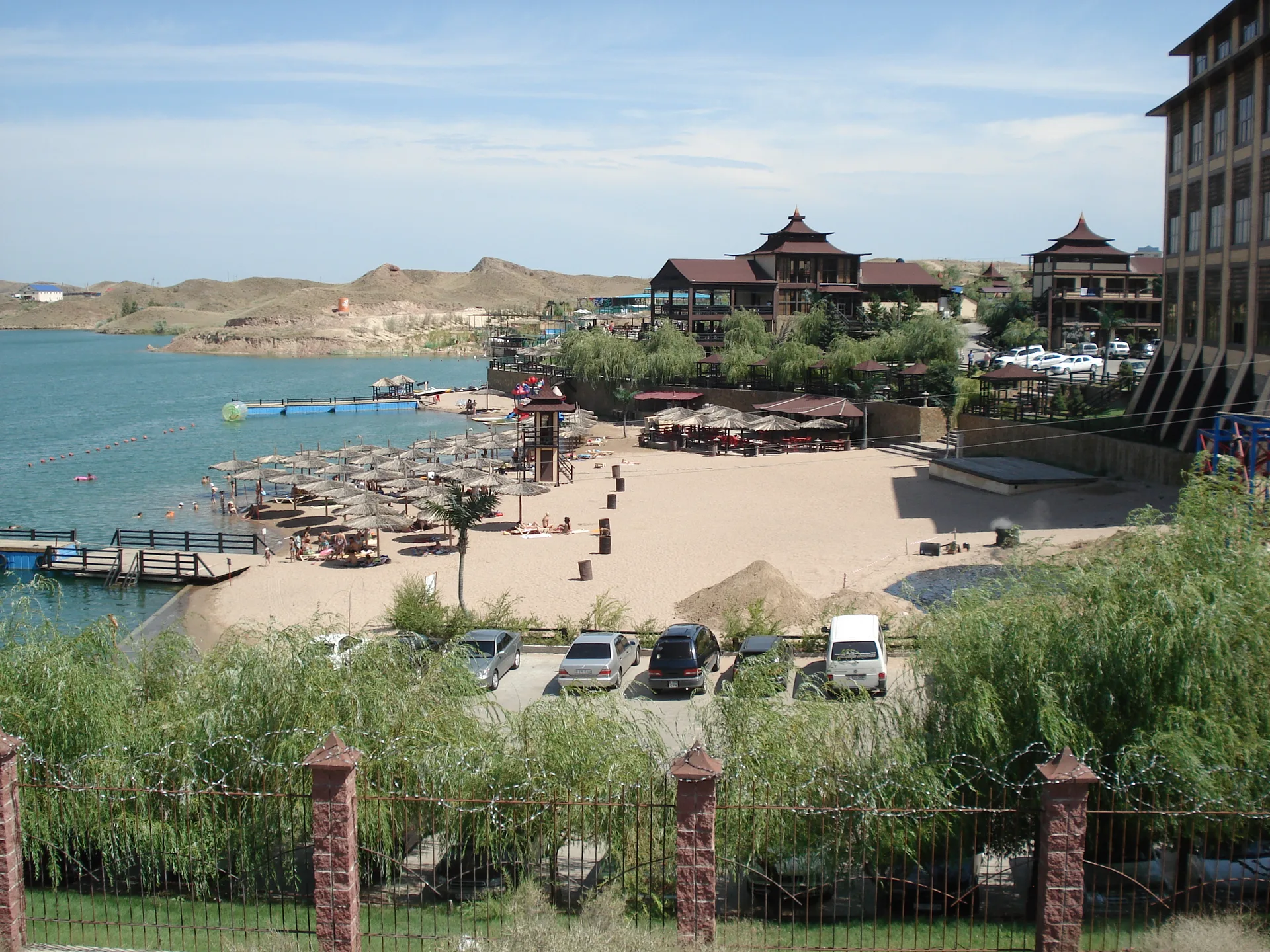
Stop 8
Return to Almaty via Kapchagai Road
- From previous:
- 62 km · 65 min drive
The return from the Ile delta to Almaty follows the M-36 southbound through Kapchagai city — a 90 km, 60-minute drive. The highway passes through open desert steppe with occasional saxaul stands and dry clay pans that themselves attract Pallid and Montagu's Harriers and Short-toed Eagles on passage. Kapchagai city has a petrol station and several roadside cafes at the main junction if a stop is needed. Back in Almaty the entire day circuit covers roughly 160 km. For those wanting an extended birding programme, Silk Road Birding (Almaty-based) runs guided half- and full-day Sorbulak excursions and can arrange transport.
Tip: Departing the Ile delta by 14:00 avoids Almaty afternoon rush hour, which backs up the A350 ring road from 16:30. The drive into the city from the north ring road junction takes 20 minutes at midday, 45 minutes at peak.
Extend to overnight
Victoria Hotel & SpaHotelMid-range· Private rooms
Victoria Hotel & Spa
A full-service Konaev hotel that works as a shared base for both reservoir leisure and early birding departures. It still fits Kapchagai days while keeping the Sorbulak and delta roads practical.
- Private rooms
- Spa
- Town access
Use as the main Konaev base for both the Kapchagai-Tamgaly-Tas and Sorbulak routes.
Also featured on: Kapchagai Reservoir & Tamgaly-Tas
Hotel Ily KonaevHotelBudget· Private rooms
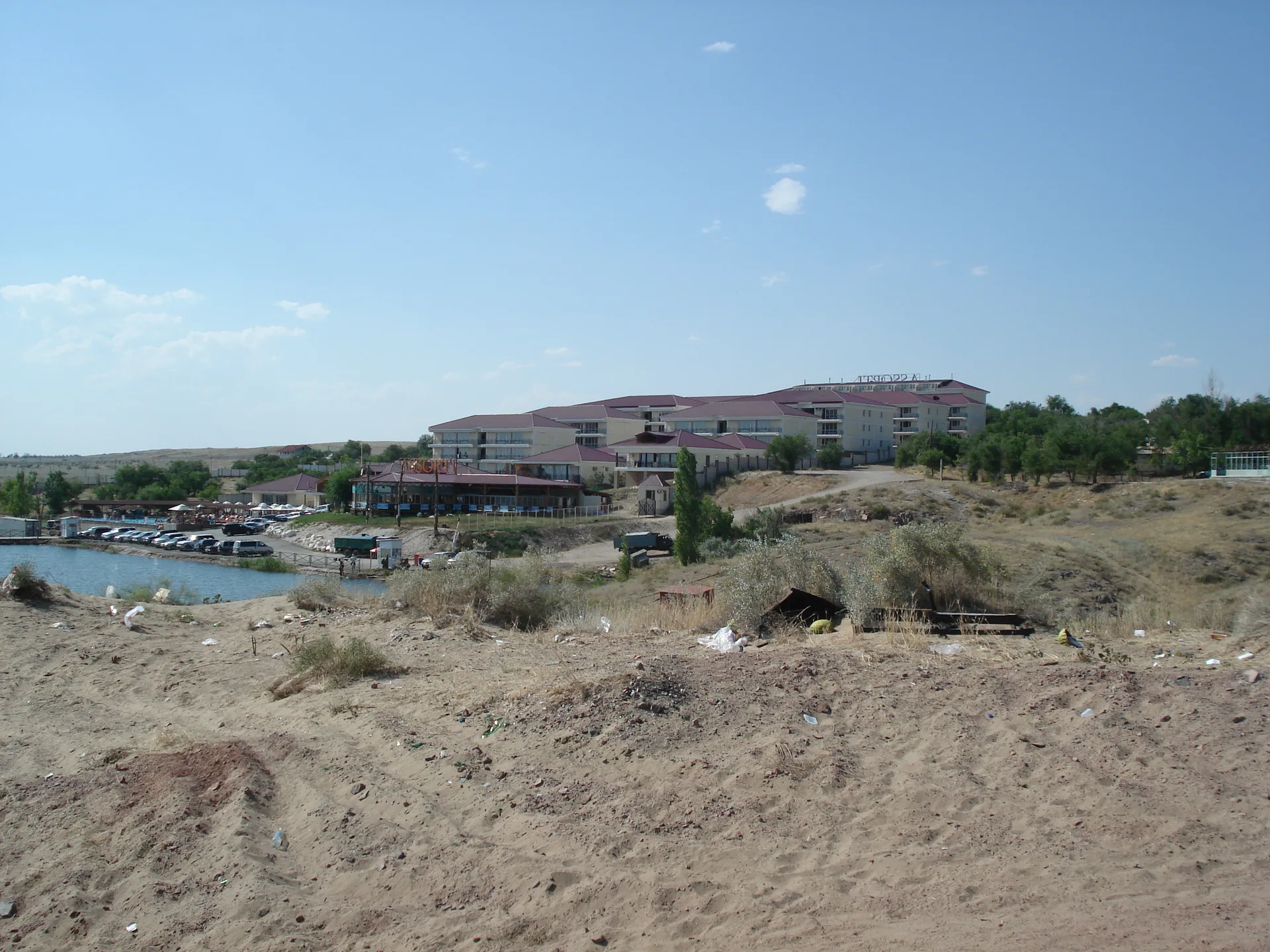
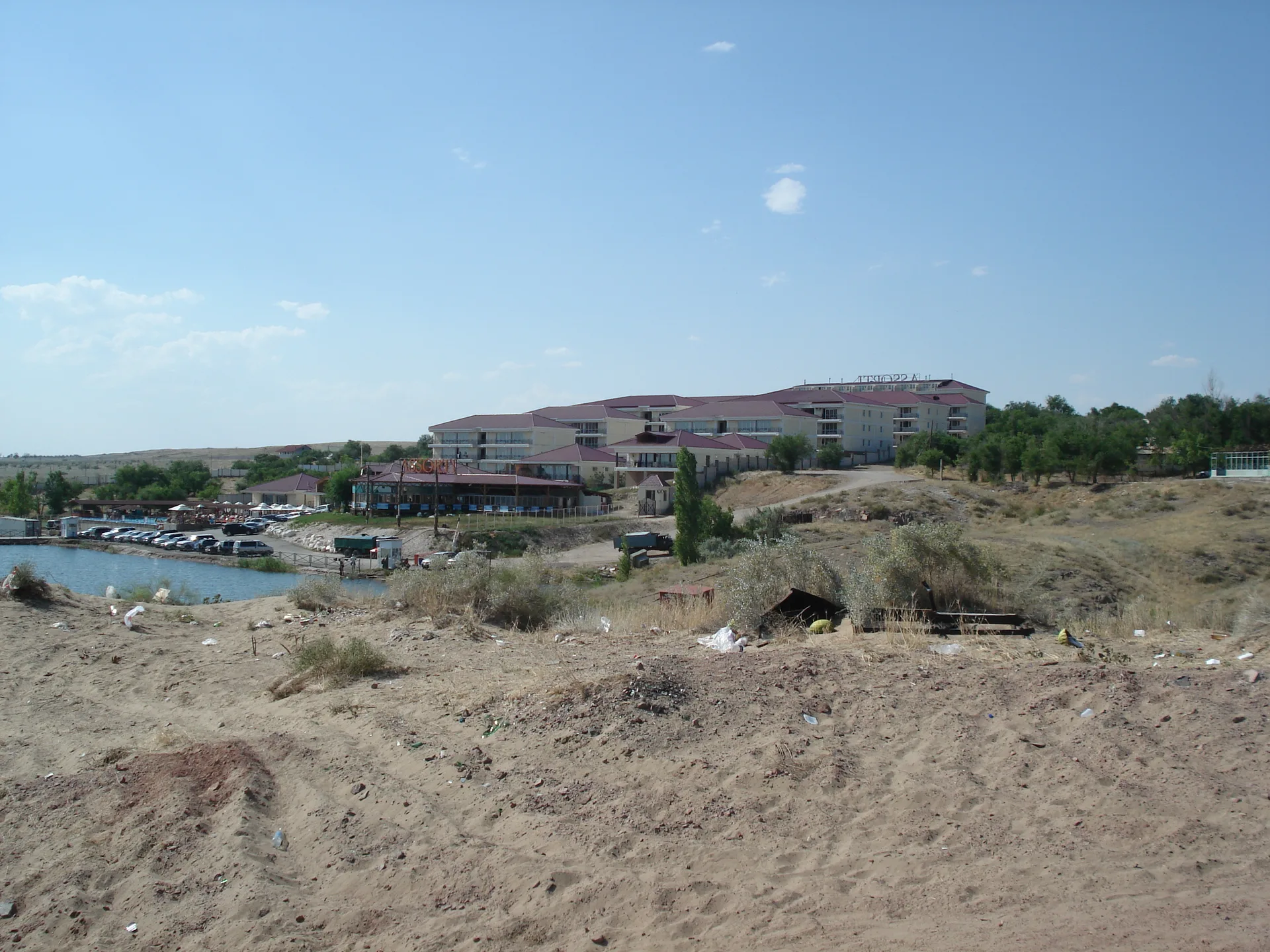
Hotel Ily Konaev
A simple central Konaev hotel that works as the lower-friction fallback to the main shared base in town. It is especially useful for early departures toward Sorbulak and the Ile delta, where a practical roadside overnight matters more than a resort feel.
- Private rooms
- Town access
Use as the budget Konaev fallback for west-side overnight extensions.
Also featured on: Kapchagai Reservoir & Tamgaly-Tas
What to bring
- Spotting scope 20–60x (critical for open-water pelican zone)
- Binoculars 8x42 or 10x42
- Field guide — Birds of Central Asia (Robson & Shirihai or equivalent)
- Water (2 L per person — no vendors on site)
- Sun hat and high-SPF sunscreen (no shade at most viewpoints)
- Insect repellent (reed margin is heavy with mosquitoes spring–summer)
- Rubber boots or waterproof shoes (shore can be muddy after rain)
- Camera with 400mm+ equivalent for bird photography
- Offline map (2GIS or Maps.me) — viewpoint tracks are not on Google Maps
- Snacks — no food vendors at the reservoir
Sources
Researched from English and Russian sources. Inaccuracies are mine.
- https://en.wikipedia.org/wiki/Sorbulak
- https://datazone.birdlife.org/site/factsheet/sorbulak-lake-system
- https://www.birdingplaces.eu/en/birdingplaces/kazakhstan/lake-sorbulaq
- https://www.tropicalbirding.com/asiakazakhstankyrgyzstanuzbekistan
- https://en.wikipedia.org/wiki/Kapchagay_Reservoir
- https://en.wikipedia.org/wiki/Dalmatian_pelican
- https://en.wikipedia.org/wiki/Greater_flamingo
- https://silkroadbirding.com/day-trips/
- https://ru.wikipedia.org/wiki/%D0%A1%D0%BE%D1%80%D0%B1%D1%83%D0%BB%D0%B0%D0%BA
- https://silkadv.com/en/content/ozero-sorbulak
Similar trips
Day trip
Issyk Lake
A turquoise alpine lake at 1,756 m in the Ile-Alatau foothills, 72 km from Almaty — a rewarding half-day drive through the Issyk Gorge, with forested shores, a reconstructed dam, and the nearby Saka 'Golden Man' burial mounds.
Day trip
Medeu & Shymbulak
The Ile-Alatau mountains rise straight from Almaty's southern edge; drive 17 km up the gorge and you reach Medeu's famous high-altitude ice rink, then a gondola carries you another 1,500 m to Talgar Pass at 3,200 m.
Day trip
Talgar and Issyk Saka Kurgan
Two distinct layers of history within 50 km east of Almaty: the UNESCO-inscribed Karakhanid city of Talkhiz (9th–13th c.) at Talgar, and the Saka royal burial complex near Issyk where the 4th–3rd c. BCE 'Golden Man' was excavated in 1969.