Overview
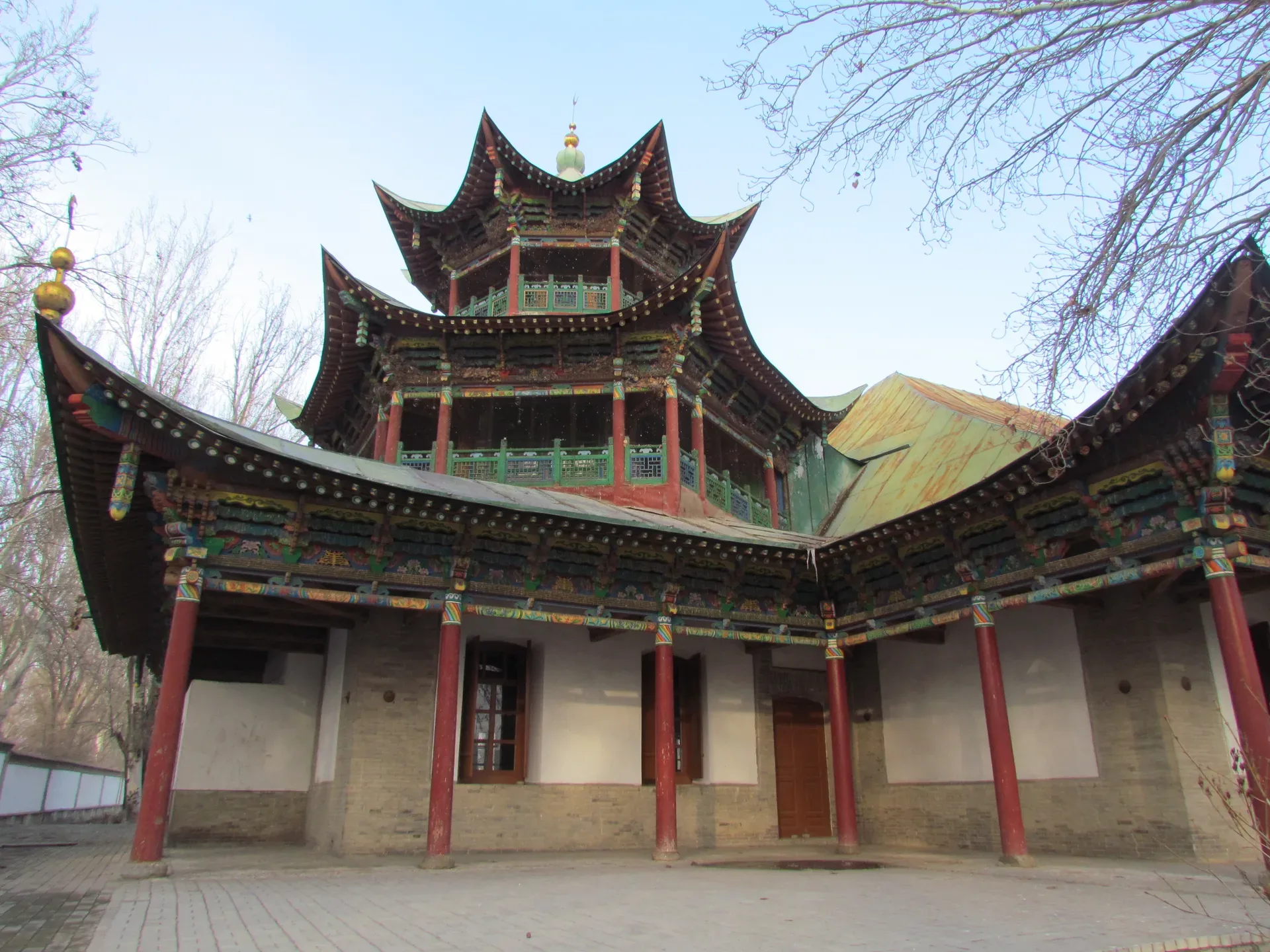
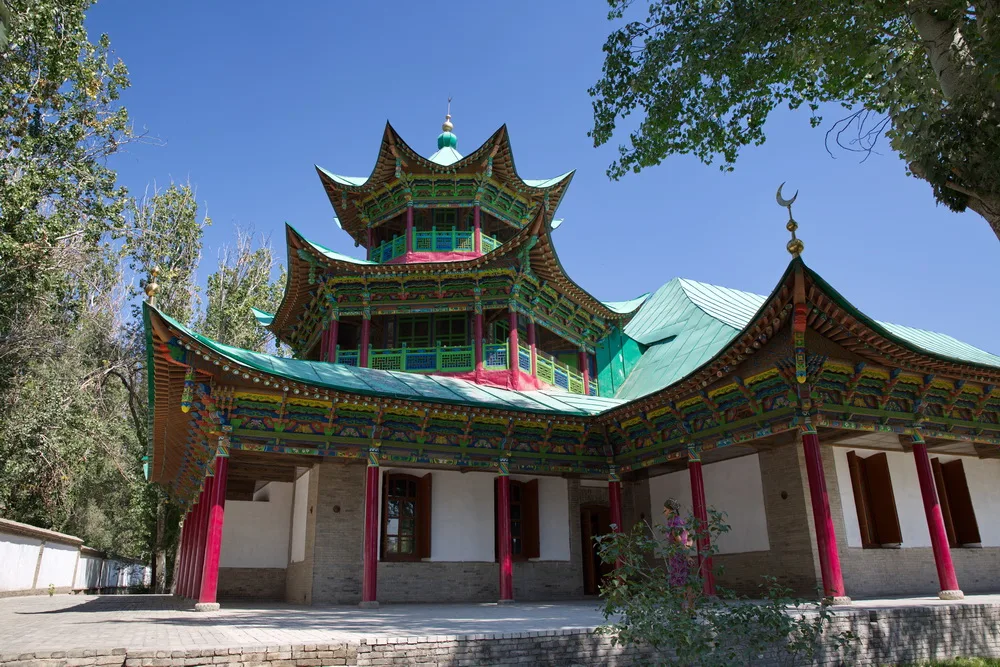
The Zharkent Mosque stands near the centre of Zharkent, 350 km from Almaty. Construction ran from 1892 to 1895, funded by merchant Vali Akhun Yuldashev and designed by Chinese architect Hong Pik. The brief was to build without metal nails using timber from the Aksu and Ketmen mountains. The result is a 54.5 m × 29 m wooden structure on 122 interlocking spruce columns, with multi-tiered curved roofs that follow Chinese timber-frame conventions while housing an Islamic prayer hall. The minaret, 22 m tall, is visible from the main road. Interior walls carry arabesque floral motifs, Quranic Arabic script, and painted birds and animals — the decorative vocabulary shifts registers across the room. The mosque survived a 1910 earthquake, underwent major restoration in 1975–1978, and received a 26-million-tenge repair in 2001–2004. Since 1982 it has held republican-significance monument status. It functions simultaneously as an active mosque and as an architectural museum with paid admission.
Open Zharkent Mosque in maps
Choose a map provider for this destination.
These links open only this place, not a full road-trip route. Links open in a new tab. 2GIS opens the map point; start navigation there.
Gallery


Jump to visit notes
Visit notes
Viewing visit notes for Zharkent Uyghur Heritage
Zharkent Mosque
Step 4 · 110 km from previous · 80 min drive
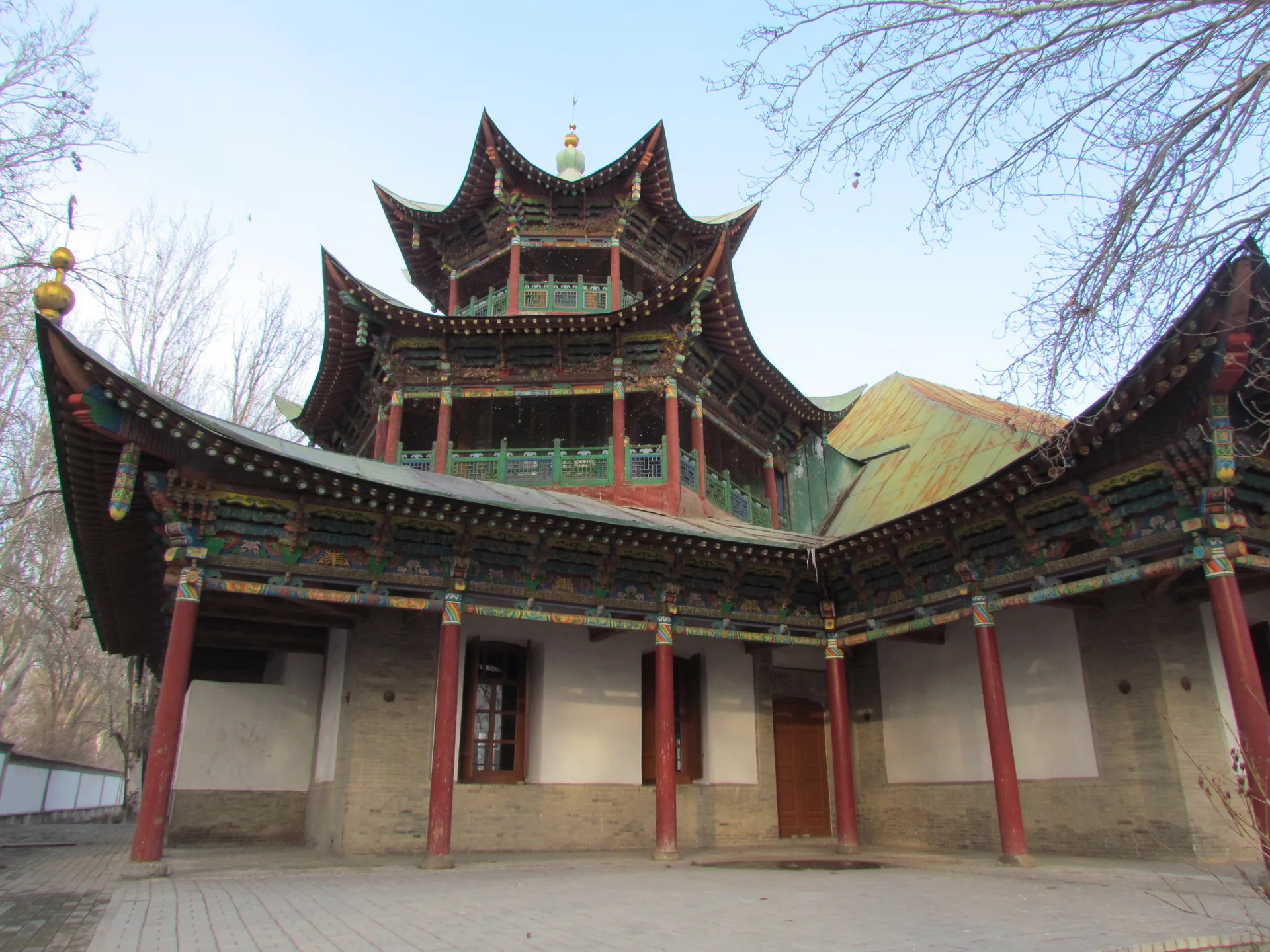
The Zharkent Mosque stands near the centre of Zharkent, 350 km from Almaty. Construction ran from 1892 to 1895, funded by merchant Vali Akhun Yuldashev and designed by Chinese architect Hong Pik. The brief was to build without metal nails using timber from the Aksu and Ketmen mountains. The result is a 54.5 m × 29 m wooden structure on 122 interlocking spruce columns, with multi-tiered curved roofs that follow Chinese timber-frame conventions while housing an Islamic prayer hall. The minaret, 22 m tall, is visible from the main road. Interior walls carry arabesque floral motifs, Quranic Arabic script, and painted birds and animals — the decorative vocabulary shifts registers across the room. The mosque survived a 1910 earthquake, underwent major restoration in 1975–1978, and received a 26-million-tenge repair in 2001–2004. Since 1982 it has held republican-significance monument status. It functions simultaneously as an active mosque and as an architectural museum with paid admission.