Before you go
- Vehicle
- Sedan is fine
- Permit
- Not required
- Entrance fee
- No entrance fee at the Kazakhstan–Korea Friendship Park or Karatal Korean History Center. A small donation to the History Center is customary.
- Peak altitude
- 680 m
- Cell coverage
- Good
- Fuel
- Fuel available throughout on the A3. Taldykorgan has multiple 24-hour stations. Ushtobe has at least one petrol station near the railway junction. No fuel gaps on this route.
- Road status
- The A3 from Almaty to Taldykorgan is fully paved and in good condition. The Taldykorgan–Ushtobe section is paved two-lane road. All stops on this itinerary are accessible to a standard sedan year-round.
About this trip
In August 1937 the Council of People's Commissars issued Decree 1428-326сс, signed by Molotov and Stalin, ordering the removal of ethnic Koreans from the Soviet Far East. By 25 October 1937 the operation was complete: 171,781 persons had been transported in sealed freight wagons across the continent. The trains stopped at Ushtobe, a railway junction in what is now Karatal District, Zhetysu Region. Deportees were unloaded onto open steppe in late October with temperatures already near −40 °C and no prepared shelter. Many dug burrows into Bastobe Hill with their hands. Estimates based on Soviet population statistics suggest roughly 20,000 died in the first winter. Within two years, survivor families had established 20 collective farms, built irrigation channels, and introduced irrigated rice cultivation to the Ili River valley — an agronomic knowledge transfer that shaped Kazakhstani rice farming for generations.
The A3 highway from Almaty follows the same northeast corridor the deportation trains used. The drive passes the Kapchagai hydroelectric reservoir (created in 1970, also fed by the Ili River) before crossing the river valley and climbing toward Taldykorgan, regional capital and a comfortable overnight base 270 km from Almaty. Ushtobe is a further 44 km northeast. The town is compact and the key sites — Kazakhstan–Korea Friendship Park on Bastobe Hill, the Karatal Korean History Center, and the central bazaar — are all within a short drive of each other.
Two memorials mark the Bastobe Hill site. A 2002 stele carries a Hangul inscription recording the occupation period (9 October 1937 to 10 April 1938); a 2012 monument from the Korean Association of Kazakhstan expresses gratitude to the Kazakh people who provided shelter and food to survivors. Hundreds of graves with Hangul headstones scatter the hillside. An annual memorial service is held on 1 March. The Karatal Korean History Center, founded by Korean-American missionary Helen Park, houses indoor rooms with historical films, photographs, books, Korean clothing, and letters, as well as outdoor courtyard exhibits including a recreated burrow, original oven, rice pounder, and thatched hut.
The Koryo-saram identity that emerged from the deportation is distinctly trilingual: Korean (now largely limited to the Koryo-mar dialect among older generations), Russian, and Kazakh. The Ushtobe bazaar carries material traces — morkovcha (spiced fermented carrot salad, a Koryo-saram invention born of the absence of napa cabbage), donjimi pickles, and rice-based side dishes unavailable elsewhere in the Ili valley. The round trip from Almaty runs approximately 590 km and is comfortably spread over three days.
Route
Skip map, jump to step listWhere to sleep
- Night 1 of 2Welcome Hotel TaldykorganHotelMid-range
- Night 2 of 2Welcome Hotel TaldykorganHotelMid-range
Budget · ~8–15k KZT/night. Mid-range · ~15–40k KZT. Premium · ~40k+ KZT.
Itinerary
Stop 1
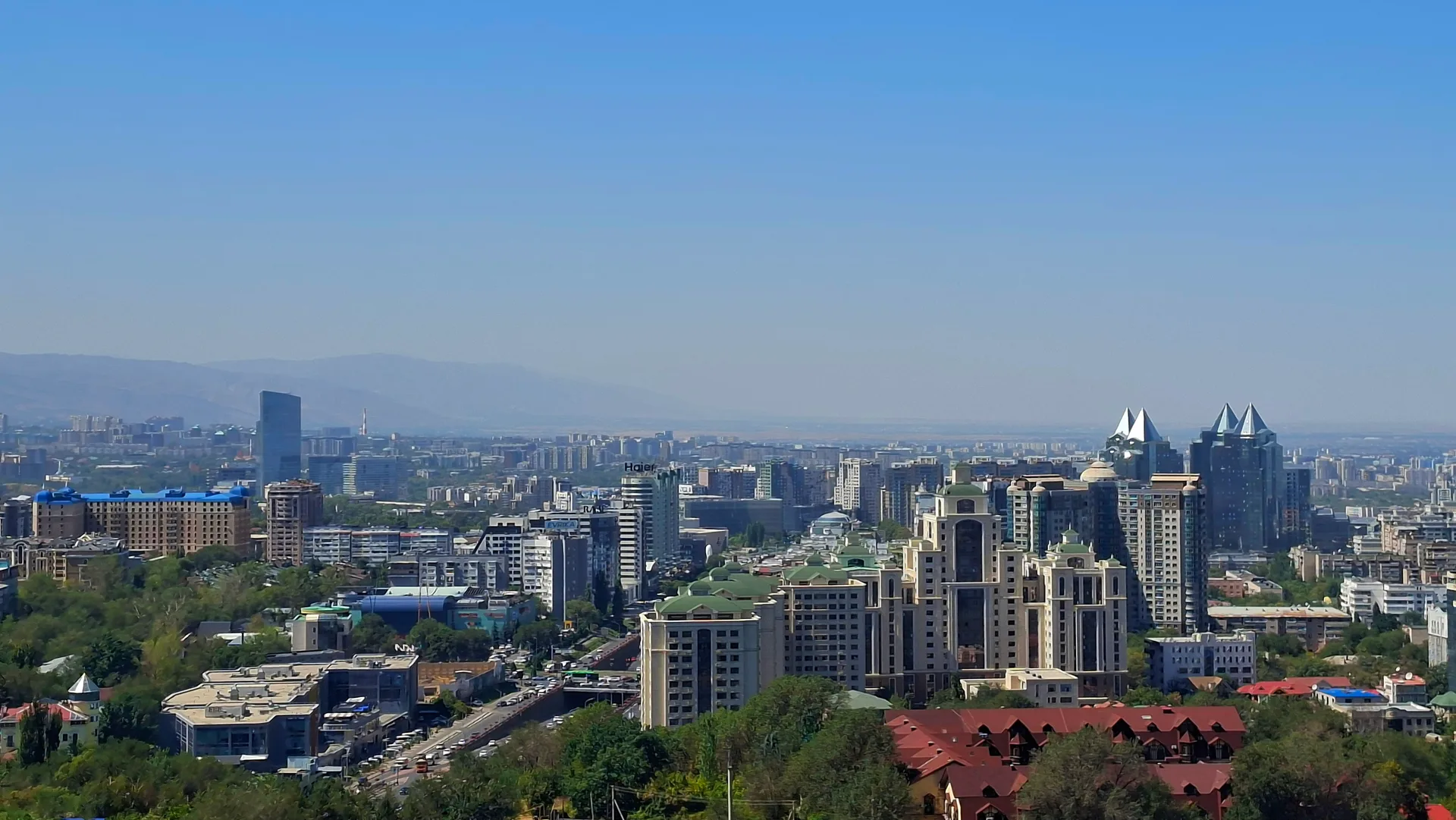
Almaty — A3 Departure
The route leaves Almaty on the A3 northeast toward Kapchagai (Qonaev). Traffic clears after the city ring road. The highway is fully paved, dual-carriageway for the first 90 km. Fill up before leaving — there are stations in Kapchagai city if needed, but it is simpler to start with a full tank. The total distance to Taldykorgan, the day-one overnight base, is 270 km and takes roughly 3 hours 30 minutes without stops. Budget one more hour for the Kapchagai reservoir crossing and a roadside stop to watch the Ili valley open out. Most travellers leave Almaty at 08:00–09:00 and reach Taldykorgan comfortably by early afternoon.
Tip: Download 2GIS offline maps for Zhetysu Region before leaving. The A3 has speed cameras starting roughly 40 km northeast of Almaty — observe posted limits (100 km/h).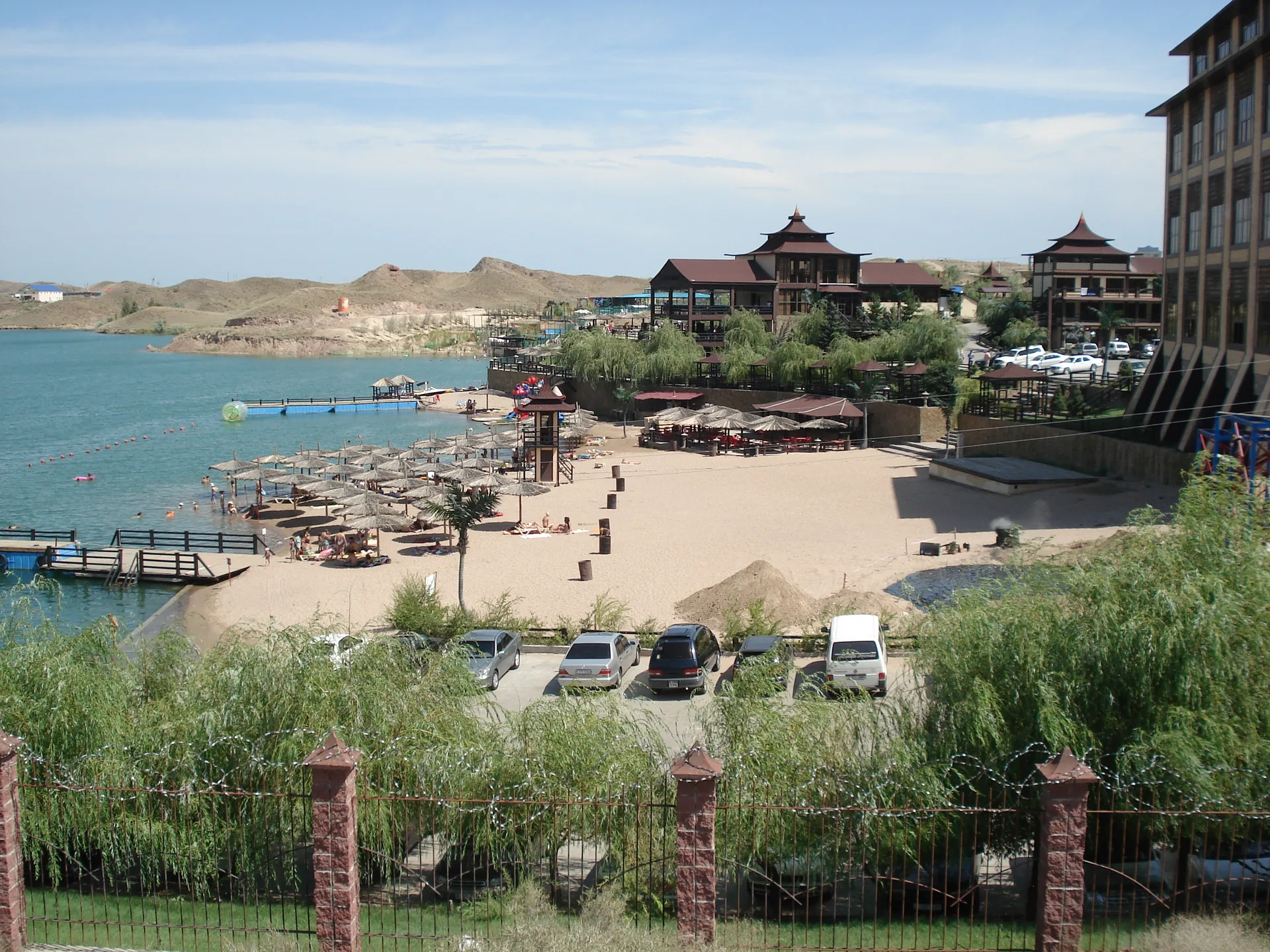
Stop 2
Kapchagai Reservoir — Ili Crossing
- From previous:
- 89 km · 65 min drive
- Stay:
- ~0.5 h
The Kapchagai reservoir, 89 km from Almaty, was created in 1970 by damming the Ili River for the Kapchagay hydroelectric plant. The A3 crosses the dam's downstream side; the bridge affords a wide view of the reservoir surface and the reed-fringed delta arms to the east. In spring and early summer the surrounding floodplain carries green irrigation channels — some of these run through rice plots cultivated by Koryo-saram families who settled this section of the Ili valley after 1937. The rice paddies are not roadside-obvious in summer but the flat, waterlogged fields visible from the road between here and the reservoir's eastern arm are a quiet marker of what the deportees built. The Kapchagai detour to the waterfront adds 20 minutes if you want a closer look; the road drops down to the shore near the town of Qonaev.
Tip: The bridge crossing and reservoir view are visible from the A3 without a detour. If you stop at the waterfront, the Qonaev town beach area has a cafe open in summer.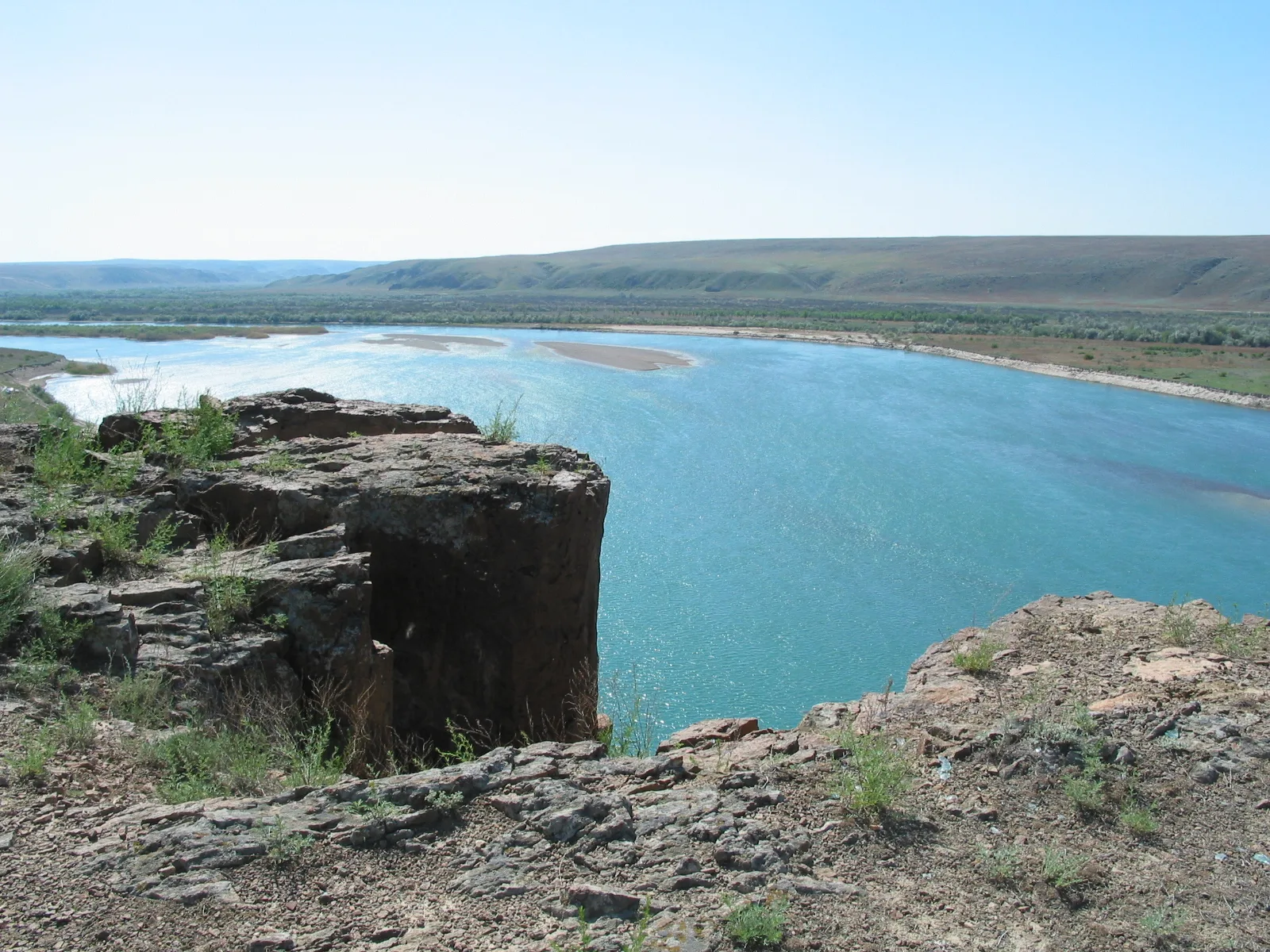
Stop 3
Taldykorgan — Overnight Base
- From previous:
- 181 km · 140 min drive
- Stay:
- ~14 h
Taldykorgan is the administrative centre of Zhetysu Region, with a population of around 160,000. It sits on the left bank of the Karatal River at the western edge of the Dzungarian Alatau foothills. The city has hotels at multiple price points, a functioning 24-hour pharmacy, and a reasonable food court near the bazaar on Zhambyl Street. It is the last proper city before Ushtobe (44 km northeast) and a much better base than driving all the way to Ushtobe on day one. The Taldykorgan city market is worth 30 minutes — stalls sell dried fruits, pine nuts from the Dzungarian range, and local honey. From Taldykorgan, the Ili valley becomes progressively more agricultural heading northeast; the road to Ushtobe follows the valley floor.
Tip: Book Taldykorgan accommodation in advance — the city has limited mid-range options. The Hotel Zhetysu and several guesthouses on Lenin Street are the most reliable. Dinner at the bazaar food court closes by 21:00.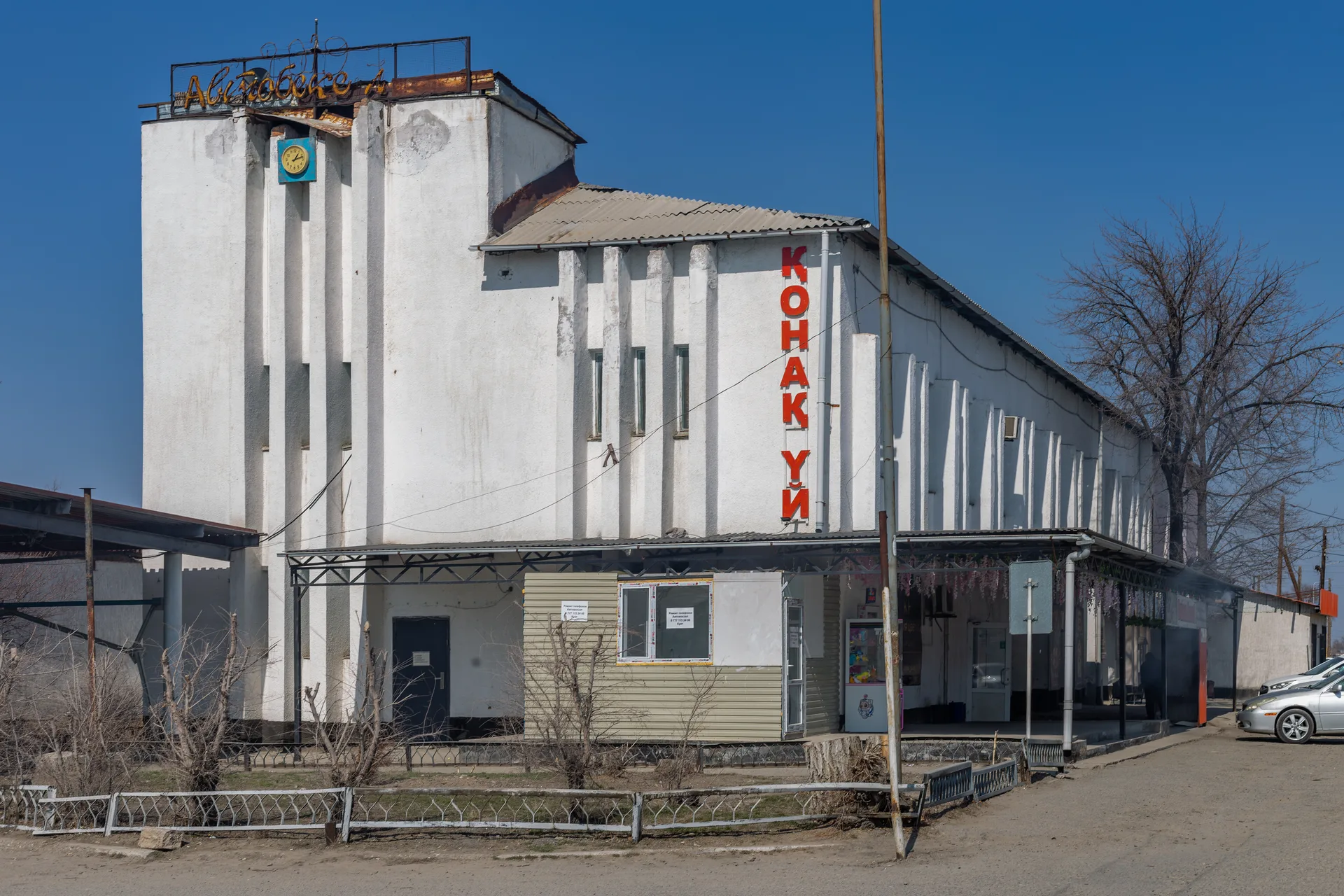
Stop 4
Ushtobe — Town Arrival
- From previous:
- 44 km · 35 min drive
- Stay:
- ~1 h
Ushtobe is a compact railway town of roughly 25,000 residents in Karatal District. The A3 enters from the southwest, passing the grain elevator and railway junction that made this the deportation terminus in 1937 — the trains could go no further east on the existing track network. The town centre is laid out on a Soviet grid: Abylai Khan Street runs east–west as the main commercial axis; the bus station (a Soviet modernist block) marks the central junction. Orientation is straightforward. The Kazakhstan–Korea Friendship Park on Bastobe Hill is visible from the southern approach — a low ridge with a flagpole and the upper memorial stele. Park the car in the town centre and plan the day around the two main sites: Bastobe Hill and the Karatal Korean History Center. Both are within 1.5 km of each other.
Tip: The Karatal Korean History Center does not have fixed public hours — contact in advance via the Korean Association of Kazakhstan or through local guesthouses that have hosted visitors before. Some visitors have made direct arrangements through the cultural centre on Tole Bi Street.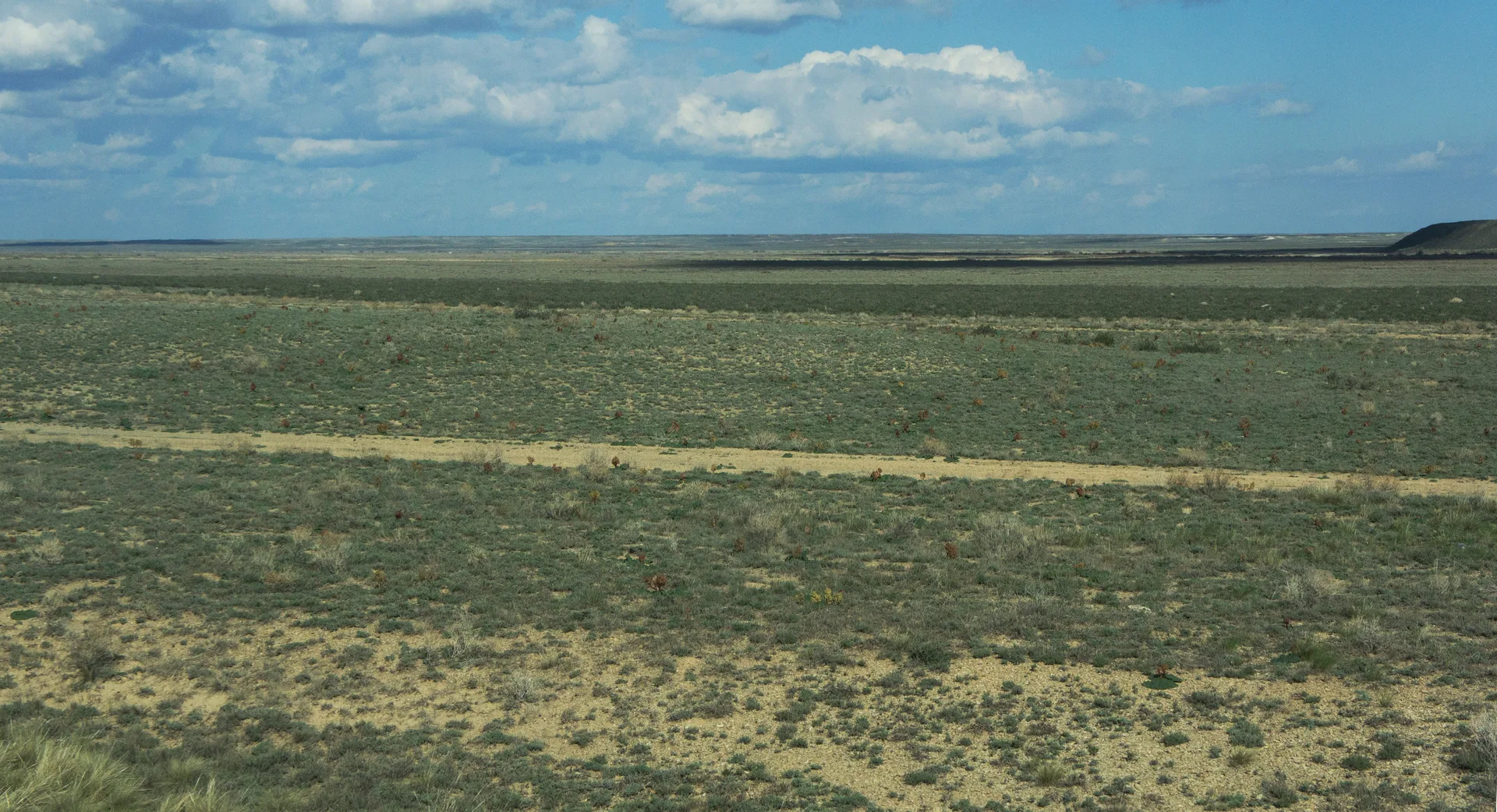
Stop 5
Bastobe Hill — Kazakhstan–Korea Friendship Park
- From previous:
- 5 km · 10 min drive
- Stay:
- ~2 h
Bastobe Hill rises a modest 30 m above the surrounding steppe on the northern edge of Ushtobe. In October 1937 deportees who arrived here had walked 4.3 km from the railway drop-off point and dug shelters into the frozen ground. The Kazakhstan–Korea Friendship Park now occupies the hill, and several memorials have been installed over the years. The 2002 stele carries a Hangul inscription: it records that Koreans forced from the Soviet Far East first settled in burrows on this site from 9 October 1937 to 10 April 1938. A 2012 monument from the Korean Association of Kazakhstan expresses gratitude to the Kazakh families who provided food and shelter in that first winter. A 2022 monument wall lists fifteen Koryo-saram independence activists. Hundreds of graves with Hangul headstones are scattered across the hillside — many without dates, many with only transliterated names. An annual memorial service is held on 1 March. The park is unenclosed and accessible at all hours; the ground is uneven and partly overgrown.
Tip: The 2002 Hangul stele is the most photographed element — it faces roughly southeast. The inscriptions name the deportation, not individuals. Approach the graves quietly; some families still tend them. The hill is exposed with no shade; a hat and water are needed in summer.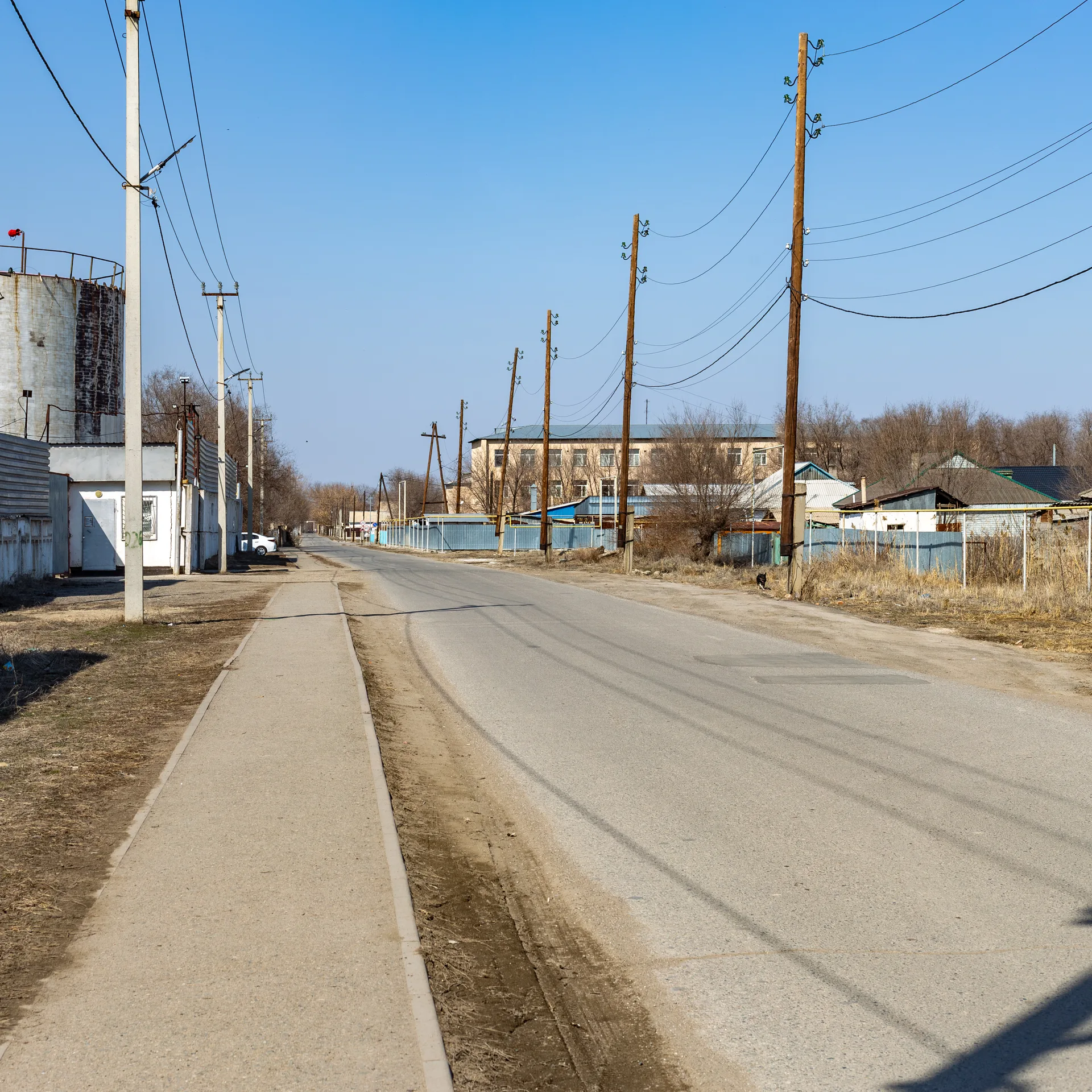
Stop 6
Karatal Korean History Center
- From previous:
- 3 km · 8 min drive
- Stay:
- ~2 h
The Karatal Korean History Center in Ushtobe was established by Korean-American missionary Helen Park, who relocated to Kazakhstan after working in Russia. The museum occupies a small compound with both indoor and outdoor sections. Indoors: one room is set up for screening historical documentary films about the deportation and early settlement, with bookshelves, photographs, and letters from the first generation; a second room displays household items, Korean clothing, and newspapers from the collective-farm period. Outdoors: an open courtyard contains a recreated burrow of the type survivors dug on Bastobe Hill in October 1937, an original cast-iron oven from a collective-farm kitchen, a wooden rice pounder, and a thatched-roof hut. The outdoor exhibits are small in scale but specific — the rice pounder in particular is concrete evidence of the agronomic knowledge the deportees carried and redeployed in the Ili valley. Koryo-saram families established 20 collective farms within two years of arrival and built the irrigation channels that first made paddy rice viable in the region.
Tip: Contact the History Center or Korean Association of Kazakhstan well in advance — at least two weeks if possible. Some visitors have arrived without prior arrangement and found the center closed. A nominal donation is appropriate. The outdoor exhibits are uncovered and best seen in dry weather.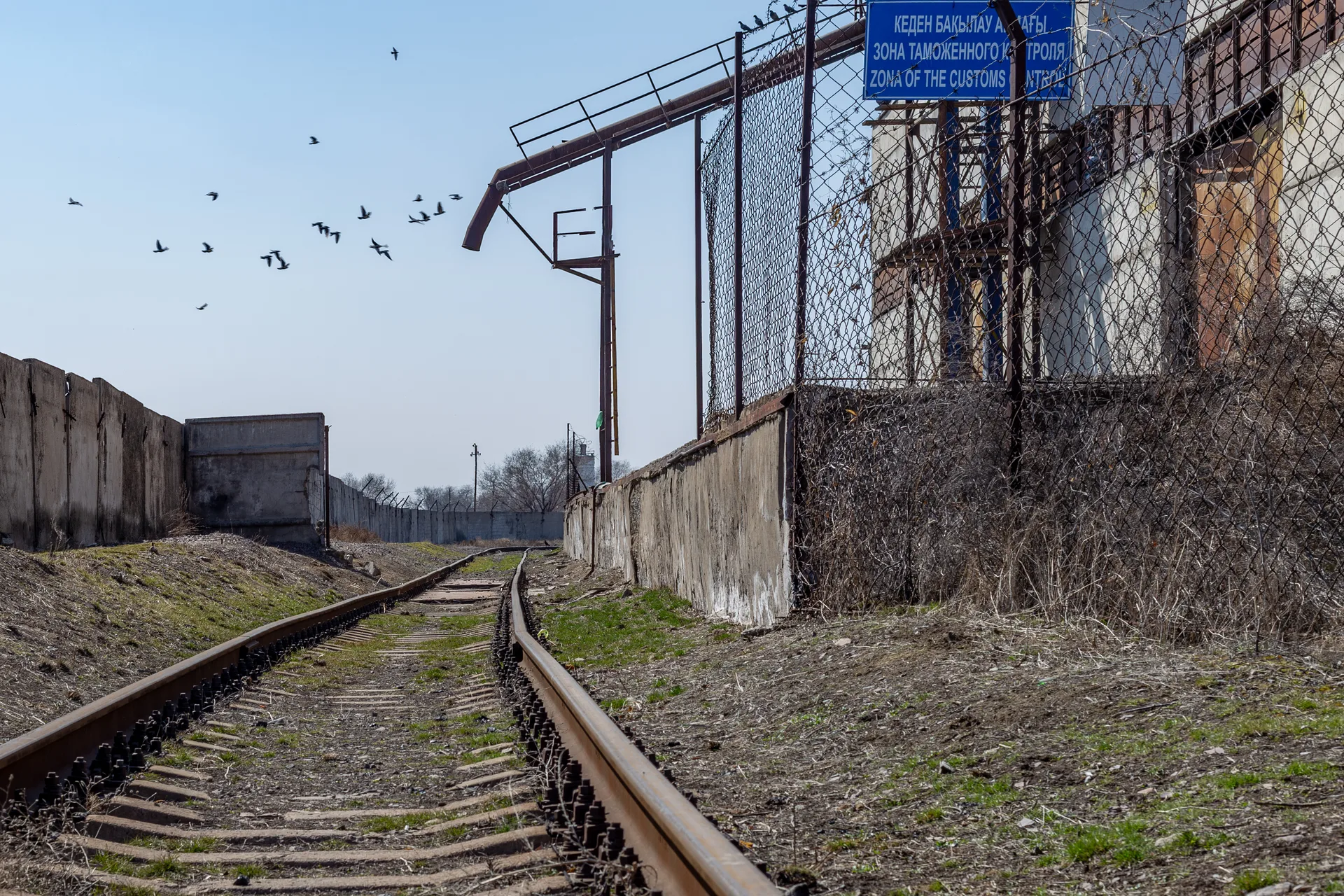
Stop 7
Ushtobe Bazaar — Koryo-saram Material Culture
- From previous:
- 2 km · 5 min drive
- Stay:
- ~1.5 h
The Ushtobe central market, on Tole Bi Street, runs daily until early afternoon. Koryo-saram vendors are present at the food section most mornings. The material culture of the community is readable here without framing it as a tourist display: morkovcha (julienned carrots fermented with garlic, chilli, and coriander seed — a Koryo-saram invention, not a traditional Korean dish, made when napa cabbage was unavailable in Central Asia) is sold by the kilogram alongside donjimi white radish pickle and several varieties of rice-based side dishes. Dried rice is sometimes available when harvest timing aligns. The market also carries mundane Ili-valley produce — melons, tomatoes, pickled watermelon — and locally manufactured goods from the nearby factory district. Ushtobe has a yurt-building factory that exports across Kazakhstan; its rail entrance and production buildings are visible from the eastern approach road. The third generation and fourth generation of Koryo-saram in Ushtobe speak primarily Russian and Kazakh; Korean is heard mainly from elders.
Tip: The food section of the bazaar is busiest 08:00–11:00. Morkovcha is sold by weight; ask for a small portion first — heat levels vary by vendor. Cash only; no card readers at market stalls.Stop 8
Return to Taldykorgan — second overnight
- From previous:
- 44 km · 35 min drive
- Stay:
- ~12 h
After the bazaar visit, return southwest to Taldykorgan for the second overnight. The 44 km drive takes roughly 35 minutes on the A3 corridor and resets the trip in the same practical city base used on day one, with dinner, pharmacy access, and a simpler morning departure back toward Almaty.
Tip: Book both Taldykorgan nights before leaving Almaty so the return from Ushtobe is straightforward after the memorial visits.Stop 9
Return — Ili Valley Viewpoint → Almaty
- From previous:
- 270 km · 210 min drive
The return follows the A3 southwest from Taldykorgan. Between the Ili valley and the Kapchagai reservoir the road runs close to the river for long stretches; in late June and July the rice paddy plots managed by Koryo-saram collective farms are at their greenest and most legible from the elevated road sections. The drive from Taldykorgan back to Almaty is roughly 270 km and takes 3 to 3.5 hours without stops. A lunch stop at Kapchagai is easy to arrange before the final run into the city.
Tip: The rice paddy section is most visible mid-summer (late June to mid-August). In other seasons the fields are dry or in preparation and less distinctive. Allow 3.5 to 4 hours for the return leg if stopping for lunch.
Night 1 of 2 · after Step 3: Taldykorgan — Overnight Base
Welcome Hotel Taldykorgan
A current Taldykorgan city hotel option for the Ushtobe route. It keeps both nights in the last full-service city before and after the memorial visits, which makes dinner, pharmacy, and resupply simpler than sleeping in Ushtobe itself.
- City-center access
- Private rooms
City hotel; use as the primary repeat overnight for the Ushtobe itinerary.
Also featured on: Eshkiolmes Petroglyphs
Night 2 of 2 · after Step 8: Return to Taldykorgan — second overnight
Welcome Hotel Taldykorgan
A current Taldykorgan city hotel option for the Ushtobe route. It keeps both nights in the last full-service city before and after the memorial visits, which makes dinner, pharmacy, and resupply simpler than sleeping in Ushtobe itself.
- City-center access
- Private rooms
City hotel; use as the primary repeat overnight for the Ushtobe itinerary.
Also featured on: Eshkiolmes Petroglyphs
What to bring
- Warm layer (Taldykorgan nights are cool even in summer)
- Cash (KZT) — small bazaar vendors rarely take cards
- Offline maps (2GIS covers Taldykorgan and Ushtobe well)
- Note or gift for the Karatal Korean History Center (advance contact recommended)
- Camera with close-up capability for memorial inscriptions
- Water (1.5 L per person minimum — limited vendors at Bastobe Hill)
- Comfortable walking shoes (Bastobe Hill is uneven ground)
Sources
Researched from English and Russian sources. Inaccuracies are mine.
- https://en.wikipedia.org/wiki/Koryo-saram
- https://en.wikipedia.org/wiki/Deportation_of_Koreans_in_the_Soviet_Union
- https://en.wikipedia.org/wiki/Kazakhstan%E2%80%93Korea_Friendship_Park
- https://en.wikipedia.org/wiki/Karatal_Korean_History_Center
- https://en.wikipedia.org/wiki/Ushtobe
- https://ru.wikipedia.org/wiki/%D0%9A%D0%BE%D1%80%D1%91_%D1%81%D0%B0%D1%80%D0%B0%D0%BC
- https://www.peripheralhistories.co.uk/post/memories-of-deportation-from-the-russian-far-east-to-central-asia
- https://quod.lib.umich.edu/j/jii/4750978.0014.101/--tracing-the-steps-of-stalins-unreliable-people-koryo-saram
- https://geohistory.today/koryo-saram-friendship-ussr/
- https://www.rome2rio.com/s/Almaty/Ushtobe
Similar trips
Day trip
Issyk Lake
A turquoise alpine lake at 1,756 m in the Ile-Alatau foothills, 72 km from Almaty — a rewarding half-day drive through the Issyk Gorge, with forested shores, a reconstructed dam, and the nearby Saka 'Golden Man' burial mounds.
Day trip
Medeu & Shymbulak
The Ile-Alatau mountains rise straight from Almaty's southern edge; drive 17 km up the gorge and you reach Medeu's famous high-altitude ice rink, then a gondola carries you another 1,500 m to Talgar Pass at 3,200 m.
Day trip
Sorbulak Lake and Ile Delta Birding
Lake Sorbulak — a sewage-fed reservoir 40 km north of Almaty that became Central Asia's most species-rich inland birding site — hosts breeding Dalmatian pelicans, staging greater flamingos, and over 20 Red-Listed species during spring and autumn migration.