Before you go
- Vehicle
- Sedan is fine
- Permit
- Not required
- Entrance fee
- Talkhiz site is open access with no gate or fee. Issyk Historical-Archaeological Museum charges a small entry fee — approximately 500–1,000 KZT per adult; verify locally. The kurgan field itself is open access from the roadside.
- Peak altitude
- 700 m
- Cell coverage
- Good
- Fuel
- Fill up in Almaty. Both Talgar and Issyk towns have petrol stations on the main A-2 corridor. No fuel gaps on this route.
- Road status
- Fully paved throughout. A-2 (Kuldzha highway) is dual carriageway for the first 30 km east of Almaty, narrowing to a single carriageway through Talgar and Issyk. No off-road required for either site.
About this trip
The A-2 highway east of Almaty passes through terrain that was significant across two separate civilisations separated by more than a millennium. At Talgar, 25 km from the city centre, the earthen mounds of Talkhiz — a fortified Silk Road trading town first mentioned by name in the Persian geographical register Hudud al-'Alam in 982 CE — survive as low ramparts and hummocked ground covering roughly 28 hectares. The site was a Karakhanid urban centre from the 9th through 13th centuries, and in 2014 it was inscribed on the UNESCO World Heritage List as part of the Silk Roads: the Routes Network of Chang'an-Tianshan Corridor, one of 33 sites stretching across China, Kazakhstan, and Kyrgyzstan. Excavations beginning in 1974, continuing under archaeologist Karl Baipakov's direction, have uncovered residential quarters, craft areas, and the outlines of a medieval bath complex within the fortified perimeter.
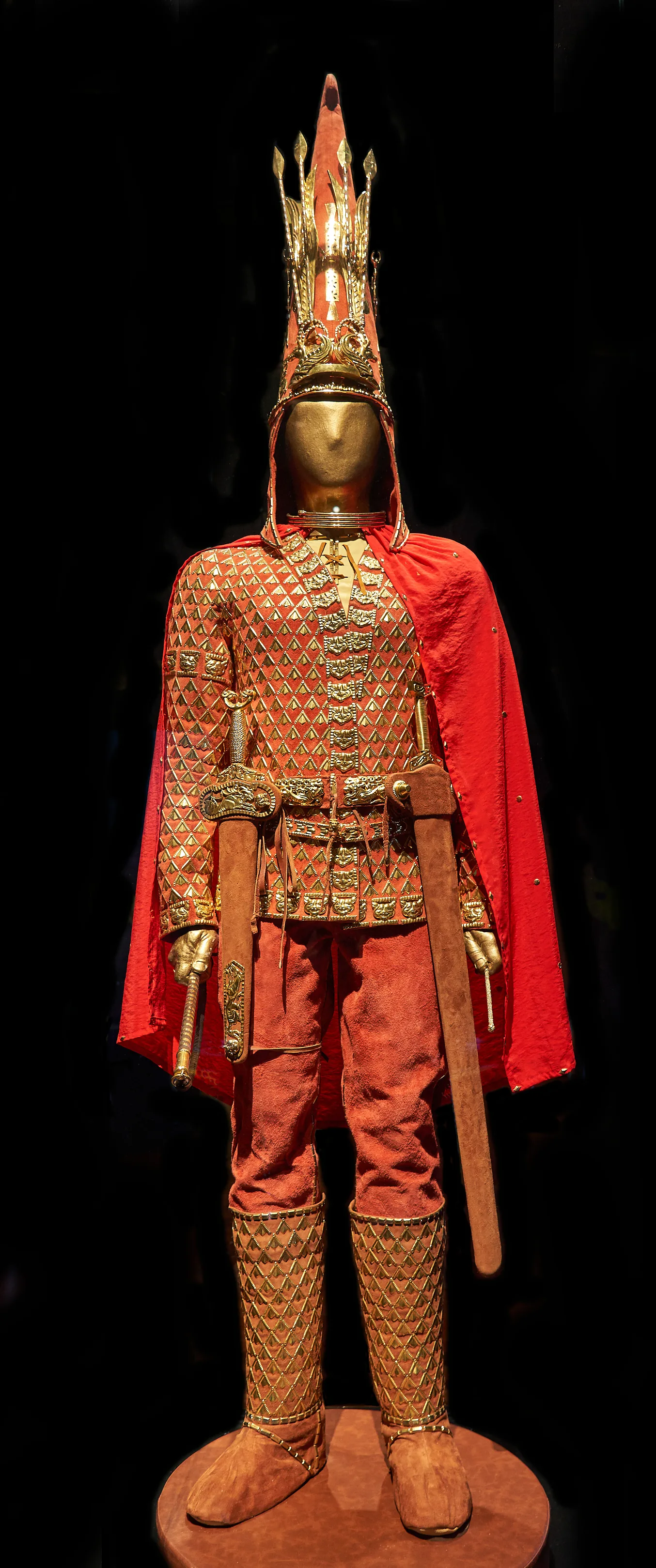
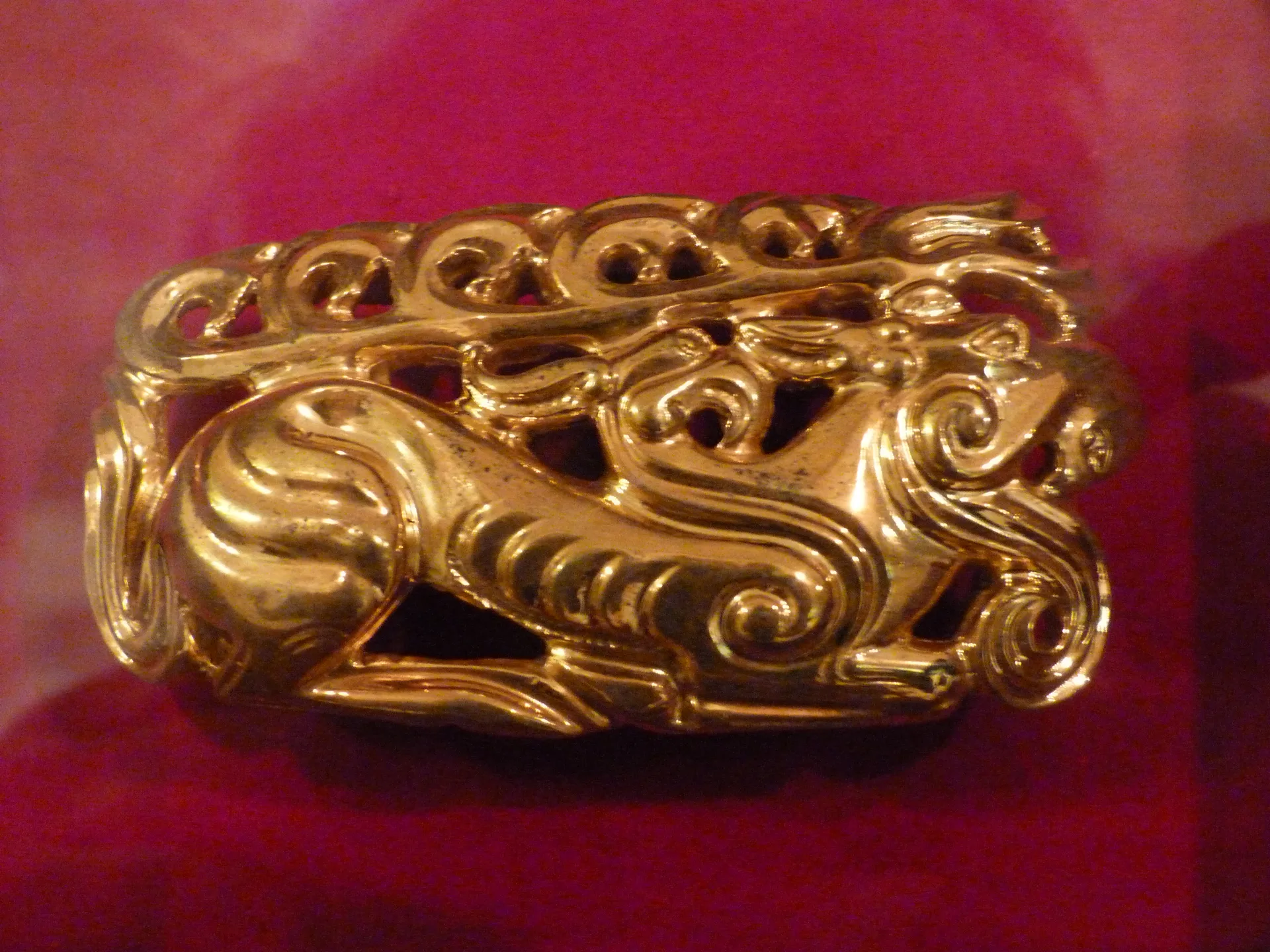
Some 15 km further east, near the modern town of Issyk (Yesik), a field of 45 royal burial mounds marks a Saka necropolis dated to the 4th–3rd centuries BCE. In 1969 archaeologist Kemal Akishev excavated one mound, 6 metres high and 60 metres across, and found a burial of an approximately 18-year-old individual — sex uncertain — interred with roughly 4,000 gold ornaments including a towering gilded headdress, armoured coat, boots, and weapons. A silver bowl found alongside carries an inscription in an as-yet undeciphered script. The burial became known as the Altyn Adam, the Golden Man, and the full-length reconstruction stands as one of Kazakhstan's defining national symbols.
The town of Issyk has a small historical-archaeological museum where a full-scale replica of the Golden Man is displayed in its burial context. The original artefacts are housed at the Kazakh Museum of Archaeology in Almaty and the State Museum of Gold and Precious Metals in Astana. The kurgan field itself is an open, unfenced site beside the highway — low grass mounds visible from the road, with interpretive signage at the main excavated mound.
The loop from Almaty is about 100 km of fully paved road. Both sites are appropriate for sedans. A comfortable pacing leaves Almaty at 08:00 and returns by 17:00, with around three hours of driving total and four to five hours on-site across both locations.
Route
Skip map, jump to step listItinerary
Stop 1
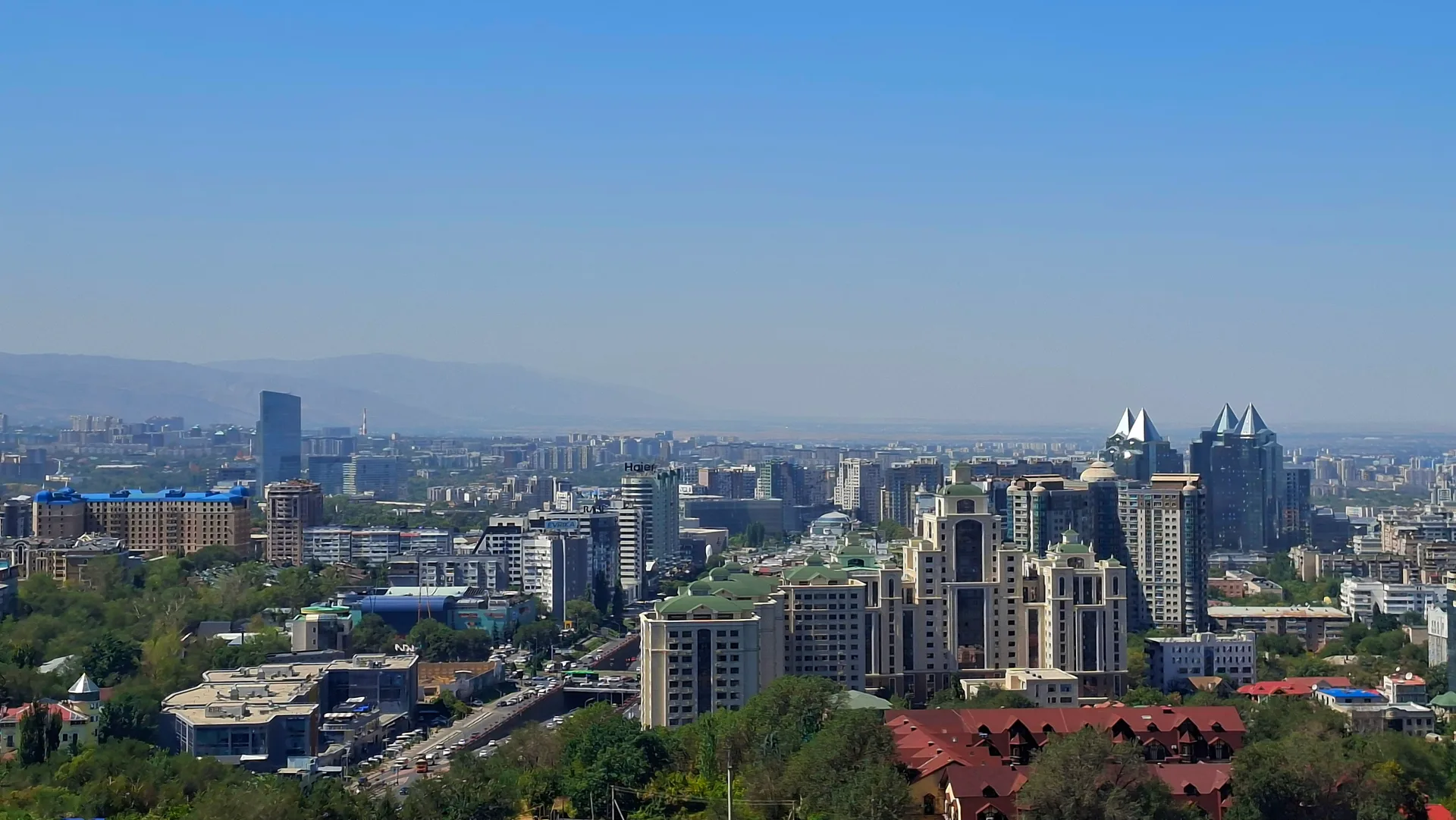
Almaty
Leave central Almaty via the Kuldzha highway (A-2) heading east. The road is dual carriageway as far as the city edge and carries moderate commuter traffic on weekdays. Talgar begins about 25 km from the Old Square; allow 30–35 minutes without stops. Fill the tank before leaving — petrol is available in both Talgar and Issyk, but there is no reason to risk running low on a day trip this close to the city.
Tip: Leave by 08:00 to reach Talkhiz before tour groups and school parties, which typically arrive mid-morning. The A-2 can back up at the Almaty ring-road junction on weekday mornings.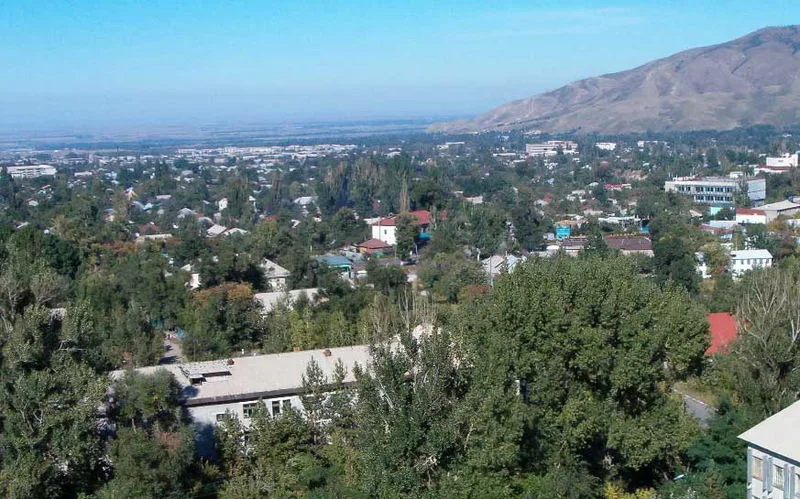
Stop 2
Talgar town
- From previous:
- 25 km · 30 min drive
- Stay:
- ~0.25 h
Talgar is a district centre of around 70,000 people, 25 km east of Almaty on the A-2. The modern town grew directly over and around the medieval settlement of Talkhiz, which is why earthen mounds and wall remnants are visible on its southern edges rather than at a remote location. The main bazaar and a cluster of cafés on the central street are the practical stops here — fuel, food, and a toilet break before the archaeological site. The town carries the name Talgar as a later modification of the medieval toponym Talkhiz.
Tip: If you want coffee before the site, the cafés on the central street open by 08:30. The bazaar has fresh produce if you want to assemble a picnic for the day.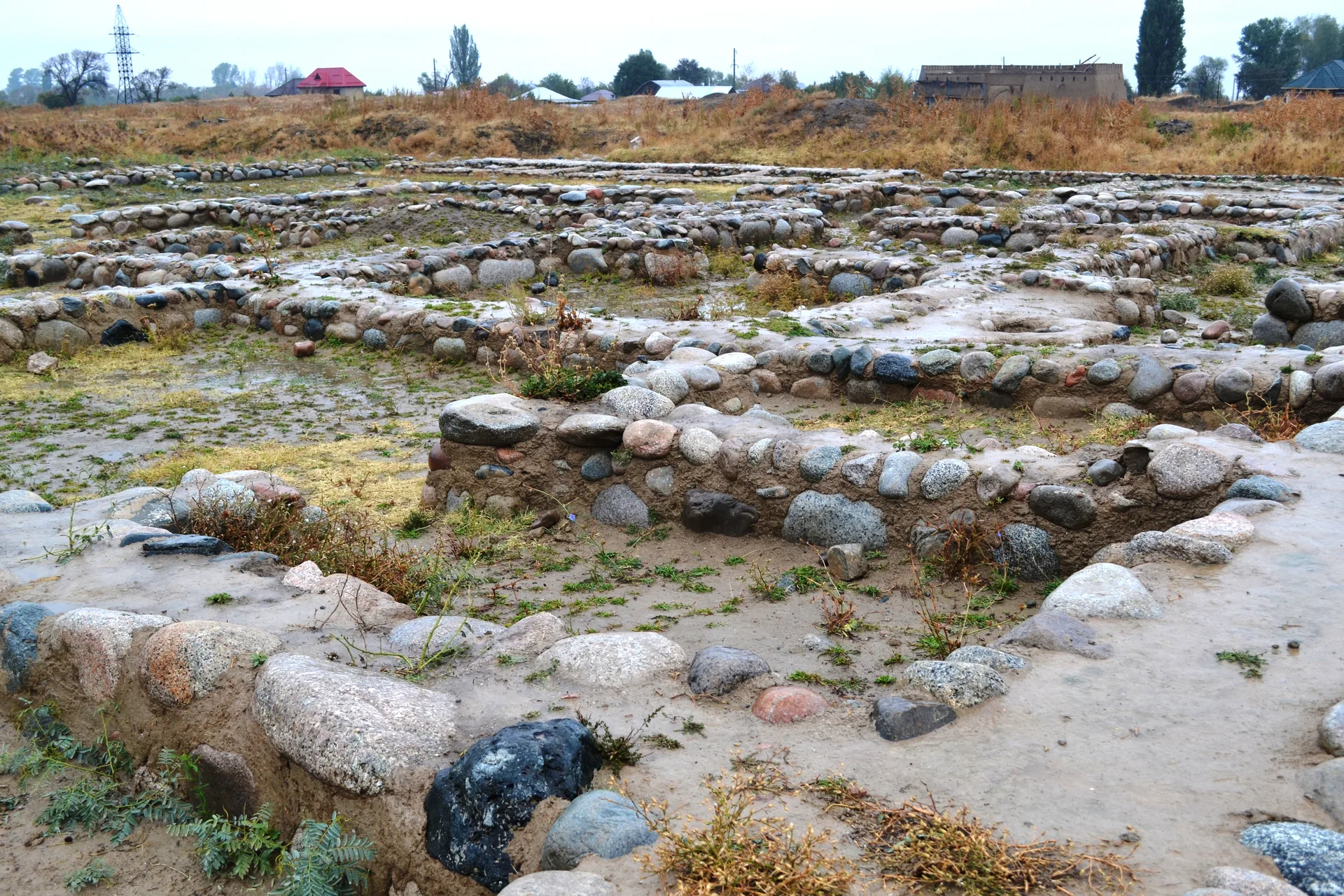
Stop 3
Talkhiz medieval mounds
- From previous:
- 3 km · 8 min drive
- Stay:
- ~1 h
The ancient settlement of Talkhiz sits on the southern outskirts of Talgar, roughly 2 km south of the main highway. The site covers approximately 28 hectares in a roughly rectangular plan — each wall around 300 metres long — with eroded earthen ramparts still rising 3–5 metres at their best-preserved sections. Corner and perimeter towers survive as grassed-over hillocks. The enclosed area shows a central raised district, best preserved in the southern sector, surrounded by evidence of residential and craft quarters. The settlement functioned as a Karakhanid trade and administrative centre from the 9th through 13th centuries and was inscribed in 2014 on the UNESCO World Heritage List as part of the Silk Roads: Routes Network of Chang'an-Tianshan Corridor. First recorded in 982 CE in the Persian geographic text Hudud al-'Alam as Talkhiz, it served caravans connecting the Ili Basin to the Tarim Basin across the northern branch of the Silk Road.
Tip: There is no formal entrance or gate. Drive south from the main Talgar street toward the visible earthen mounds. Signage is sparse — downloading the UNESCO site boundary on a mapping app beforehand makes navigation easier. The surface is uneven grass and compacted earth; flat shoes with grip are adequate.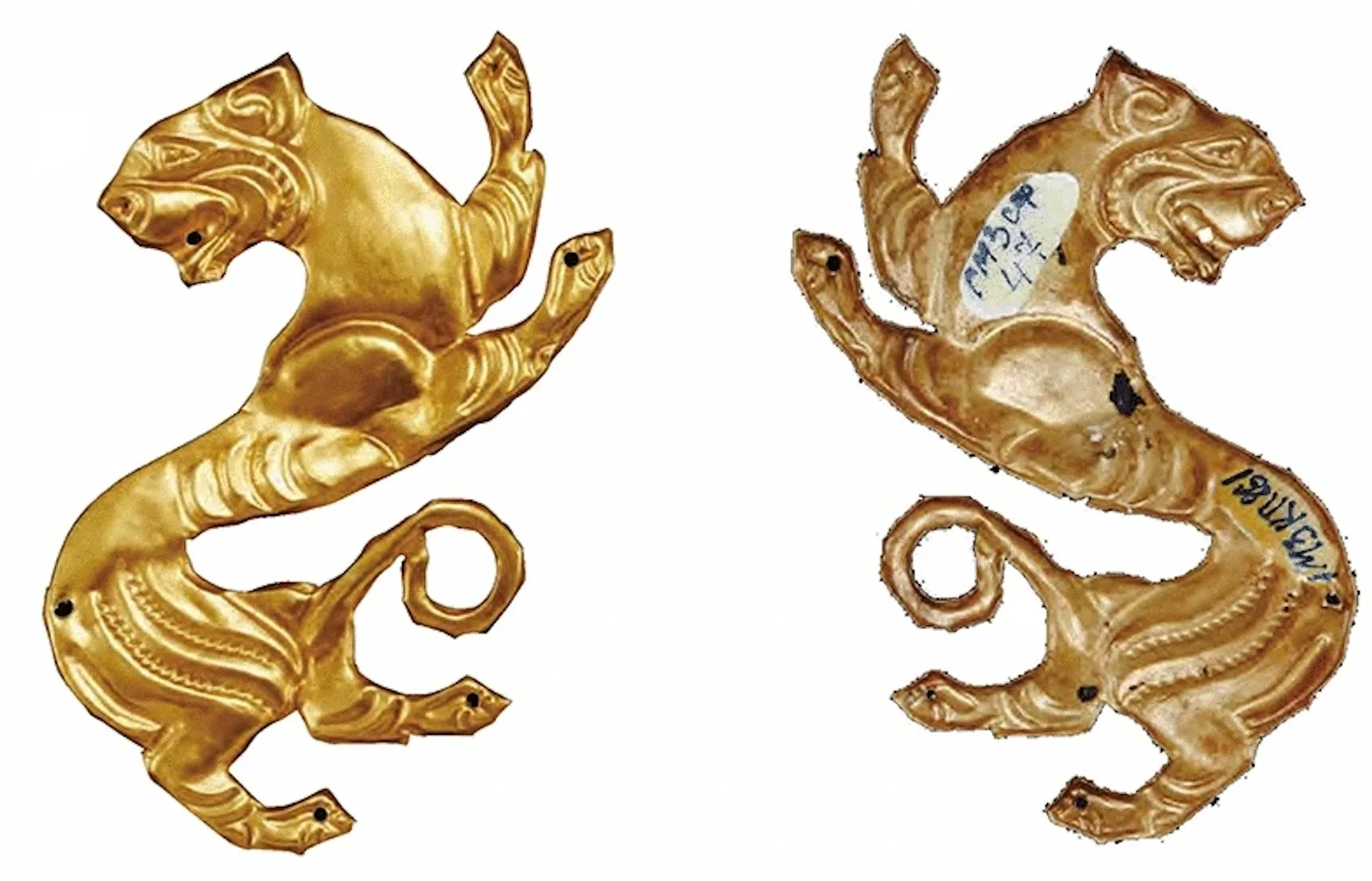
Stop 4
Talkhiz excavation perimeter — bath and craft area
- From previous:
- 1 km · 5 min drive
- Stay:
- ~0.5 h
Within the Talkhiz enclosure, excavations begun in 1974 under a team that included Karl Baipakov revealed a layered urban fabric: residential structures, craft production areas, and the outlines of a medieval bath complex (hammam-type), consistent with other Karakhanid urban centres of the region. Brick kilns and fired-clay artefacts document active craft production here from at least the 10th century. The site is not formally fenced or interpreted with signage; what you see are low trenched areas, compacted earth, and occasional placed stone markers. Walking the perimeter of the enclosure takes about 20 minutes at an easy pace and gives the clearest sense of the settlement's scale relative to the surrounding modern town.
Stop 5
Drive to Issyk (Yesik)
- From previous:
- 15 km · 20 min drive
From Talgar, rejoin the A-2 heading east and continue approximately 15 km to the town of Issyk (officially Yesik). The highway runs through flat agricultural land at the foot of the Trans-Ili Alatau, with the mountains rising sharply to the south. Issyk is a town of around 50,000 and serves as the administrative centre of Enbekshikazakh District. The drive takes about 20 minutes. The Issyk River valley runs south from the town into the national park — if you have done the Issyk Lake trip separately, note that the kurgan site described here is on the valley floor near the town, not the alpine lake 15 km up the gorge.
Tip: The A-2 speed limit drops through Issyk town. A speed camera operates on the western approach. Note: Issyk Lake (the alpine lake in the gorge south of town) is a separate destination. The kurgan complex is beside the highway on the valley floor, not up the mountain road.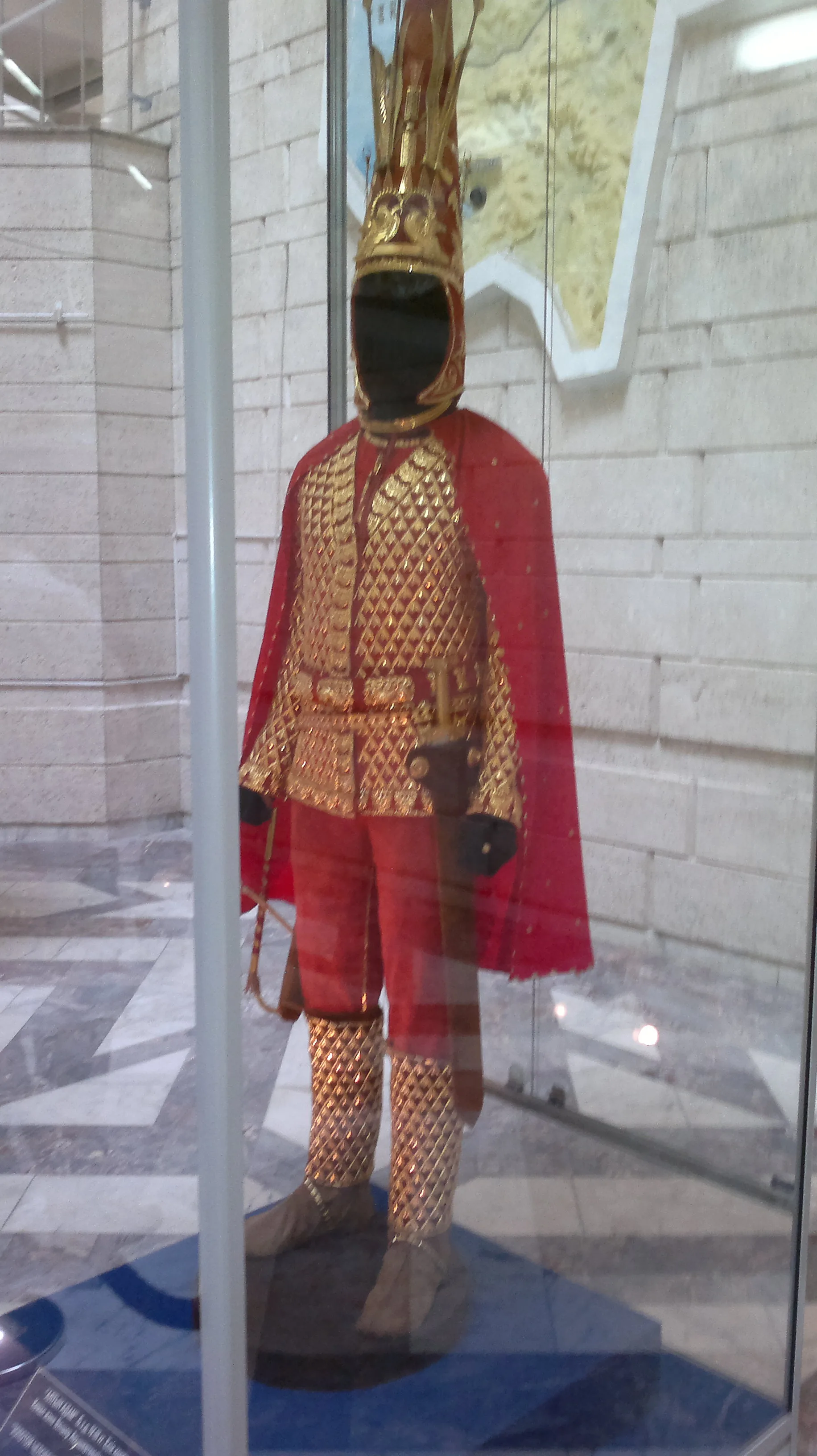
Stop 6
Issyk Historical-Archaeological Museum
- From previous:
- 5 km · 10 min drive
- Stay:
- ~0.75 h
The Issyk State Historical and Cultural Reserve-Museum, in the town of Yesik, centres on the Altyn Adam — the Golden Man. The main display shows a full-scale reconstruction of the burial as found in 1969: the gilded conical headdress rising roughly 65 cm above the skull, the coat of scale armour covered in overlapping gold plaques, and the gold-decorated boots. The nearby silver bowl with its undeciphered inscription is documented in the exhibition. Original artefacts from the excavation — over 4,000 individual gold items — are at the Kazakh Museum of Archaeology in Almaty and the State Museum of Gold and Precious Metals in Astana; what you see here is a high-quality replica presented in excavation context. Allow 30–45 minutes to see the main halls.
Tip: Museum hours are typically 09:00–18:00, closed Mondays; verify before arrival. Entry fee approximately 500–1,000 KZT. Photography is generally permitted inside — confirm with staff. A small gift shop sells replicas of gold-plaque ornaments.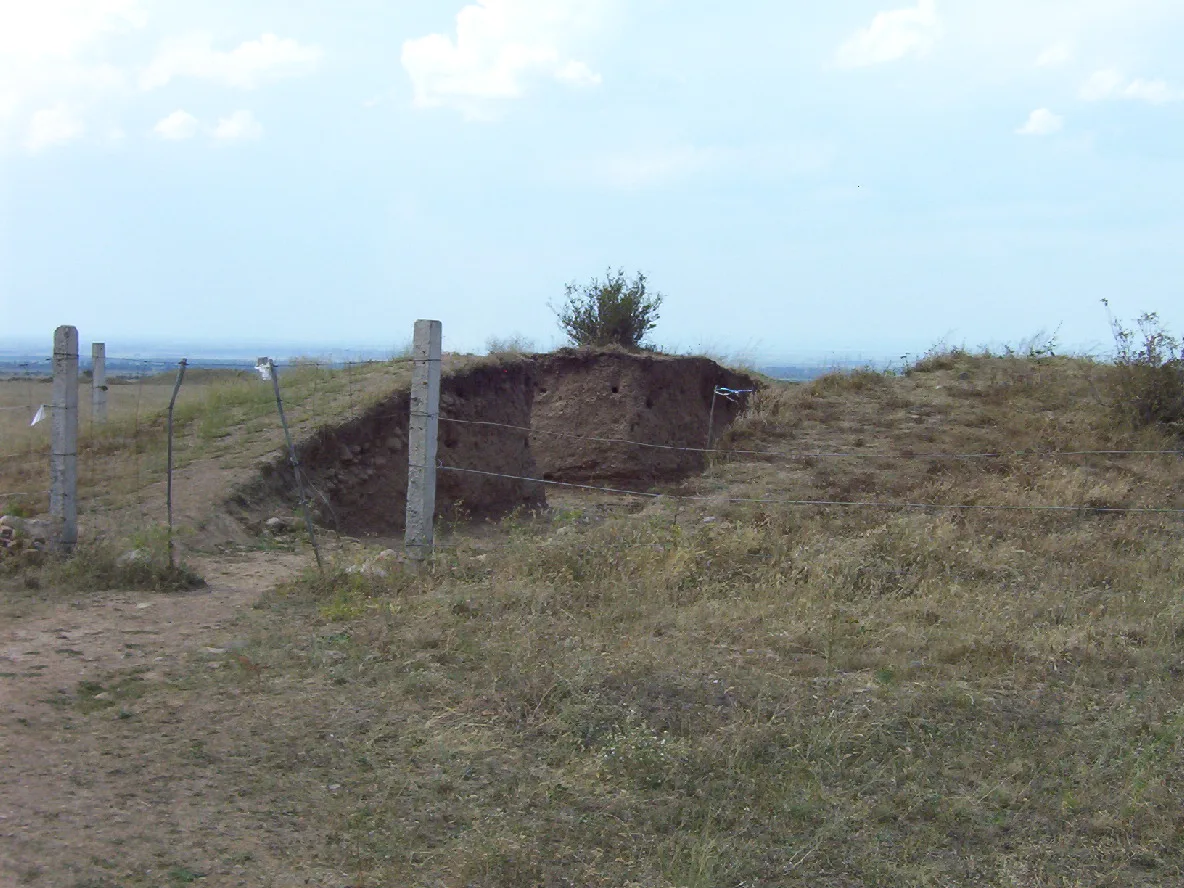
Stop 7
Issyk Kurgan field
- From previous:
- 2 km · 8 min drive
- Stay:
- ~1 h
About 2 km west of the museum, on the northern side of the A-2 highway, the kurgan field is visible from the road: a series of low grass-covered mounds ranging from 4 to 15 metres in height and 30 to 90 metres in diameter, forming the royal necropolis of a Saka tribal elite. There are 45 large mounds in the complex. The main excavated kurgan — 6 metres high, 60 metres across — yielded the Golden Man burial in 1969 when a construction crew accidentally cut into it, prompting Kemal Akishev's excavation team from the Kazakhstan Institute of History, Ethnography and Archaeology to investigate. Interpretive signs at the site (Kazakh, Russian, English) describe the birch-beam chamber construction, the burial arrangement, and the significance of the silver bowl with its inscription of 26 characters in an undeciphered script dated palaeographically to the 6th–5th century BCE. The site is open access.
Tip: The mounds are not individually labelled beyond the main excavated kurgan. Walk the perimeter of the main mound (about 200 m circuit) — the scale of the earthwork is clearest at ground level. The site has no shade; bring water and a hat.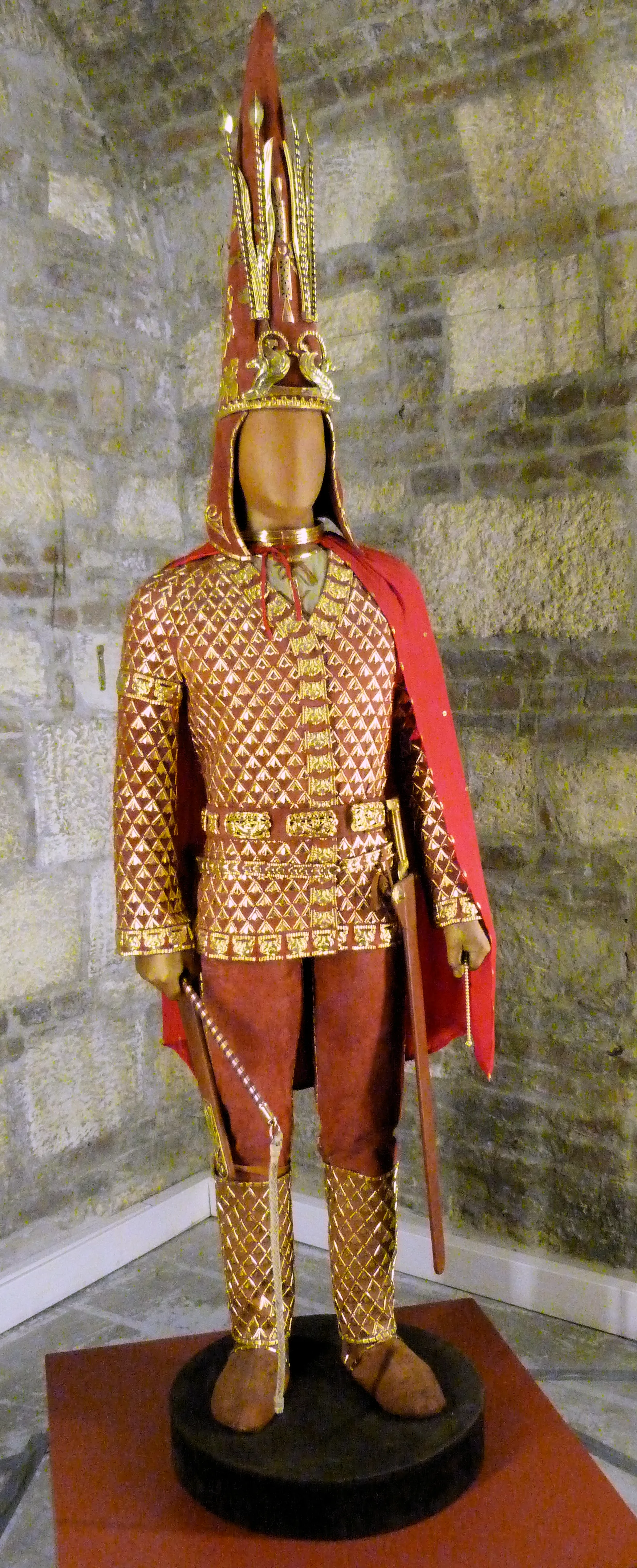
Stop 8
Return to Almaty
- From previous:
- 52 km · 65 min drive
Rejoin the A-2 heading west. The return drive from Issyk to central Almaty is approximately 52 km and takes 55–70 minutes depending on traffic. Traffic density increases approaching the city from around 16:00 on weekdays and from 15:00 on summer weekends. The Kazakh Museum of Archaeology at 44 Dostyk Avenue in Almaty holds the original Golden Man artefacts and a broader collection of Saka and Karakhanid material — a natural extension of the day if the reconstruction at the Issyk museum prompted further interest.
Tip: If returning via Almaty's city centre, the Kazakh Museum of Archaeology on Dostyk Avenue (open Tue–Sun 10:00–18:00, approximately 1,000–1,500 KZT entry) displays the original Golden Man artefacts and Talkhiz excavation finds. Allow 1–1.5 hours.
What to bring
- Water (1.5 L per person minimum)
- Sun hat and sunscreen — sites are open and exposed
- Sturdy walking shoes for uneven mound terrain
- Cash for museum entry (card readers may be unavailable)
- Camera
- Printed or downloaded map — signage to Talkhiz from the main road is minimal
- Light jacket — museum interiors can be cool
Sources
Researched from English and Russian sources. Inaccuracies are mine.
- https://en.wikipedia.org/wiki/Issyk_kurgan
- https://en.wikipedia.org/wiki/The_Ancient_Settlement_Talhiz_(Talgar)
- https://ru.wikipedia.org/wiki/%D0%A2%D0%B0%D0%BB%D0%B3%D0%B0%D1%80
- https://silkroadresearch.blog/silk-road-countries/kazakhstan/talgar/
- https://factsanddetails.com/central-asia/Kazakhstan/sub8_4h/entry-7160.html
- https://en.wikipedia.org/wiki/Issyk_Golden_Cataphract_Warrior
- https://commons.wikimedia.org/wiki/Category:Issyk_kurgan
- https://commons.wikimedia.org/wiki/Category:Issyk_Golden_Cataphract_Warrior
- https://visitworldheritage.com/en/eu/wider-kazakhstan-settlements-silk-roads-the-routes-network-of-chang%E2%80%99an-tianshan-corridor/00c9ae76-50df-47df-9c9c-d96f69798601
- https://grokipedia.com/page/the_ancient_settlement_talhiz_talgar
Similar trips
Day trip
Issyk Lake
A turquoise alpine lake at 1,756 m in the Ile-Alatau foothills, 72 km from Almaty — a rewarding half-day drive through the Issyk Gorge, with forested shores, a reconstructed dam, and the nearby Saka 'Golden Man' burial mounds.
Day trip
Medeu & Shymbulak
The Ile-Alatau mountains rise straight from Almaty's southern edge; drive 17 km up the gorge and you reach Medeu's famous high-altitude ice rink, then a gondola carries you another 1,500 m to Talgar Pass at 3,200 m.
Day trip
Sorbulak Lake and Ile Delta Birding
Lake Sorbulak — a sewage-fed reservoir 40 km north of Almaty that became Central Asia's most species-rich inland birding site — hosts breeding Dalmatian pelicans, staging greater flamingos, and over 20 Red-Listed species during spring and autumn migration.