Overview
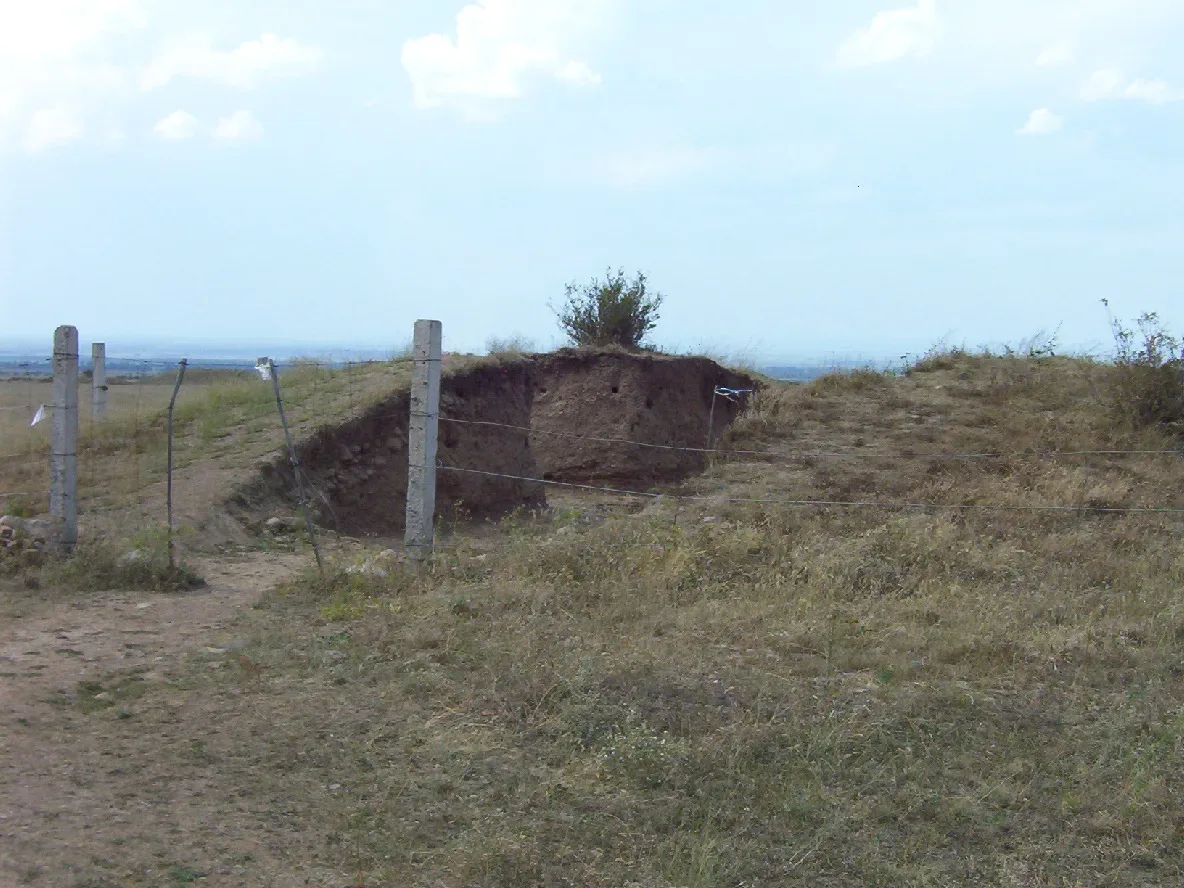
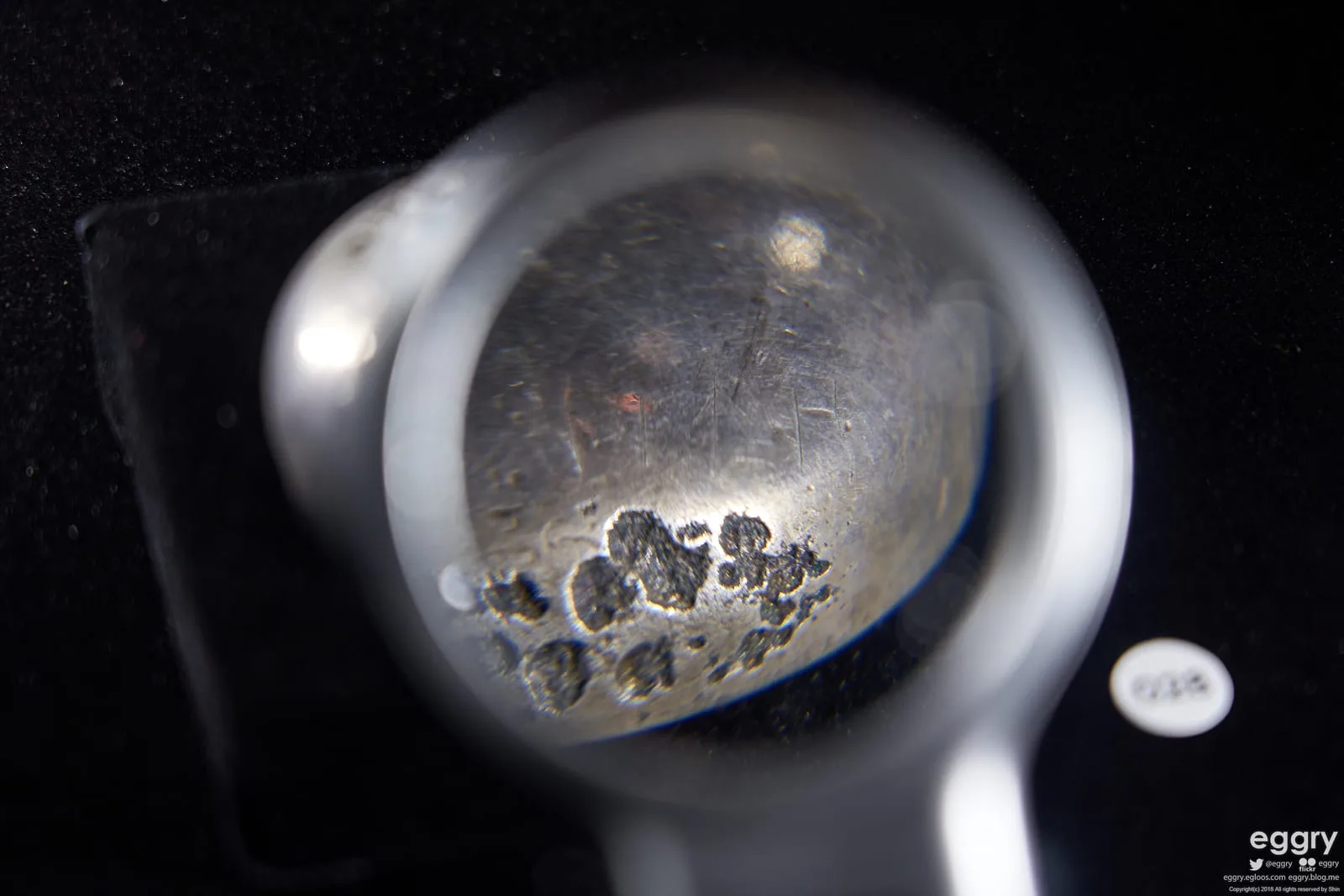
About 2 km west of the museum, on the northern side of the A-2 highway, the kurgan field is visible from the road: a series of low grass-covered mounds ranging from 4 to 15 metres in height and 30 to 90 metres in diameter, forming the royal necropolis of a Saka tribal elite. There are 45 large mounds in the complex. The main excavated kurgan — 6 metres high, 60 metres across — yielded the Golden Man burial in 1969 when a construction crew accidentally cut into it, prompting Kemal Akishev's excavation team from the Kazakhstan Institute of History, Ethnography and Archaeology to investigate. Interpretive signs at the site (Kazakh, Russian, English) describe the birch-beam chamber construction, the burial arrangement, and the significance of the silver bowl with its inscription of 26 characters in an undeciphered script dated palaeographically to the 6th–5th century BCE. The site is open access.
Open Issyk Kurgan Field in maps
Choose a map provider for this destination.
These links open only this place, not a full road-trip route. Links open in a new tab. 2GIS opens the map point; start navigation there.
Gallery


Jump to visit notes
Visit notes
Viewing visit notes for Talgar and Issyk Saka Kurgan
Issyk Kurgan field
Step 7 · 2 km from previous · 8 min drive
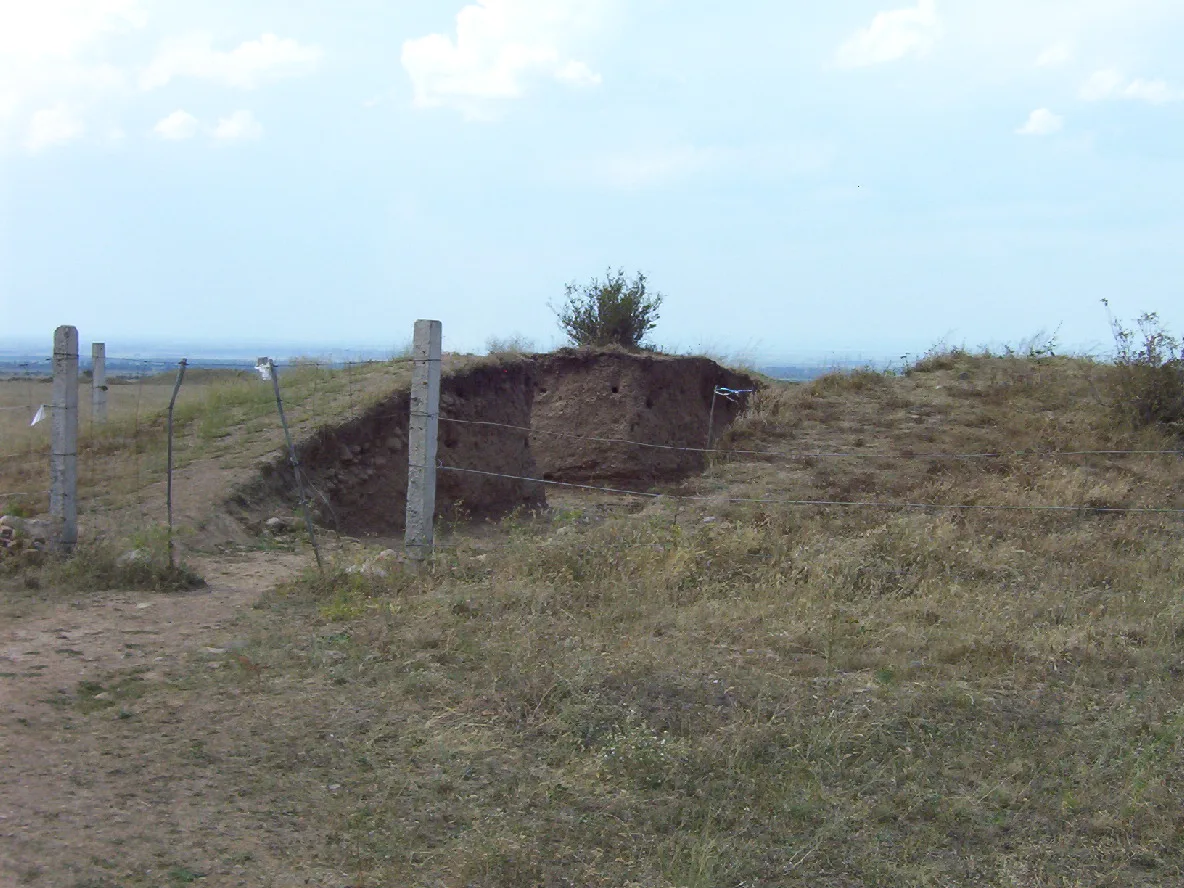
About 2 km west of the museum, on the northern side of the A-2 highway, the kurgan field is visible from the road: a series of low grass-covered mounds ranging from 4 to 15 metres in height and 30 to 90 metres in diameter, forming the royal necropolis of a Saka tribal elite. There are 45 large mounds in the complex. The main excavated kurgan — 6 metres high, 60 metres across — yielded the Golden Man burial in 1969 when a construction crew accidentally cut into it, prompting Kemal Akishev's excavation team from the Kazakhstan Institute of History, Ethnography and Archaeology to investigate. Interpretive signs at the site (Kazakh, Russian, English) describe the birch-beam chamber construction, the burial arrangement, and the significance of the silver bowl with its inscription of 26 characters in an undeciphered script dated palaeographically to the 6th–5th century BCE. The site is open access.