Overview
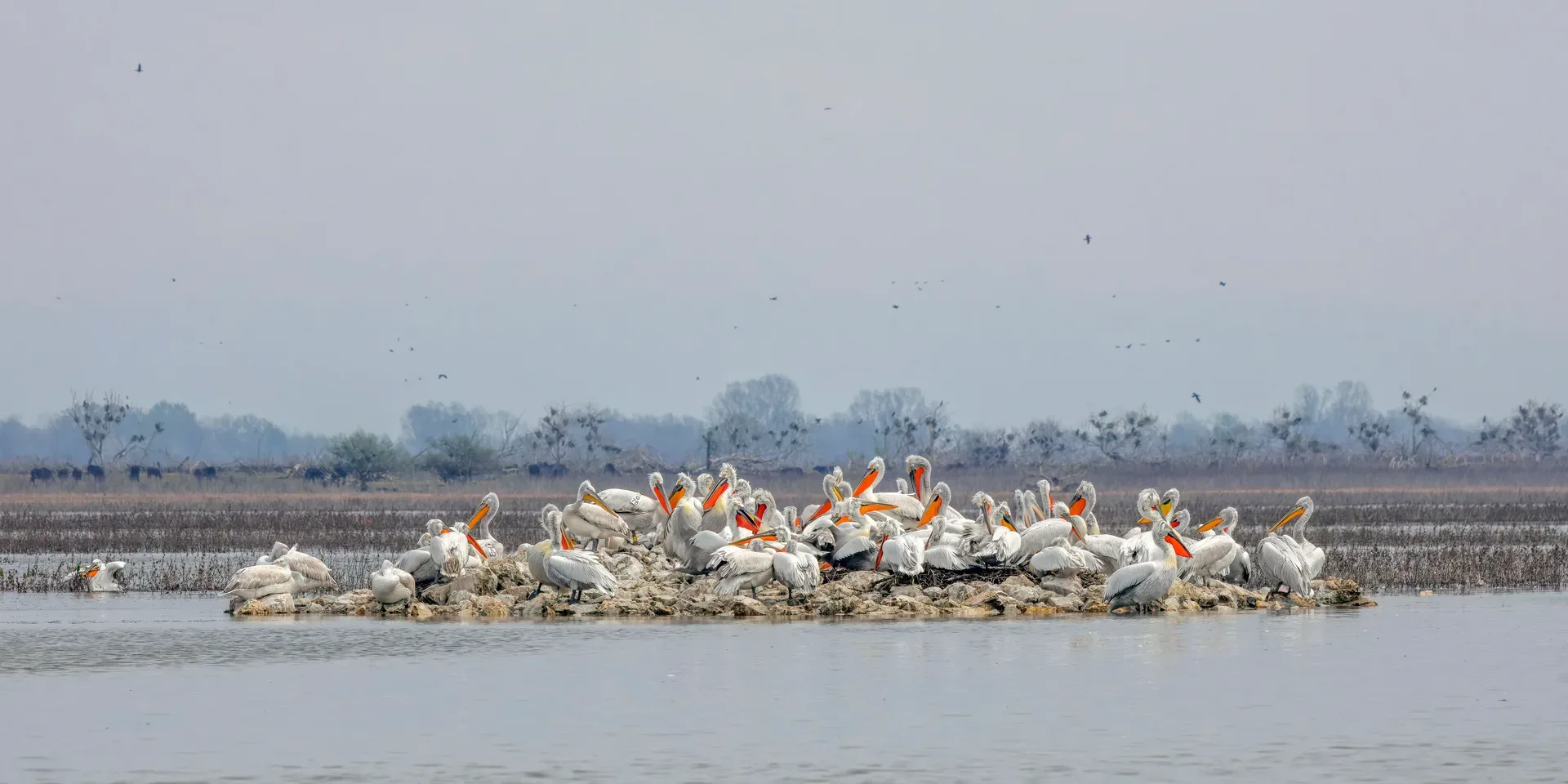
The Dalmatian pelican (Pelecanus crispus) colony at Sorbulak supports up to 300 breeding pairs — one of the largest colonies in Kazakhstan for a globally vulnerable species with a world population of around 10,000 birds. From the east-shore access road, the pelicans are best viewed where the reed bed gives way to open water. Adult birds measure 160–180 cm in length with a wingspan up to 295 cm; the colony is audible from 200 m, a constant grunting and bill-clattering. Great white pelicans (Pelecanus onocrotalus) share the same water and are visually distinguished by their pink-flushed white plumage and solid orange-yellow pouch. A scope is essential here — birds rarely approach closer than 200–300 m.
Open Open Water Pelican Zone in maps
Choose a map provider for this destination.
These links open only this place, not a full road-trip route. Links open in a new tab. 2GIS opens the map point; start navigation there.
Gallery
_roost_Kerkini.jpg)

.jpg)


Jump to visit notes
Visit notes
Viewing visit notes for Sorbulak Lake and Ile Delta Birding
Open-Water Pelican Zone
Step 4 · 3 km from previous · 8 min drive
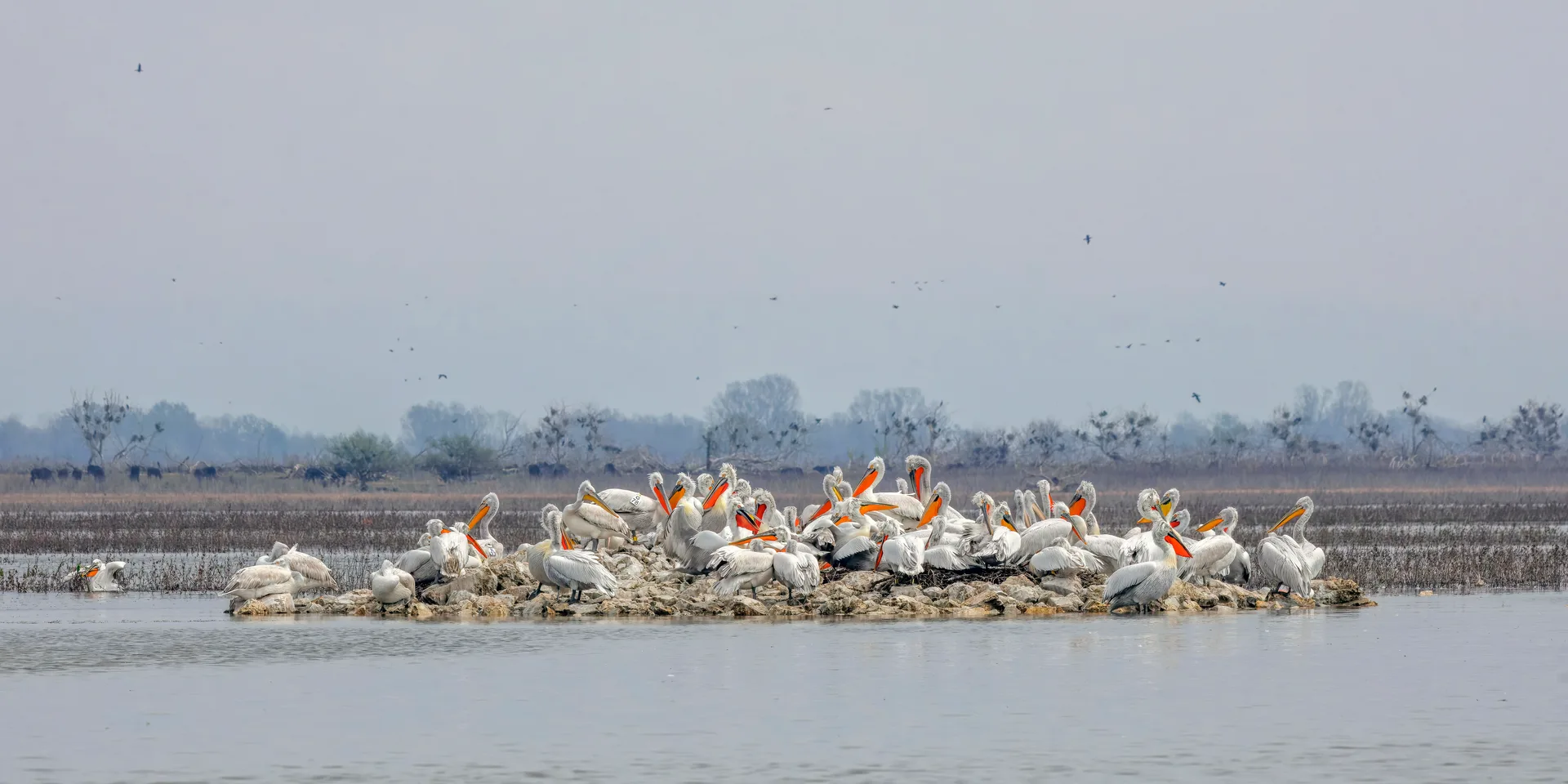
The Dalmatian pelican (Pelecanus crispus) colony at Sorbulak supports up to 300 breeding pairs — one of the largest colonies in Kazakhstan for a globally vulnerable species with a world population of around 10,000 birds. From the east-shore access road, the pelicans are best viewed where the reed bed gives way to open water. Adult birds measure 160–180 cm in length with a wingspan up to 295 cm; the colony is audible from 200 m, a constant grunting and bill-clattering. Great white pelicans (Pelecanus onocrotalus) share the same water and are visually distinguished by their pink-flushed white plumage and solid orange-yellow pouch. A scope is essential here — birds rarely approach closer than 200–300 m.