Before you go
- Vehicle
- High-clearance recommended
- Permit
- Not required
- Entrance fee
- The jailau zone above Saty is open rangeland — no park gate or fee applies when approaching from the Saty track (as distinct from the Kolsai Lakes national park gate south of the village). Check with your Saty guesthouse before departure; informal grazing-land access norms can vary by season and family territory.
- Peak altitude
- 3200 m
- Cell coverage
- Patchy
- Fuel
- Fill up in Almaty before leaving. Last reliable fuel is in Kegen, approximately 240 km from Almaty. Saty has no fuel station. Carry a 10-litre reserve can if the jailau track above Saty is on the itinerary.
- Road status
- Almaty to Kegen: paved A-351 highway (236 km). Kegen to Saty: paved road (approximately 44 km). Above Saty to jailau zone: unpaved dirt track with stream crossings and exposed switchbacks; high-clearance recommended, 4x4 preferred in wet conditions. Track passable in dry summer weather in a high-clearance SUV.
- Closed months
- Jan, Feb, Mar, Apr, May, Sep, Oct, Nov, Dec
About this trip
Saty village sits in the Shilik valley at 1,448 m, roughly 280 km southeast of Almaty along the A-351 highway and then south through Kegen. In 2023 the United Nations Tourism Organisation named it one of its Best Tourism Villages — a designation tied to community-based tourism infrastructure rather than any single attraction. The village itself is compact: roughly 1,400 residents, a mosque, a school, patrilocal household clusters visible from the main track, and 90-plus guesthouses that have doubled in capacity since 2019. What makes Saty distinct from the surrounding park infrastructure is that the village functions as the economic base for semi-transhumant herding families who move cattle, horses, and sheep up to the jailau (жайлау) each June and bring them back in late August or early September.
The jailau — the Kazakh word for a summer highland pasture — occupies the open ridges and grassy basins above the treeline starting at around 2,800 m. Under the Soviet collective farm system this land was managed as otgon pasture: herders were state employees, the animals belonged to the kolkhoz, and the seasonal migration was coordinated across districts. After 1991 the collectives dissolved. What emerged in mountain zones like the Kungey Alatau was informal pasture rotation among households and kin groups: wealthier families hire shepherds for the season; smaller operators pool their animals with a larger herd. The physical patterns — tent placement, water-source selection, milking schedules — are continuous with pre-Soviet practice, but the property and labour arrangements are post-collective.
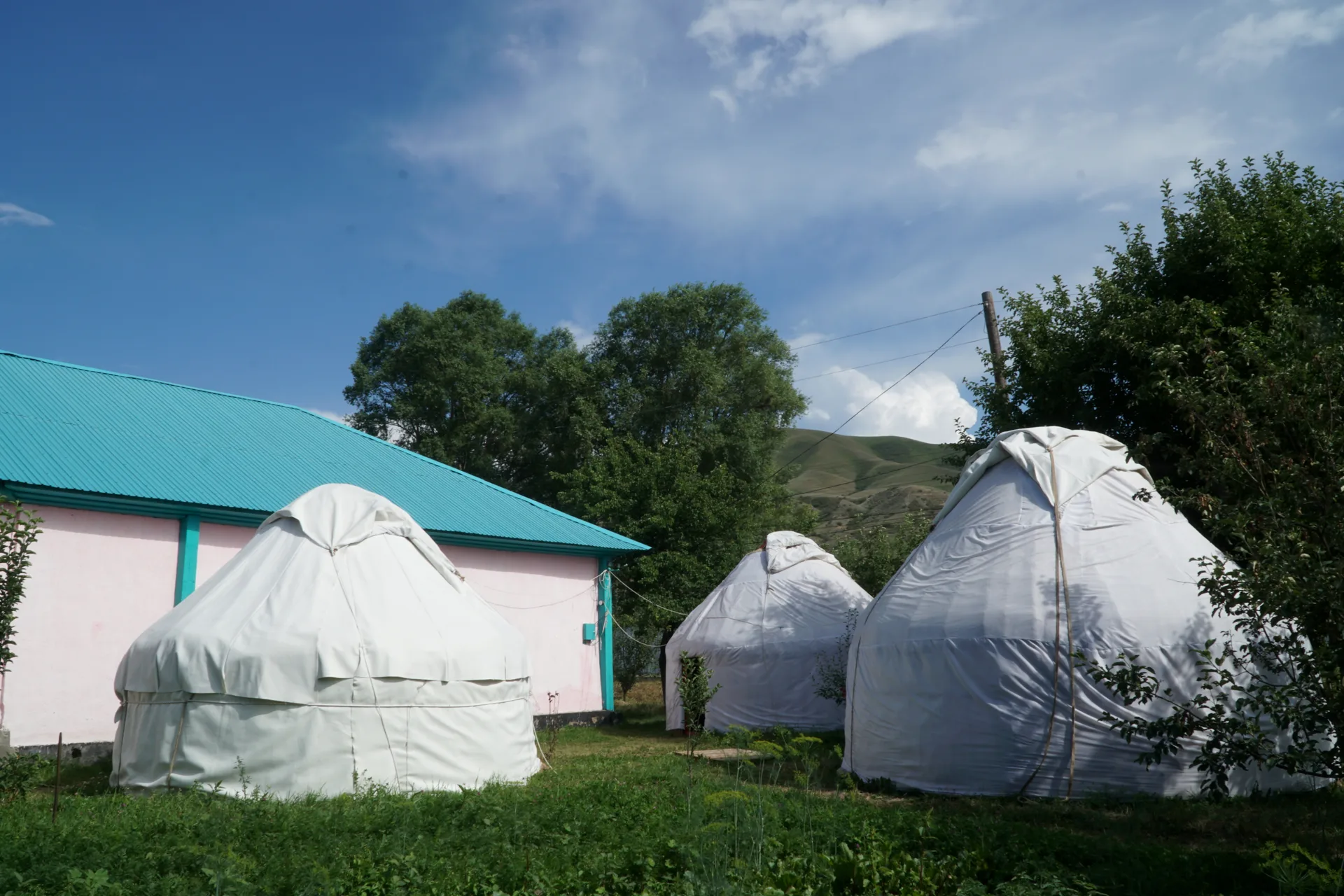
A high-clearance vehicle is required from Saty upward. The track climbs on unpaved switchbacks through the spruce belt and breaks into open alpine meadow. Herder families erect the kiyiz üy (felt house) on the jailau at the start of the season and take it down when they descend. The structure has a wooden lattice frame (kerege), bent roof poles (uyk) meeting at the circular crown ring (shanyrak), and layers of felt panels tied with coloured rope — a fully demountable system that packs onto pack horses. If a family is in the active milking period and kymyz (fermented mare's milk) is offered, declining is awkward. Ask before photographing milking: the milker kneels with the foal pressed to the mare's side to trigger let-down, and this is a working moment, not a performance.
The trip is a two-day structure: day one covers the drive from Almaty, the Kegen supply stop, the Saty village walk, and the drive up to the jailau for a late-afternoon visit; night is spent at a Saty guesthouse. Day two begins with an early drive back up to the high pasture viewpoint above treeline, then descent and return to Almaty. The route does not touch Kolsai Lakes or Kaindy Lake. Those are separate destinations with their own itineraries.
Route
Skip map, jump to step listWhere to sleep
- Night 1 of 1Saty Jailau — Bekova Family Yurt CampYurt campBudget
Budget · ~8–15k KZT/night. Mid-range · ~15–40k KZT. Premium · ~40k+ KZT.
Itinerary
Stop 1
Almaty
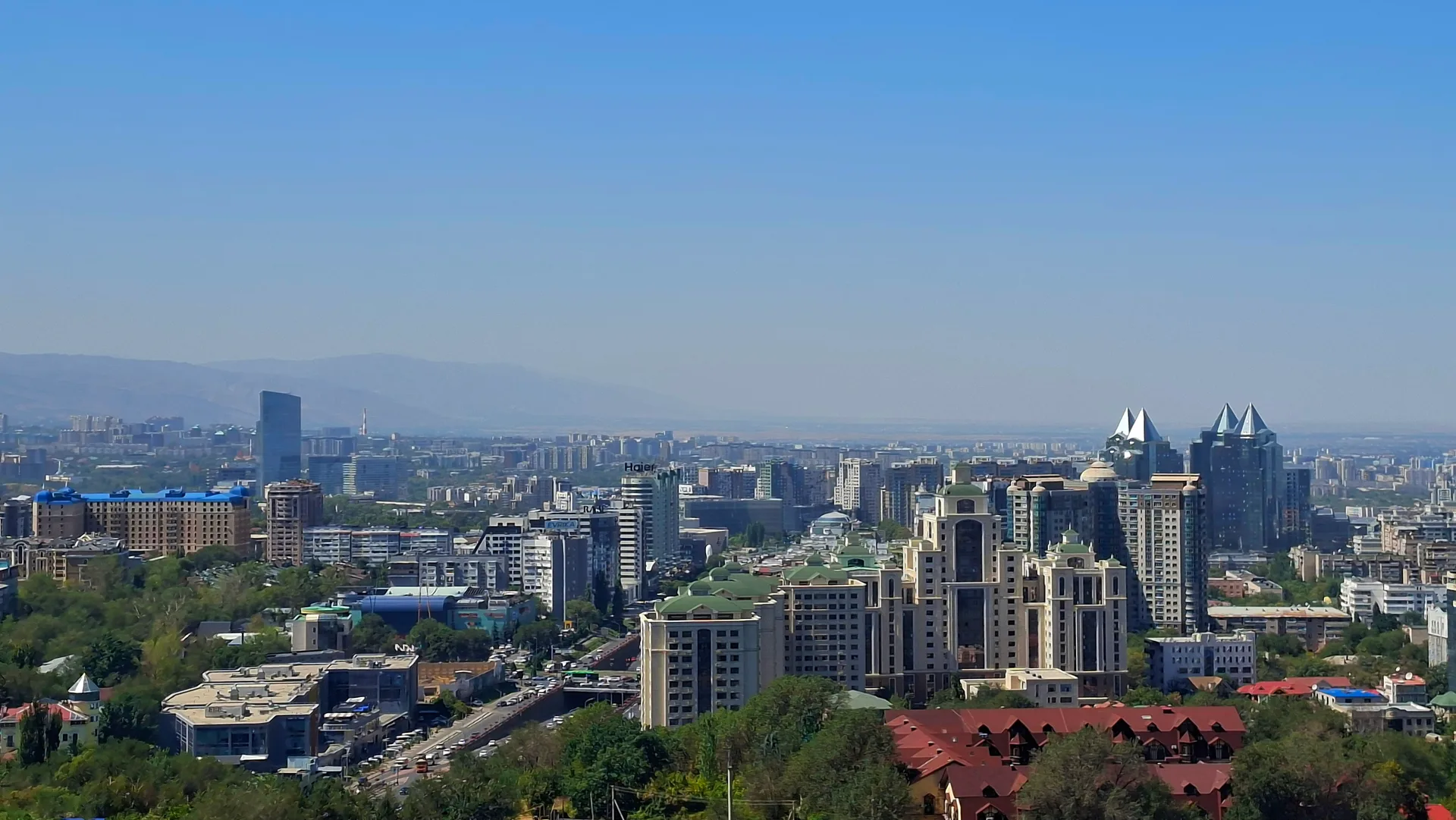
Depart from Almaty on the A-351 highway heading southeast. The route to Saty is 280 km and takes approximately 4.5 hours of driving time under normal conditions. Fill the tank before leaving the city — last reliable fuel is in Kegen, 236 km out. Carry sufficient cash: there is no ATM in Saty and card readers in the area are unreliable. If you plan to hire a local guide for the jailau section, it is worth contacting your Saty guesthouse in advance to arrange this. Departure by 06:30 allows arrival in Saty before midday and a full afternoon for the jailau drive.
Tip: Leave no later than 07:00 to reach the jailau zone in the afternoon while light is good and herders are active. Weekend summer mornings see Almaty traffic building after 08:00.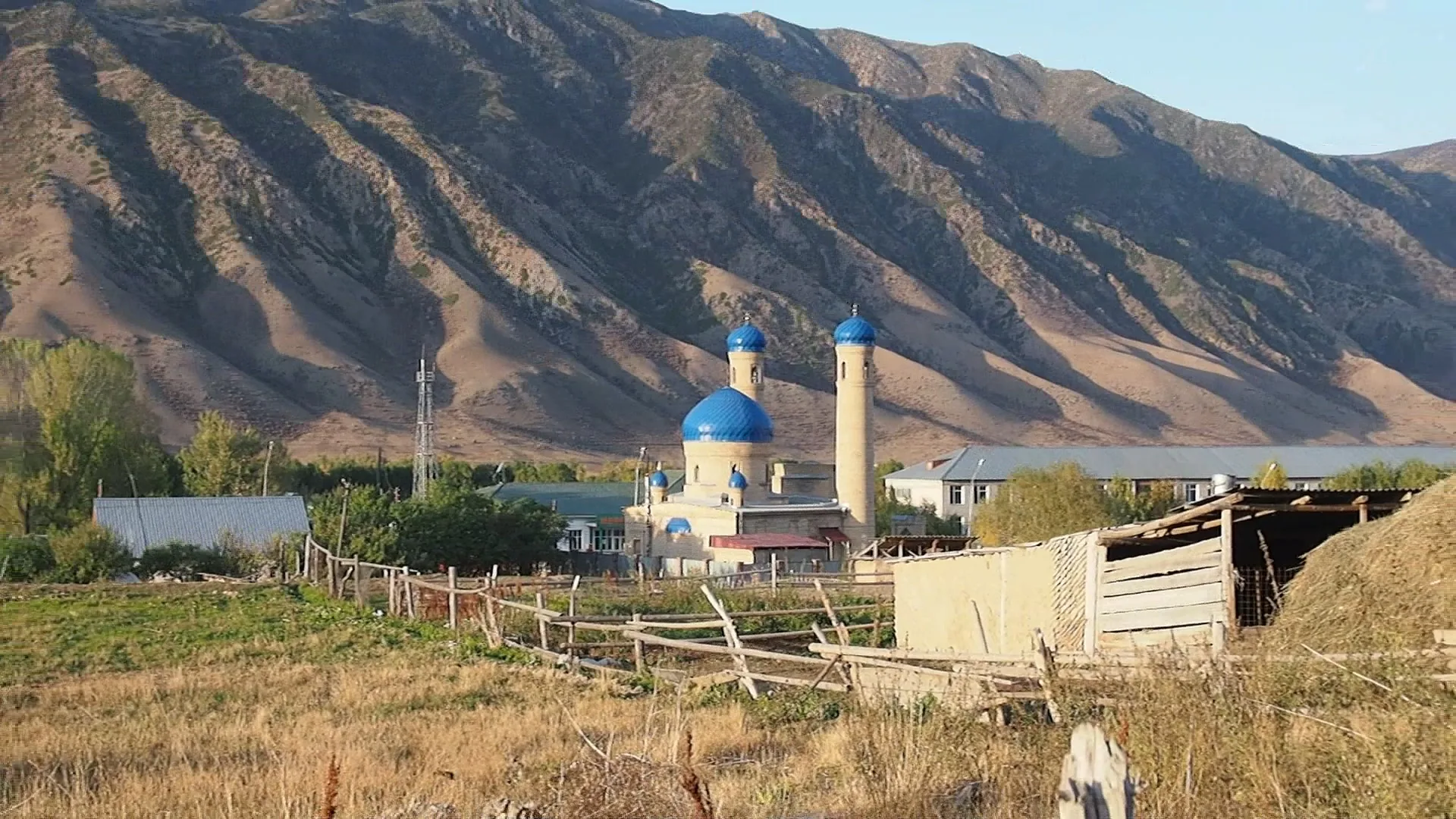
Stop 2
Kegen — Supply Stop
- From previous:
- 236 km · 210 min drive
- Stay:
- ~0.75 h
Kegen is the district seat of Raiymbek District, 236 km from Almaty and roughly 44 km north of Saty along the same road. It is the last town of any size before the village and the last reliable fuel stop. The town has a small bazaar, a pharmacy, and basic shops; stock up on anything not already packed. Kegen sits at around 1,700 m and feels distinctly different from the Almaty basin — drier plateau air, wider sky, fewer trees. Drive time from Almaty is approximately 3.5 hours. The road from Kegen south toward Saty is paved and passes through open steppe before descending into the Shilik valley.
Tip: Refuel here. Saty has no petrol station. The Kegen bazaar is best stocked Thursday–Saturday. Buy water, snacks, and any camp food for the jailau visit before continuing.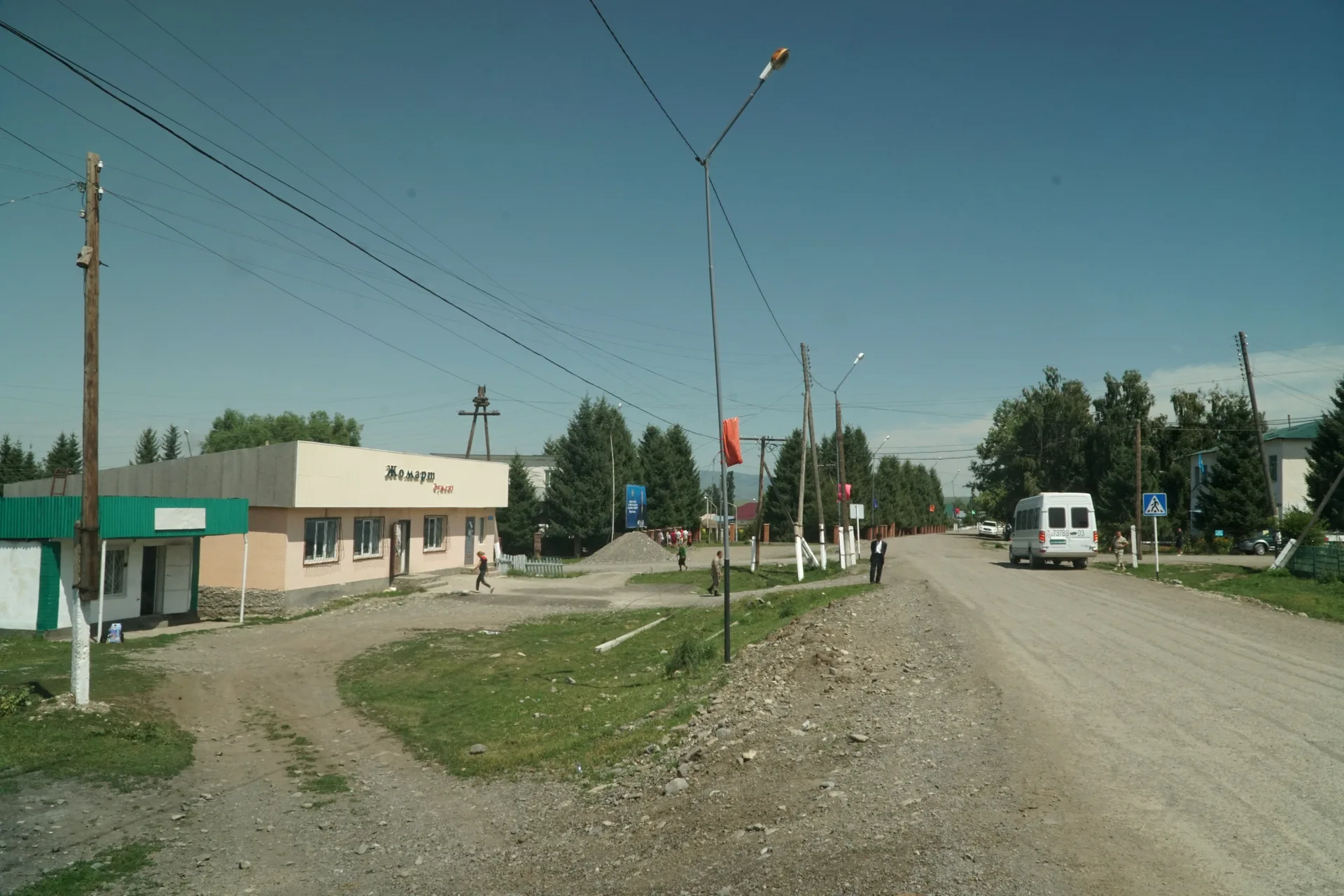
Stop 3
Saty Village — Arrival
- From previous:
- 44 km · 40 min drive
- Stay:
- ~1.5 h
Saty village occupies a flat section of the Shilik valley at 1,448 m. The settlement was designated a UN Tourism Best Tourism Village in 2023, one of 54 globally selected in the initiative's third year. The honour recognised community-based tourism infrastructure: by 2023 the village operated 90 guesthouses and 30 hotels, roughly double the 2019 count. For arriving travellers the practical priority is checking into the guesthouse, which is also where local guides for the jailau can be arranged. Saty is the last point of reliable mobile signal before heading uphill. The guesthouse fee runs approximately 7,000–10,000 KZT per person including dinner and breakfast.
Tip: Book guesthouse accommodation in advance during July and August when the village fills. Ask the guesthouse owner to suggest a herder family willing to receive visitors at the jailau — cold-approach visits can be awkward if no one has vouched for you.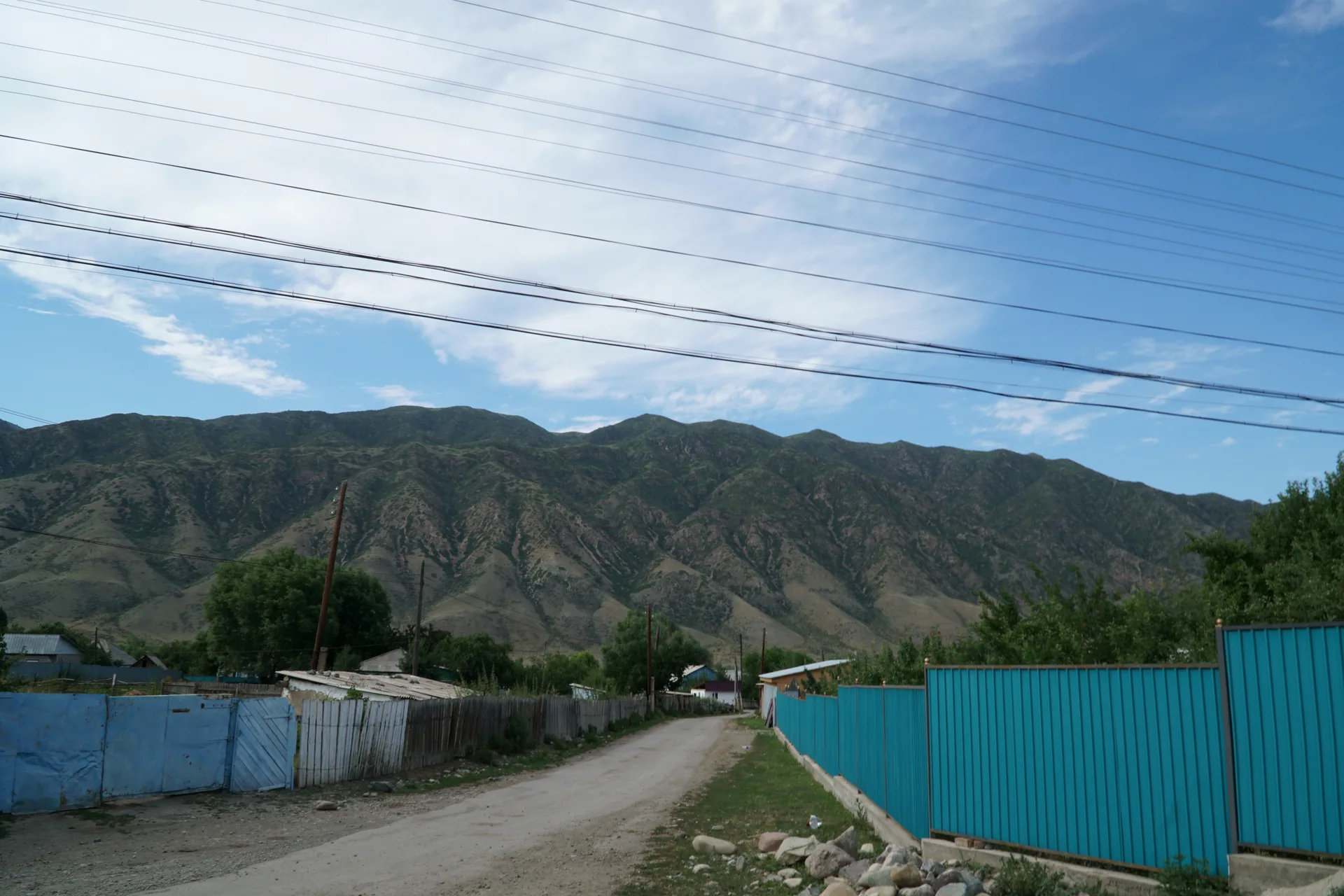
Stop 4
Saty Village Walk — Household Clusters
- From previous:
- 1 km · 5 min drive
- Stay:
- ~1 h
Before driving uphill, spend an hour walking the village perimeter. Saty's layout shows patrilocal household clustering: related men's households often share a compound wall or sit on adjacent plots, with daughters-in-law moving in at marriage. The arrangement is readable from the track — groups of three or four residential structures sharing a yard and a common vegetable plot, separated from the next cluster by open ground. The mosque anchors the village centre. There are no formal tourist facilities in the village core; the walk is observational. A secondary track leads east along the river where horses are sometimes grazed in the early morning. Mobile signal exists here but drops quickly above the valley floor.
Tip: The village is a working community, not a heritage display. Walk quietly, greet people you encounter, and do not photograph private courtyards without permission. A local guide handles introductions and context more effectively than self-directed wandering.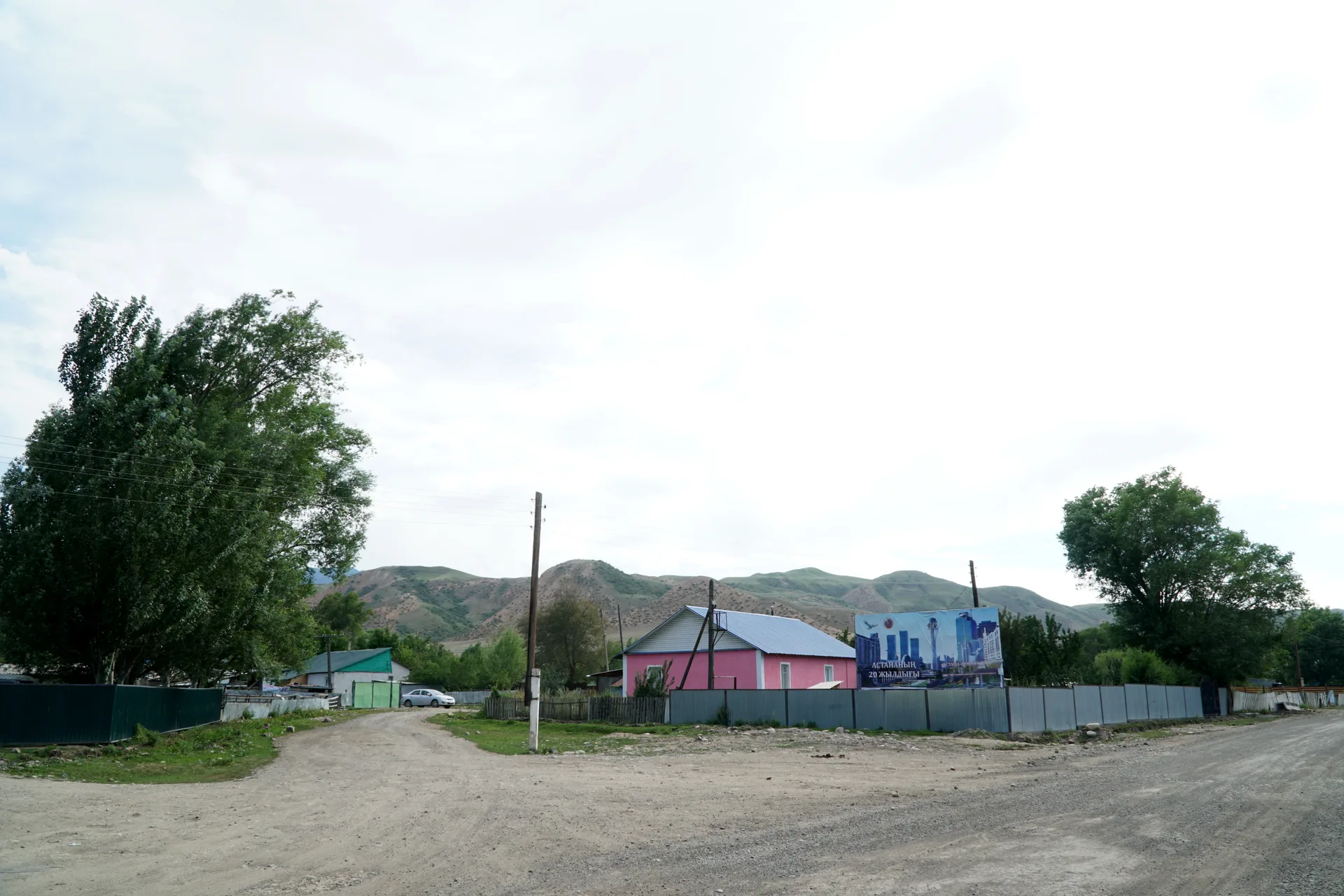
Stop 5
Drive Above Saty — Jailau Track (2,800 m)
- From previous:
- 8 km · 55 min drive
- Stay:
- ~1 h
The jailau track begins at the southern edge of Saty and climbs through dense Tian Shan spruce forest on an unpaved switchback road. The ascent from the village to the open pasture zone at around 2,800 m takes approximately 45 minutes to an hour by high-clearance vehicle. Stream crossings are shallow but present; after rain the track surface becomes slick clay requiring careful line selection. At the treeline the landscape opens abruptly: the spruce gives way to broad, rolling alpine meadow with unobstructed views of the surrounding ridgelines. This is where herder families set up their seasonal camps between June and late August. The track continues to roughly 3,200 m but the pasture zone begins at 2,800 m and most jailau camps cluster between 2,800 and 3,000 m.
Tip: A high-clearance vehicle (SUV or UAZ) is required; a sedan will ground out on the rocky sections. Drive slowly on the switchbacks — the track is single-lane and passing is limited to specific pullouts. If the track is wet from rain, park at the treeline and walk the remaining 1.5 km on foot.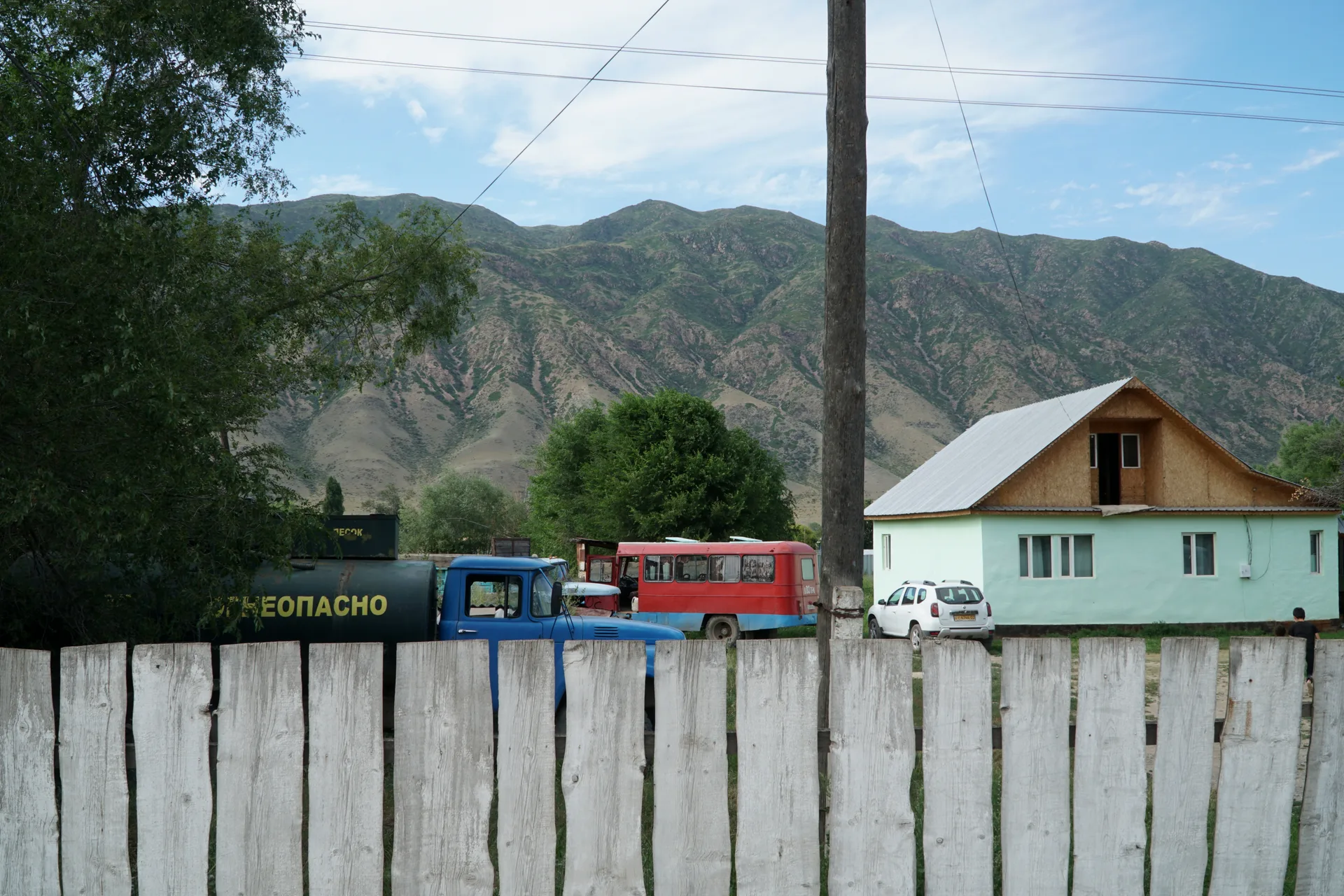
Stop 6
Jailau Yurt Camp — Kymyz Production (2,800–3,000 m)
- From previous:
- 4 km · 25 min drive
- Stay:
- ~2.5 h
The kiyiz üy (felt house) erected on the jailau is a fully functional working shelter, not an exhibit. The structure consists of a cylindrical lattice wall (kerege) made of bent willow rods tied with leather straps, roof poles (uyk) that radiate from the lattice rim up to the circular crown ring (shanyrak), and several layers of felt panels tied on with coloured braid. A full assembly takes two to three hours and two or three people. On an active jailau the saaba — a large fermentation vessel traditionally made from horse hide, today sometimes rubber or food-grade plastic — hangs near the entrance where it is accessible for frequent stirring. Fresh mare's milk is added daily and the contents agitated at intervals with a wooden churn; the fermentation cycle for kymyz runs two to five days at ambient temperature. Milking occurs up to six times per day in peak season. If kymyz is offered, it is a social gesture and declining without a medical explanation is awkward. The drink is mildly alcoholic (typically under 2%) and distinctly sour.
Tip: Ask before photographing milking — it is a working process requiring the herder's full attention. Do not touch the saaba or other fermentation equipment. Interior yurt photography is at the household's discretion; ask via your guide. Bring a small gift (tea, sugar, or bread) as a token of respect.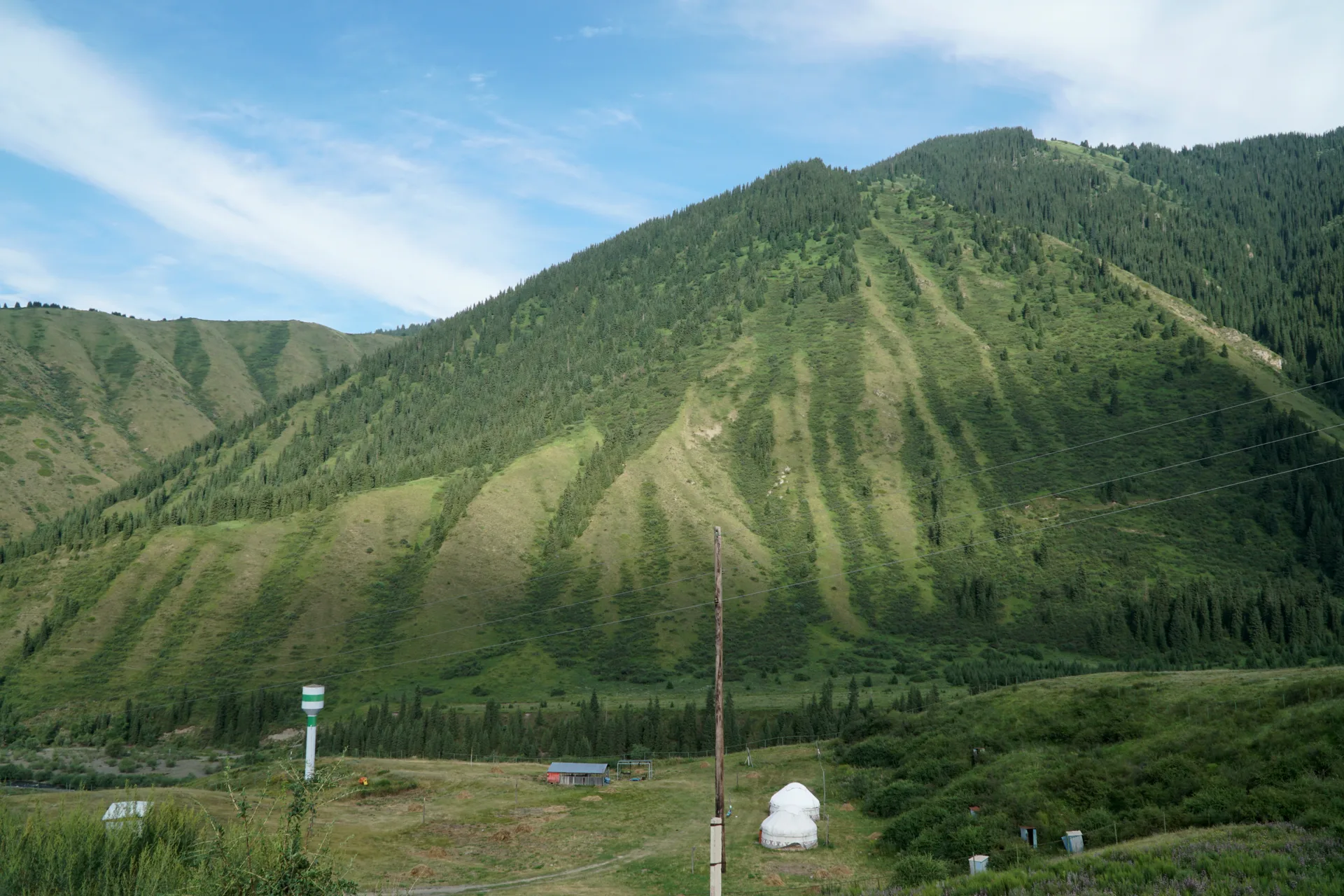
Stop 7
Above-Treeline Pasture Viewpoint (3,000+ m)
- From previous:
- 3 km · 20 min drive
- Stay:
- ~1.5 h
From the jailau camp, a 1.5–2 km walk or short drive uphill reaches a viewpoint above 3,000 m where the full scale of the Kungey Alatau ridge becomes visible. Looking north, the Saty valley is laid out below; looking south, the terrain rolls toward the Kazakhstan–Kyrgyzstan border ridge. Horse and cattle herds are commonly visible across the open slope in midsummer. The pasture here is short-grass alpine steppe grazed continuously by domestic animals since at least the medieval period; the plant cover is notably different from the protected spruce forest below — shorter, more open, marked by animal paths. This is the high point of the trip at roughly 3,000–3,200 m and the turnaround before overnight in Saty. Return to the village by late afternoon. Night: Saty guesthouse.
Tip: Altitude is around 3,000–3,200 m. Acclimatise before any sustained walking — you drove up in under an hour from 1,448 m. Afternoon thunderstorms are common July–August; plan to be descending by 14:00. There is no shelter above the treeline.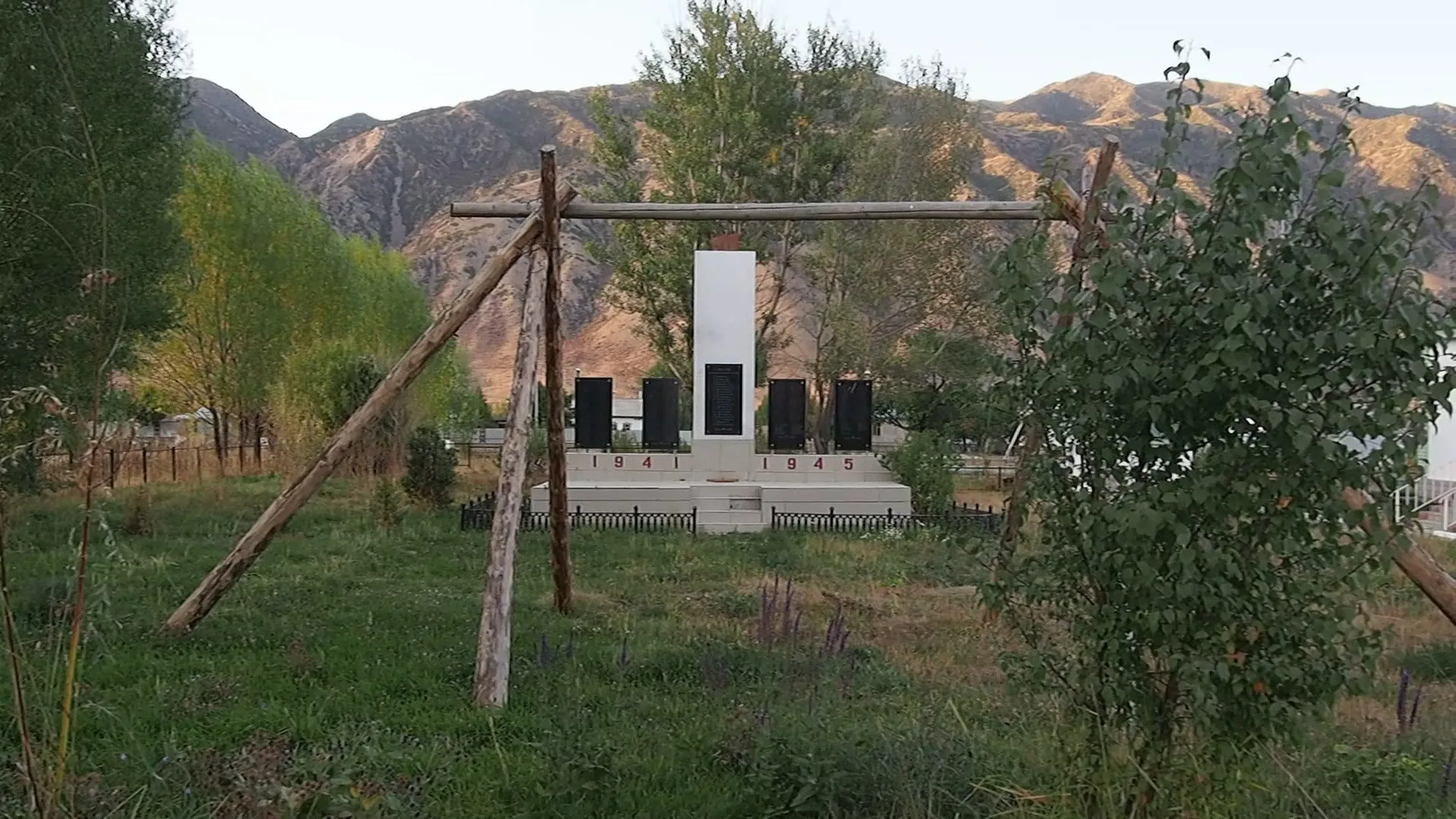
Stop 8
Return — Saty to Kegen to Almaty
- From previous:
- 280 km · 250 min drive
Depart Saty after breakfast on day two. The return drive follows the same route in reverse: Saty to Kegen (44 km, about 40 minutes), then Kegen to Almaty on the A-351 (236 km, approximately 3.5 hours). Total return drive is around 4 hours without stops. Kegen offers a last fuel and food stop. The A-351 back to Almaty is straightforward — a single highway through the Charyn river basin and then Chilik before the city ring. Traffic into Almaty on Sunday evenings can back up after 17:00; plan departure from Saty no later than 09:00 if arriving Sunday.
Tip: Check weather before the jailau if you plan a second morning visit — track conditions change quickly after rain. Leave Saty by 09:00 to avoid Sunday evening traffic backing up into Almaty from the A-351.
Night 1 of 1 · after Step 6: Jailau Yurt Camp — Kymyz Production (2,800–3,000 m)
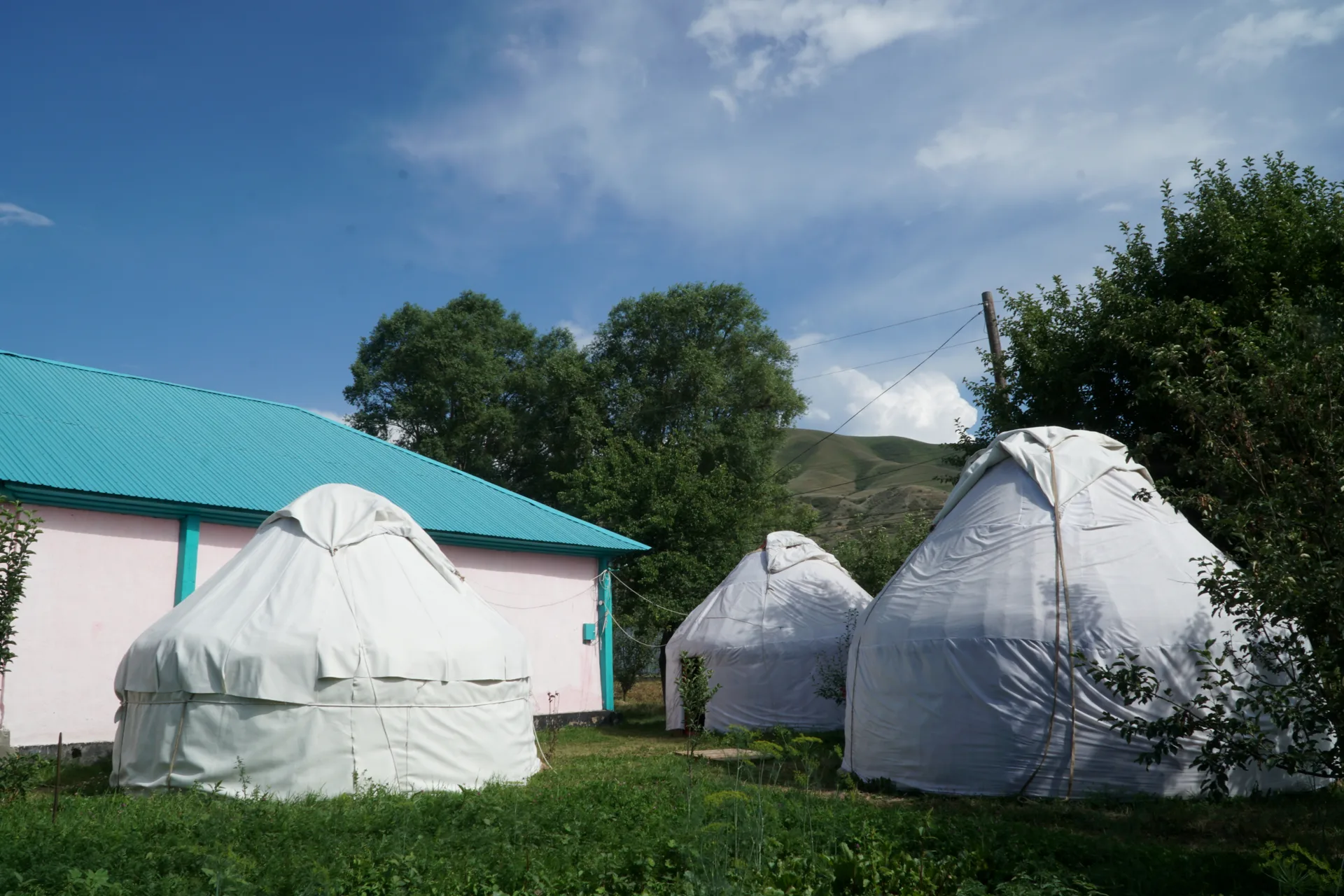
Saty Jailau — Bekova Family Yurt CampДжайлау Саты — летовка семьи Бековых
A family-run summer camp on the open jailau at 2,850 m, operated by a herder household that has grazed this pasture zone since Soviet times. Two felt-covered kiyiz üy sleep up to six guests on traditional blanket bedding; evening meals are taken inside the larger yurt with the family. Kymyz is available through July and August when the mares are in active milk — the fermentation vessel hangs near the entrance and the rhythm of the camp is set by milking intervals, not clock time.
- kymyz
- meals included
- outdoor toilet
- traditional yurts
2 guest yurts, up to 6 guests; meals included
Also nearby
Saty Jailau — Kerei Herder CampYurt campBudget· kymyz
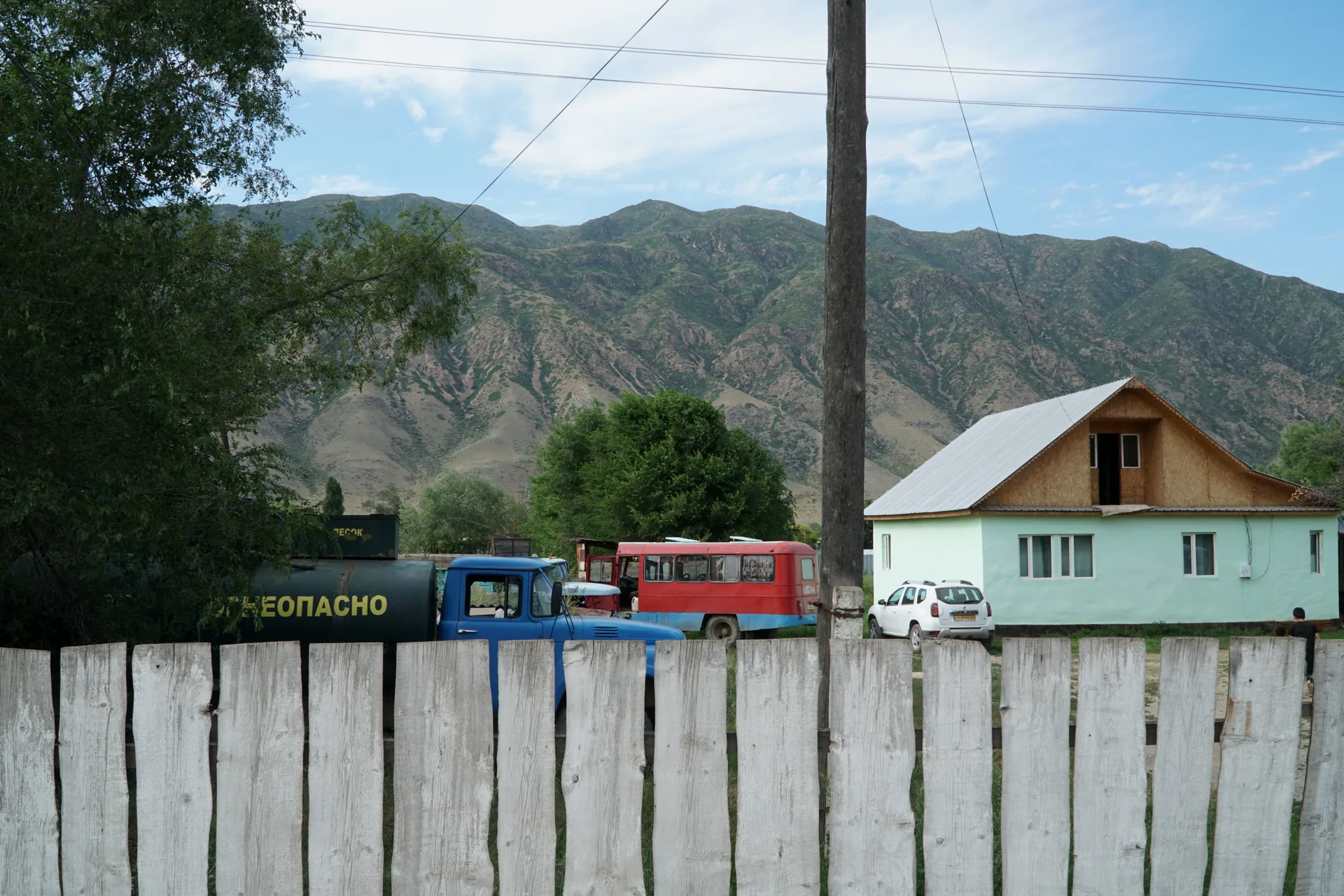
Saty Jailau — Kerei Herder CampДжайлау Саты — пастушья стоянка Кереев
A single-yurt herder camp at around 2,950 m on the high pasture north of the Saty ridge, run by a Kerei lineage family who bring horses and cattle up each June. Guests sleep in the family yurt on felt-lined wooden beds; a second, smaller shelter serves as a cooking space. The camp sits near a seasonal stream and has wide views west along the Kungey Alatau foothills. Contact is best arranged in advance through Saty village guesthouses, as there is no fixed phone at altitude.
- kymyz
- meals included
- traditional yurts
1 shared yurt, up to 4 guests
What to bring
- Water (3 L per person for the jailau day)
- Warm mid-layer (temperatures drop sharply above 2,800 m even in July)
- Rain jacket (afternoon thunderstorms common July–August)
- Sun hat and sunscreen (UV exposure intense at altitude)
- Sturdy footwear with ankle support (rocky track above treeline)
- Cash in KZT (no ATM in Saty; bring enough for guesthouse + guide + supplies)
- Food for jailau day (no shops above Saty village)
- Camera with wide-angle lens (open pasture, wide ridgelines)
- Insect repellent (June–July mosquitoes active in valley)
- Small daypack for the on-foot section above treeline
- Passport (general ID requirement for the region)
Sources
Researched from English and Russian sources. Inaccuracies are mine.
- https://tourism-villages.unwto.org/en/villages/saty/
- https://astanatimes.com/2023/10/kazakhstans-saty-village-named-unwtos-best-tourism-village-2023/
- https://www.nomadsland.travel/en/before-you-go/kazakhstan/villages/saty
- https://welcome.kz/en/info-cities/almaty-region/saty-village
- https://en.wikipedia.org/wiki/Kumis
- https://ru.wikipedia.org/wiki/%D0%96%D0%B0%D0%B9%D0%BB%D0%B0%D1%83
- https://www.frontiersin.org/journals/sustainable-food-systems/articles/10.3389/fsufs.2020.590401/full
- https://commons.wikimedia.org/wiki/Category:Saty_(Almaty_Region)
Similar trips
Day trip
Big Almaty Lake
A turquoise alpine reservoir at 2,511 m in the Ile-Alatau National Park, roughly 28 km south of Almaty — the city's most accessible high-mountain destination and its primary drinking-water source.
Day trip
Kaskelen Gorge
A limestone-walled canyon 42 km southwest of Almaty, reached by asphalt to within 5 km of the trailhead, featuring Schrenk spruce forest, wild apple and apricot groves, and Uy-Tas — a 500-tonne granite glacial erratic sitting alone on a 2,000 m ridge.
2 days
Charyn: Valley of Castles and Moon Canyon
A full-day combined loop that pairs the red sandstone towers of the Valley of Castles with the pale grey-yellow walls of <span lang="ru">Лунный каньон</span> (Moon Canyon) — a short spur downstream along the Charyn, rarely crowded even in peak season, and strikingly different in colour and character from its better-known neighbour.