Overview
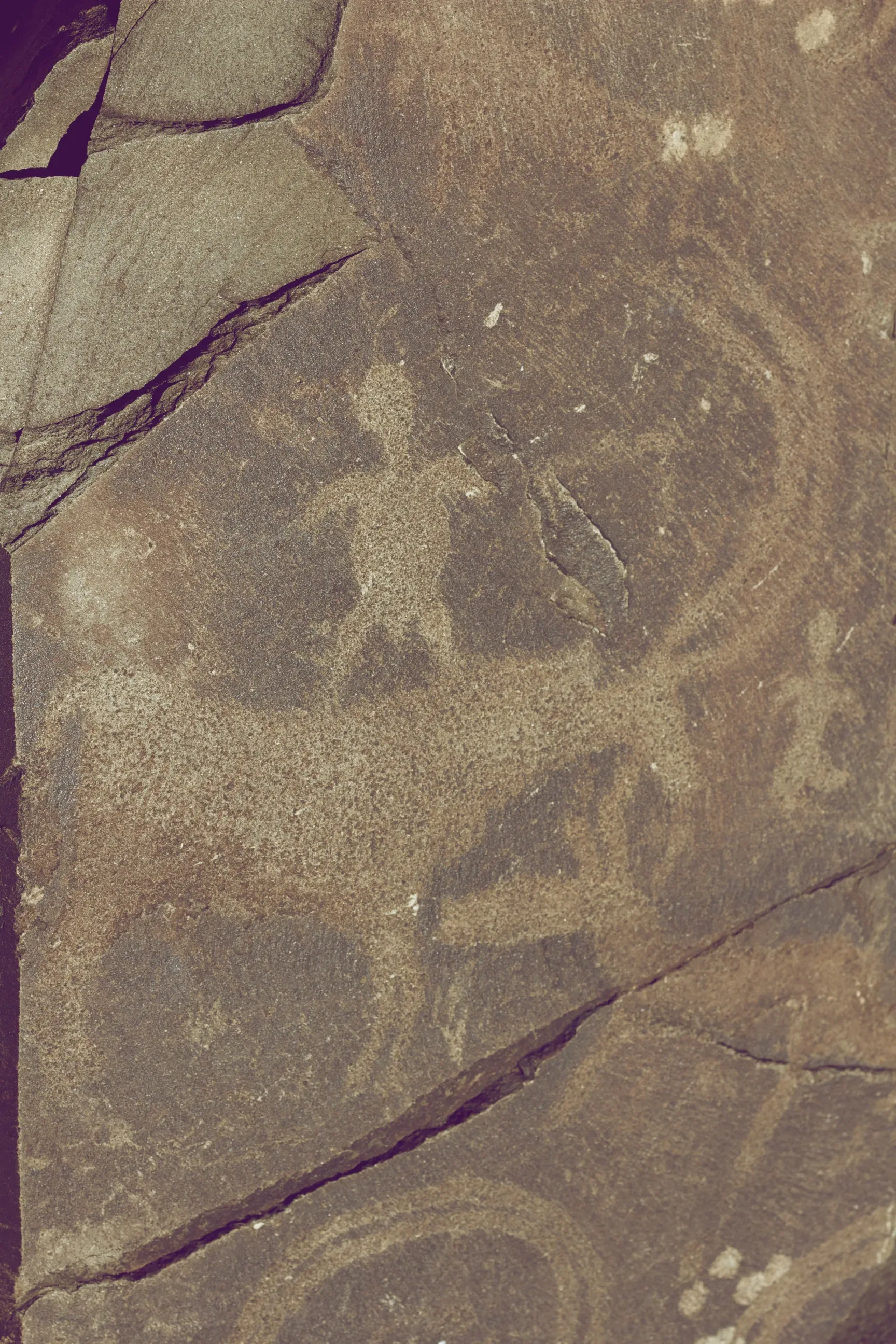
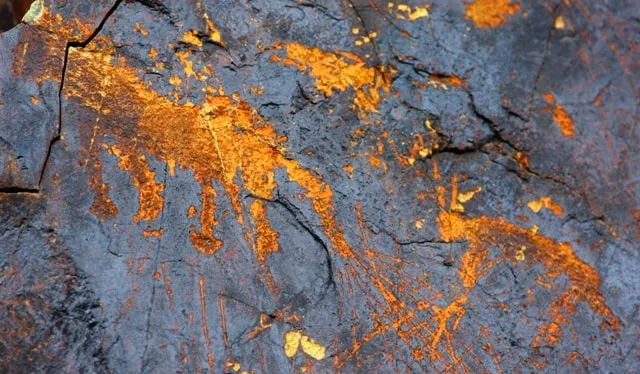
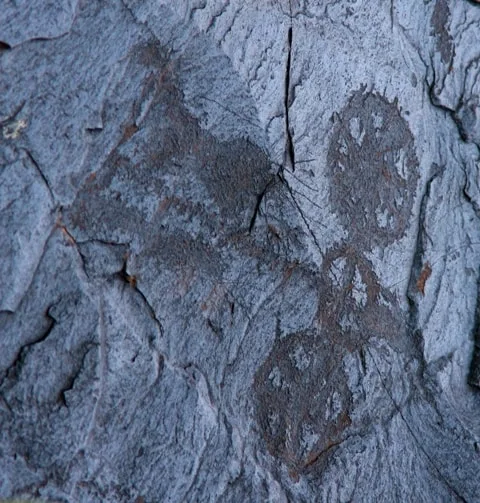
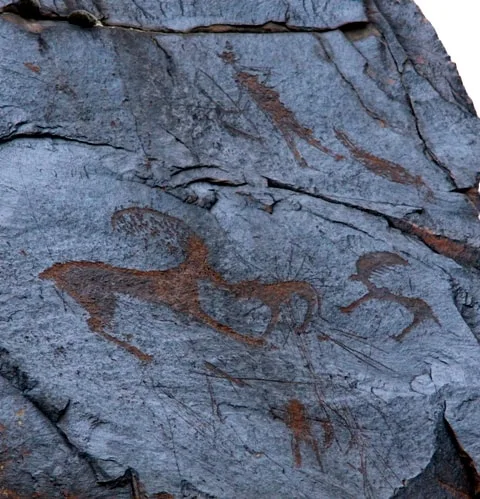
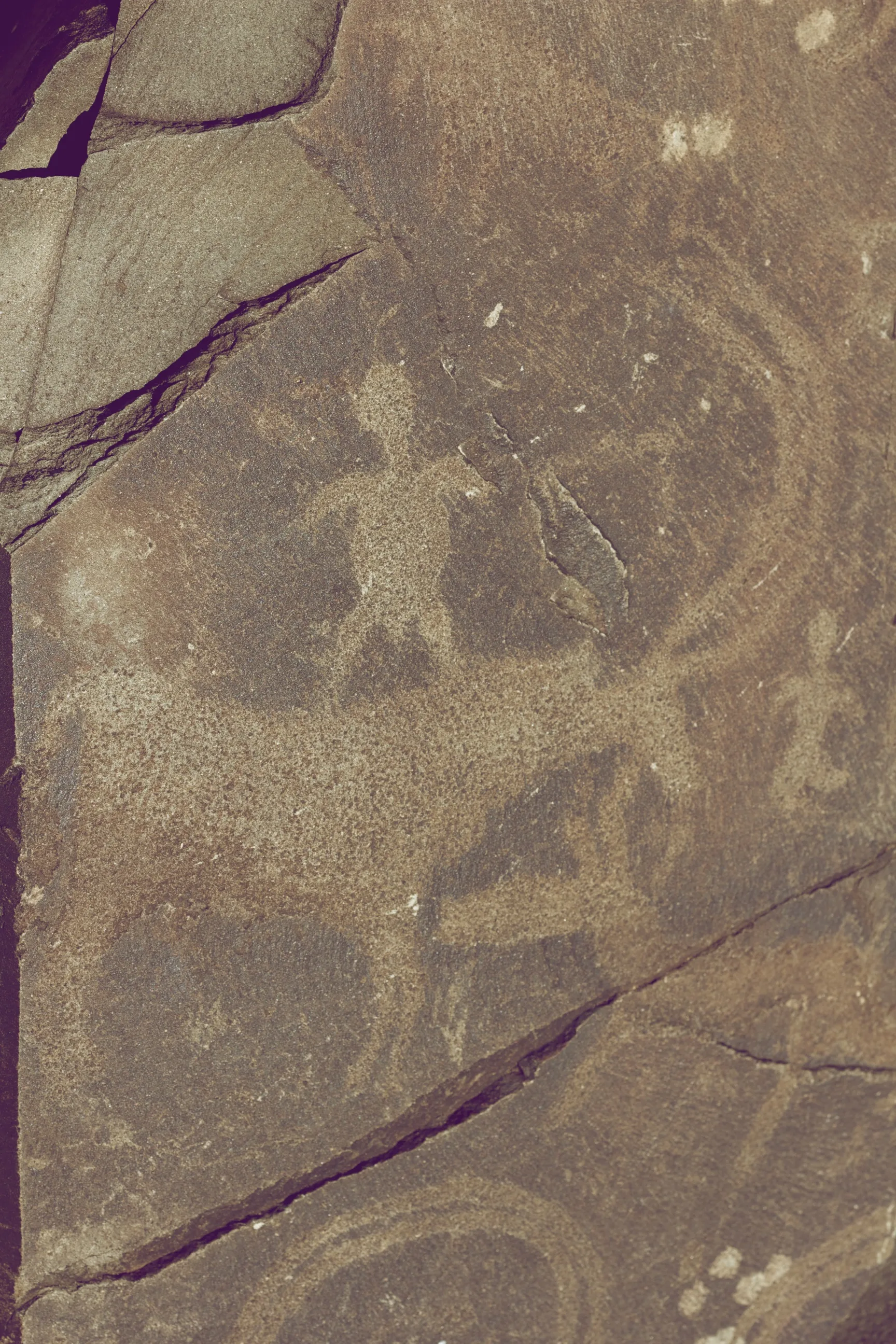
Gorges 10, 12, 13, and 20 of the Eshkiolmes ridge hold the densest concentration of Saka Iron-Age imagery (6th–4th century BCE), documented by Maryashev and Nuskabayev as representing the peak artistic period at the site. Saka animal-style motifs at Eshkiolmes include deer with full branching antlers thrown back over the body (a hallmark of the 'deer stone' compositional tradition), wolves following rams with exaggerated open jaws, panthers, and boars with hypertrophied tusks. The individual figures show multiple variants in a single gorge — Maryashev identified at least four-to-five distinct deer conventions side by side. Intermixed with these are the early Turkic medieval engravings (6th–8th century CE), identifiable by Orkhon-script runic characters — the same script used on the Bilge Khagan and Kul Tigin memorial steles in Mongolia's Orkhon Valley. At Eshkiolmes, short runic sequences appear alongside zoomorphic imagery rather than as formal monumental inscriptions, suggesting graffiti by literate Turkic pastoralists reusing a sacred landscape.
Open Upper Ridge Saka And Turkic Sector in maps
Choose a map provider for this destination.
These links open only this place, not a full road-trip route. Links open in a new tab. 2GIS opens the map point; start navigation there.
Gallery

.jpg)
Jump to visit notes
Visit notes
Viewing visit notes for Eshkiolmes Petroglyphs
Upper-ridge Saka and Turkic sector
Step 7 · 3 km from previous · 15 min drive
Gorges 10, 12, 13, and 20 of the Eshkiolmes ridge hold the densest concentration of Saka Iron-Age imagery (6th–4th century BCE), documented by Maryashev and Nuskabayev as representing the peak artistic period at the site. Saka animal-style motifs at Eshkiolmes include deer with full branching antlers thrown back over the body (a hallmark of the 'deer stone' compositional tradition), wolves following rams with exaggerated open jaws, panthers, and boars with hypertrophied tusks. The individual figures show multiple variants in a single gorge — Maryashev identified at least four-to-five distinct deer conventions side by side. Intermixed with these are the early Turkic medieval engravings (6th–8th century CE), identifiable by Orkhon-script runic characters — the same script used on the Bilge Khagan and Kul Tigin memorial steles in Mongolia's Orkhon Valley. At Eshkiolmes, short runic sequences appear alongside zoomorphic imagery rather than as formal monumental inscriptions, suggesting graffiti by literate Turkic pastoralists reusing a sacred landscape.