Overview
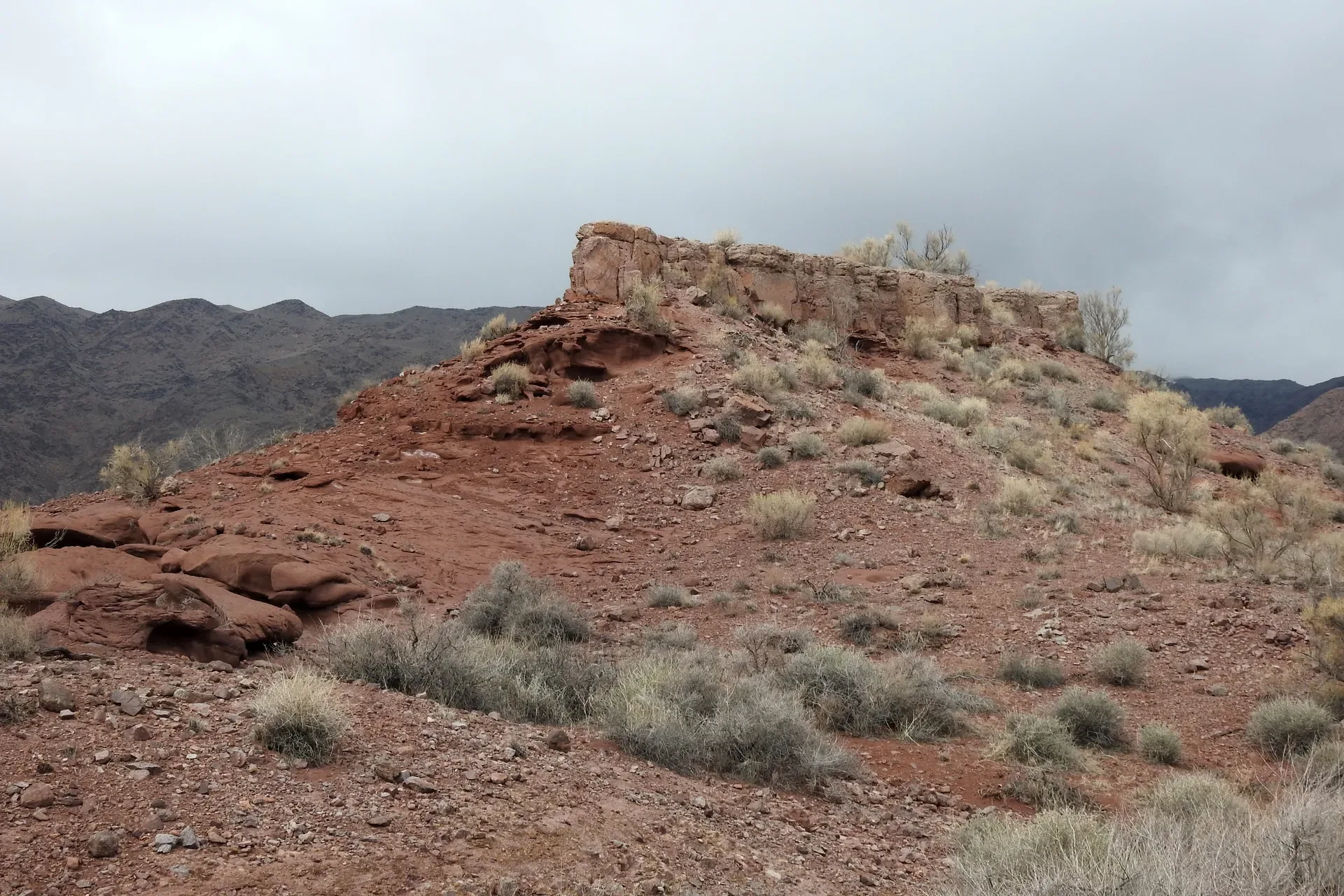
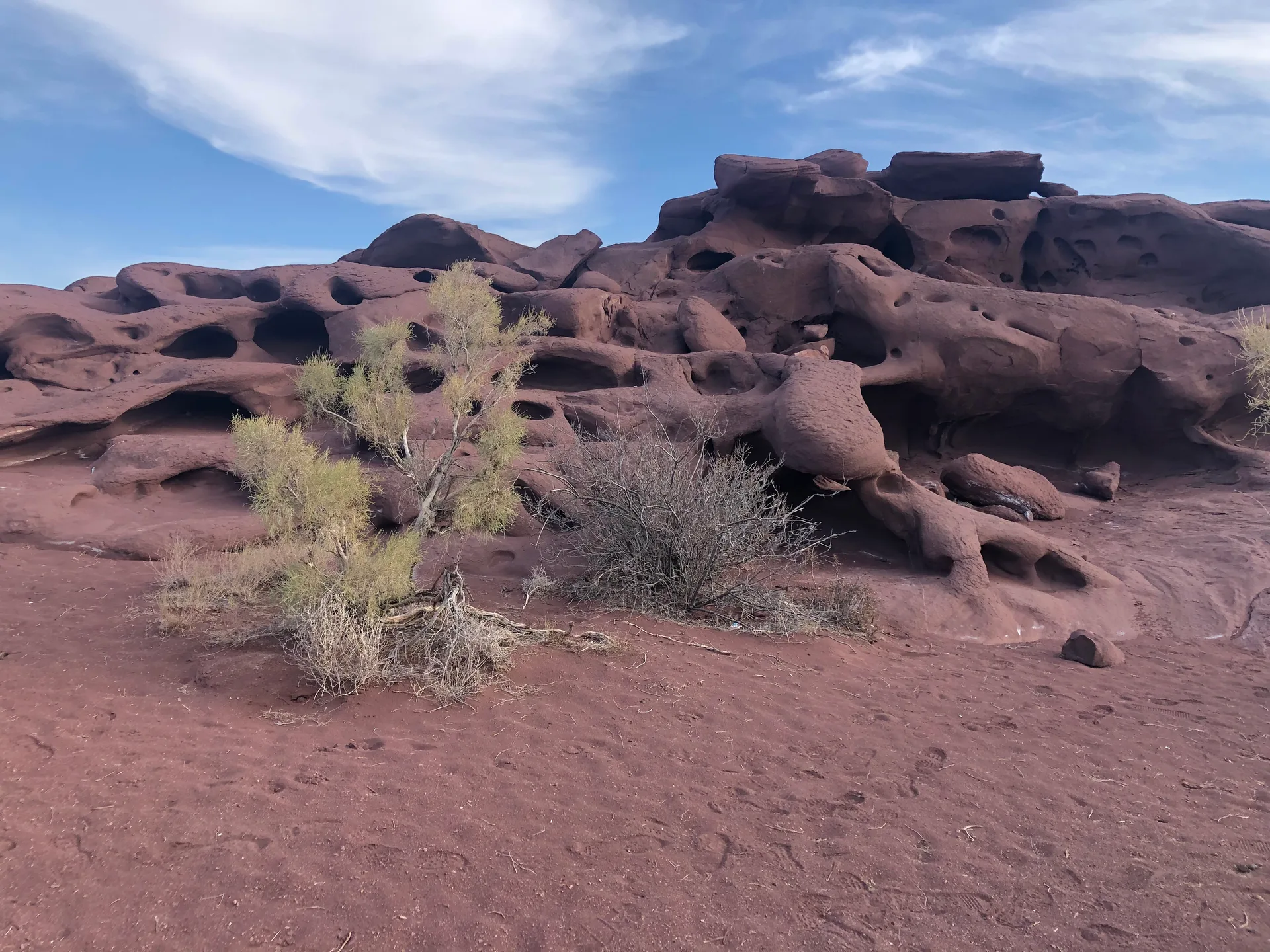
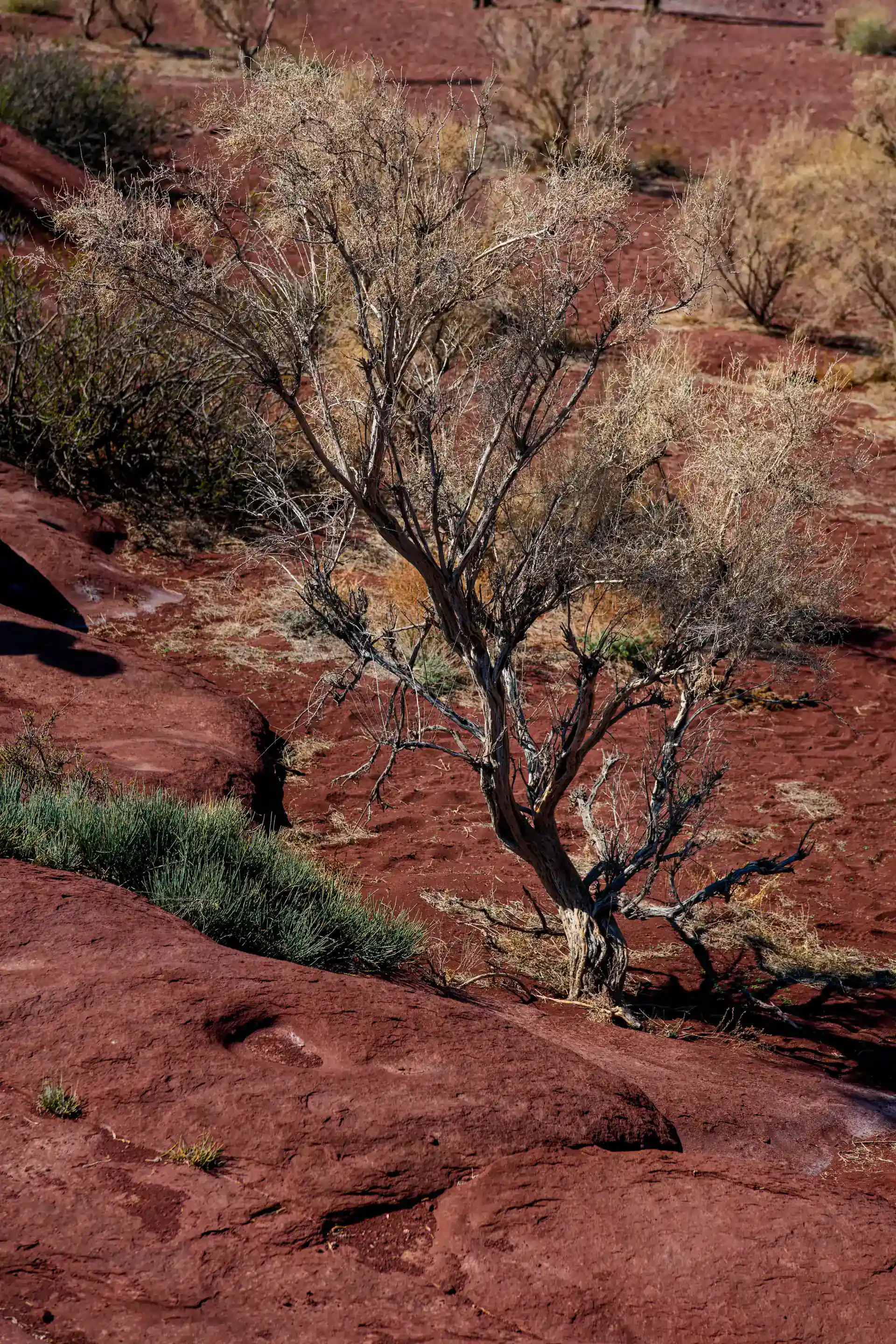
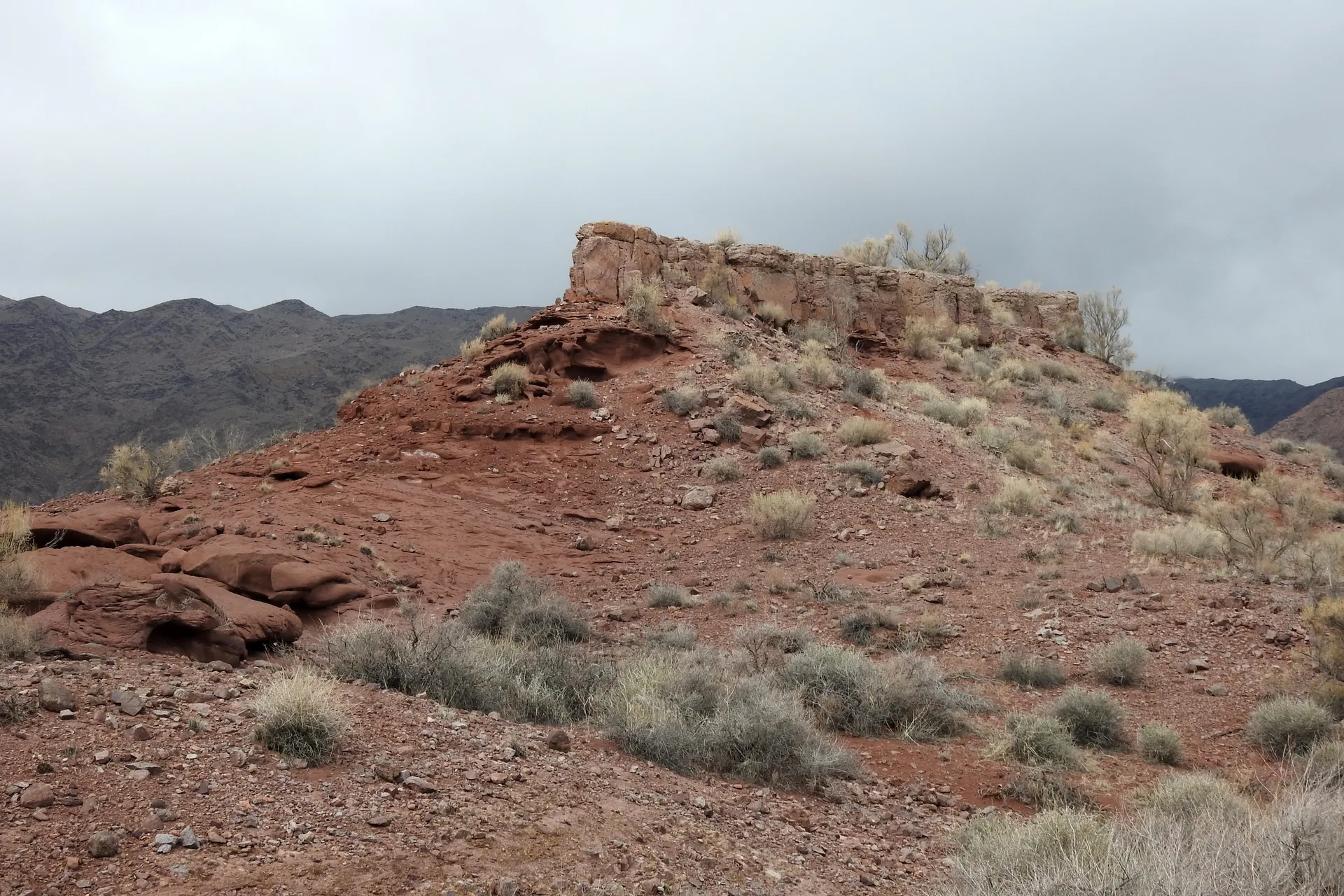
Katutau ('Bitter Mountains' or 'Hard Mountains' in Kazakh) lies 25 km west-northwest of Aktau. The 25 km track from the Aktau camp takes 40–50 minutes. The landscape changes completely within a few kilometres: the pale chalk world gives way to dark red, purple, and violet-grey basalt formations — solidified lava from two large volcanoes that erupted roughly 240 million years ago into a shallow lake. The lava cooling in water produced hollow formations, arches, and pillar shapes unlike typical flat lava fields. The highest ridge tops out near 1,720 m. A 2–3 hour walk with the guide covers the main lava fields, a natural arch, and the Tiger Mountains sub-formation in the southeastern foothills — banded ochre, red, and white slopes where volcanic outcrops meet sedimentary rock from the same era. Kulans and gazelles are often seen on the steppe approach.
Open Katutau Volcanic Basalt Ridge in maps
Choose a map provider for this destination.
These links open only this place, not a full road-trip route. Links open in a new tab. 2GIS opens the map point; start navigation there.
Gallery


Jump to visit notes
Visit notes
Viewing visit notes for Aktau and Katutau Mountains
Katutau — Volcanic Basalt Ridge
Step 7 · 25 km from previous · 45 min drive
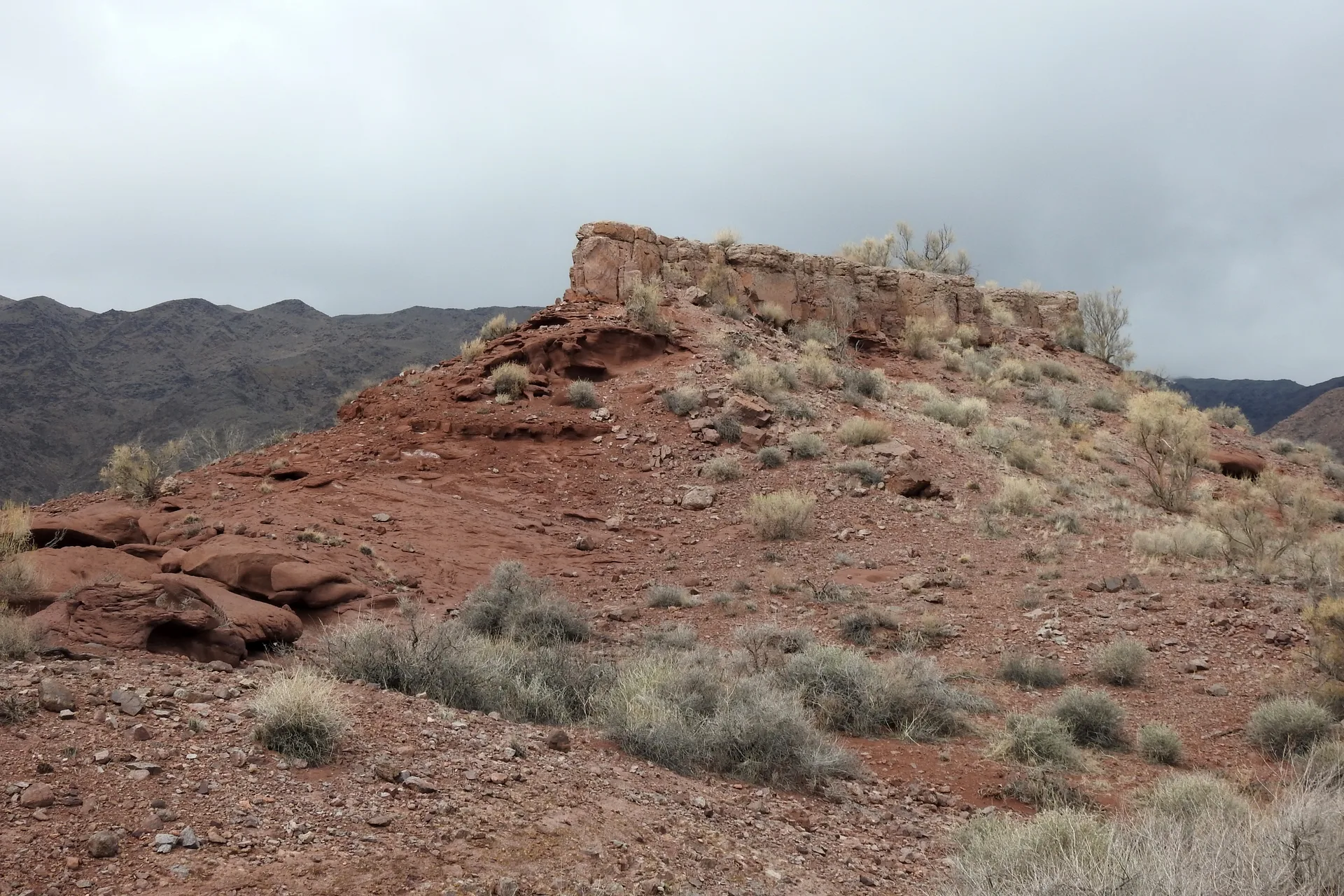
Katutau ('Bitter Mountains' or 'Hard Mountains' in Kazakh) lies 25 km west-northwest of Aktau. The 25 km track from the Aktau camp takes 40–50 minutes. The landscape changes completely within a few kilometres: the pale chalk world gives way to dark red, purple, and violet-grey basalt formations — solidified lava from two large volcanoes that erupted roughly 240 million years ago into a shallow lake. The lava cooling in water produced hollow formations, arches, and pillar shapes unlike typical flat lava fields. The highest ridge tops out near 1,720 m. A 2–3 hour walk with the guide covers the main lava fields, a natural arch, and the Tiger Mountains sub-formation in the southeastern foothills — banded ochre, red, and white slopes where volcanic outcrops meet sedimentary rock from the same era. Kulans and gazelles are often seen on the steppe approach.