Overview
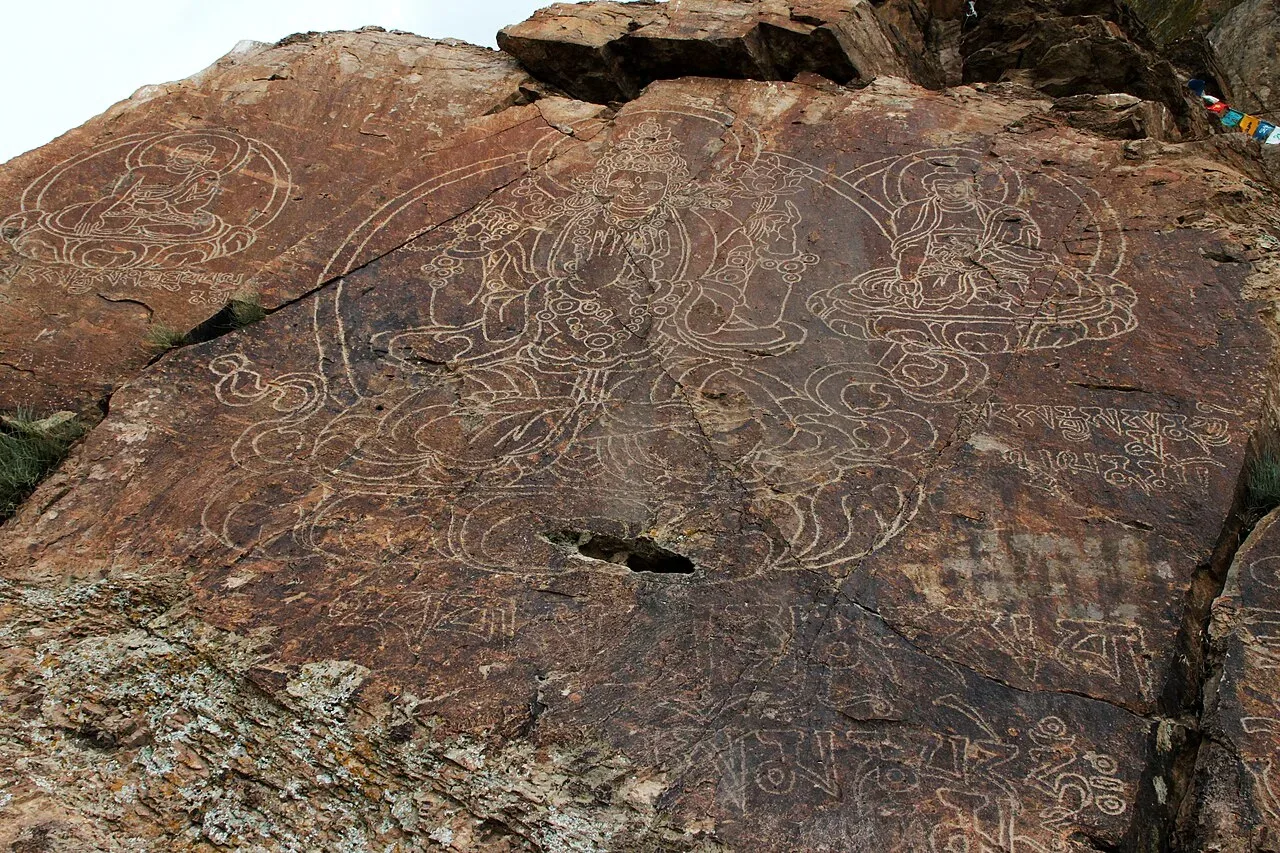
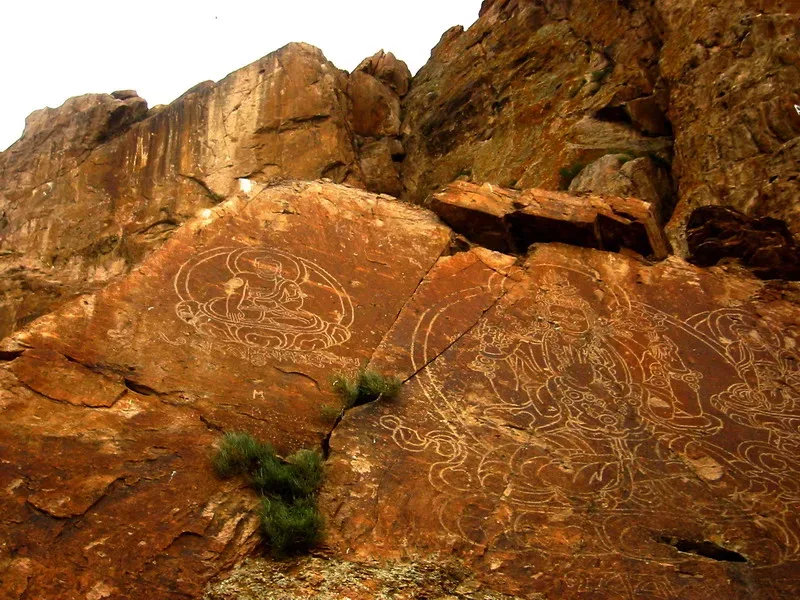
From Konaev, cross the Ili dam bridge and continue north 19 km on the Bakanas road until a sign for «Полигон МЧС» (MChS training ground). Turn left onto a dirt track heading west toward the river for 4–5 km. Three low sandstone bluffs rise from the steppe at the water's edge; the carvings are spread across their faces at head height and above. The oldest Buddhist iconostasis — Avalokiteshvara with four hands seated on a lotus — dates to 1677, created at the order of Dzungar Khan Galdan. Later panels added images of Amitabha and Shakyamuni, Tibetan mantras, and Oirat calligraphy through 1771. An older panel at the northern end carries Turkic runic text from around the 8th–9th century. The site is open-air with no barriers; morning light from the east and early afternoon from the south both read the reliefs well.
Open Tamgaly Tas Petroglyphs in maps
Choose a map provider for this destination.
These links open only this place, not a full road-trip route. Links open in a new tab. 2GIS opens the map point; start navigation there.
Gallery


Jump to visit notes
Visit notes
Viewing visit notes for Kapchagai Reservoir & Tamgaly-Tas
Tamgaly-Tas Petroglyphs
Step 3 · 45 km from previous · 55 min drive
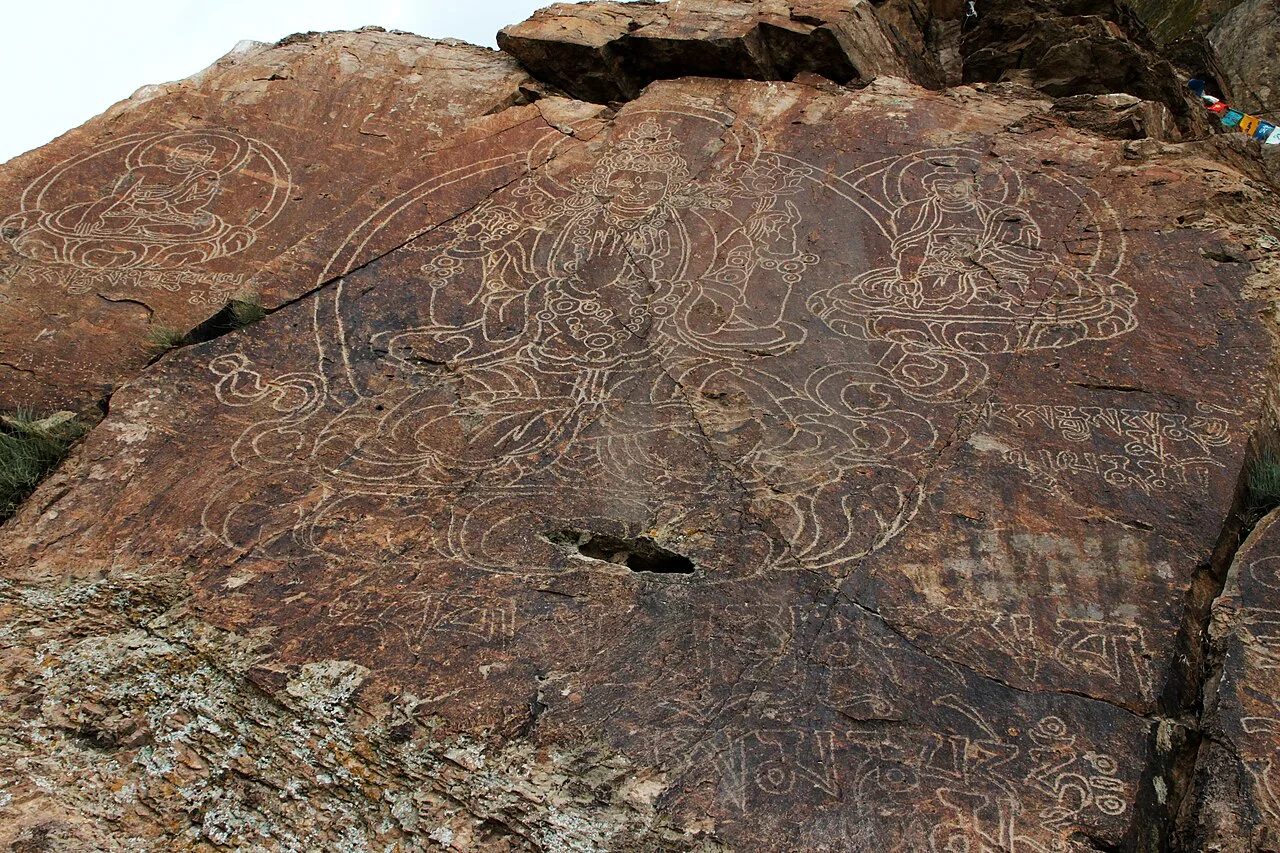
From Konaev, cross the Ili dam bridge and continue north 19 km on the Bakanas road until a sign for «Полигон МЧС» (MChS training ground). Turn left onto a dirt track heading west toward the river for 4–5 km. Three low sandstone bluffs rise from the steppe at the water's edge; the carvings are spread across their faces at head height and above. The oldest Buddhist iconostasis — Avalokiteshvara with four hands seated on a lotus — dates to 1677, created at the order of Dzungar Khan Galdan. Later panels added images of Amitabha and Shakyamuni, Tibetan mantras, and Oirat calligraphy through 1771. An older panel at the northern end carries Turkic runic text from around the 8th–9th century. The site is open-air with no barriers; morning light from the east and early afternoon from the south both read the reliefs well.